
HPC / THE SCIENCE OF HUMAN PERFORMANCE
The Architecture of a High‑Performance Mind
Psychology, neuroscience, and systems thinking, vetted for rigor, built for daily practice.
7,000+ sources, with citation metadata and verification status shown for each
Start with the Scan if you want help choosing where to focus. Prefer to begin straight away? The 7-Day Baseline works on its own, and the Scan is there whenever you want it.
TAKE THE PERFORMANCE SCAN START YOUR FIRST PROTOCOLKARAKORAM NORTHERN PAKISTAN 01 / 07
Put the science to work
What do you want to improve?
Choose a goal. Find a practical next step.
Choose your starting point
Focus selectedAll eight goals: protocol and assessment links
- Focus deeply Deep work protocol Focus assessment (7–9 min)
- Sleep better Sleep optimisation protocol Sleep recovery assessment (7–9 min)
- Feel more energised Energy systems protocol Fatigue & energy assessment (8–10 min)
- Build better habits Habit loop protocol Habit strength assessment (7–9 min)
- Learn faster Deliberate practice protocol Practice quality assessment (7–9 min)
- Decide with clarity Cognitive debiasing protocol Cognitive bias assessment (8–10 min)
- Build confidence Confidence protocol Confidence assessment (7–9 min)
- Perform under pressure Clutch performance protocol Pressure performance assessment (7–9 min)

Your starting point
Make room for deep work.
Build the conditions for sustained attention, one work session at a time.
Editor's selection
 Science Deep Dive, Decisions
The Framing Effect: How Identical Information Changes Your Decisions
Science Deep Dive, Decisions
The Framing Effect: How Identical Information Changes Your Decisions
- Science Deep Dive, Habits Thumb Sucking: When It Matters, and What Actually Helps a Child Stop Few children still suck a thumb by age 7 to 8. The habit matters when it lasts for years while the bite is forming. The methods that help a…
More from the library
- Guide, Relationships Network Intelligence: The Science of Strategic Relationship Building for Career Growth You have spent years building expertise, earning credentials, and refining your craft. · 39 min read
- Self-assessment, Nutrition Anti-Inflammatory Diet Self-Reflection: How Does Your Plate Match the Research? Your dietary habits across five dimensions, omega-3 to omega-6 balance, refined carbohydrate load, polyphenol diversity, processed food frequency, and alcohol…
 Guide, Inner Game
Cognitive Reframing Techniques: The CBT-Based System for Restructuring Limiting Beliefs
You already reframe. You just do it badly.
· 43 min read
Guide, Inner Game
Cognitive Reframing Techniques: The CBT-Based System for Restructuring Limiting Beliefs
You already reframe. You just do it badly.
· 43 min read
 Trend, Nutrition
Non-Coeliac Gluten Sensitivity: Is It Real, or Is It FODMAPs?
Blinded trials find just 16% of self-diagnosed cases react to gluten itself; most are FODMAPs or nocebo effects.
Trend, Nutrition
Non-Coeliac Gluten Sensitivity: Is It Real, or Is It FODMAPs?
Blinded trials find just 16% of self-diagnosed cases react to gluten itself; most are FODMAPs or nocebo effects.
The Ledger
dated snapshotYou meet advice like this every day: "it takes 21 days to build a habit", "power poses change your hormones". The Ledger is our public record of those claims. We check each one against the published research and stamp it with one of the five verdicts below. So far, only 5 have fully survived. Ten from this snapshot are here; the full Ledger holds the current record. Open a card for the verdict, the strength of the evidence, and every source we judged it against.
Confirmed holds up · Nuanced true, with conditions · Overstated stretched past the evidence · Refuted does not hold · Declined not graded, the evidence was too thin to judge responsibly
What the five verdicts mean
Confirmed holds up · Nuanced true, with conditions · Overstated stretched past the evidence · Refuted does not hold · Declined not graded, the evidence was too thin to judge responsibly
Select a band to see every claim with that verdict in the full Ledger
"How a choice is worded changes what people decide, even when the actual facts are identical."
The identical outcome, reworded from how many will be saved to how many will die, reverses people's choices: framed as saved lives, 72% picked the safe certain option; framed as lives lost, 78% picked the risky gamble, even though the underlying numbers (200 saved out of 600, or a 1/3 chance nobody dies versus a 2/3 chance 600 die) never changed. A corrected meta-analysis confirms this is a real, moderate-to-large effect (d = 0.52), not an artifact of selective publication.
Worth knowingFraming effects are not one uniform phenomenon, this classic risky-choice version (Tversky and Kahneman, 1981) is one of several distinct types identified in the literature, so it doesn't automatically prove that every kind of rewording (e.g., attribute framing, goal framing) moves decisions the same way.
Graded against
- Tversky & Kahneman 1981survey · Science ·
10.1126/science.7455683 supports - Steiger & Kühberger 2018meta-analysis · Zeitschrift für Psychologie ·
10.1027/2151-2604/a000321 supports - Levin et al. 1998commentary · Organizational Behavior and Human Decision Processes ·
10.1006/obhd.1998.2804 context - DeKay et al. 2022study · Perspect Psychol Sci ·
10.1177/17456916221079611 context
Each DOI listed here is Crossref-verified
Further on the site
"People consistently underestimate how much their conversation partner liked them."
This is well supported and replicated. Across strangers meeting in a lab, first-year dorm mates, and unacquainted workshop attendees, people systematically underestimated how much their conversation partners liked them and enjoyed talking with them -- a gap that held up regardless of how long the conversation ran and that, for developing dorm-mate relationships, persisted for months. The effect is not limited to one-on-one talks: it also shows up in small-group conversations and in engineering teams working on shared projects, where it is linked to team-functioning outcomes and is largest among peers. It also does not depend on being face to face -- across text-chat, audio-chat, and video-chat conversations, the size of the gap did not differ significantly by modality. A newer line of work adds a nuance rather than a contradiction: once researchers separate an 'actual' liking gap (how much others truly liked you versus your guess) from a 'perceived' liking gap (how much you liked others versus your guess at being liked back), the two behave differently -- the perceived version tracks personality traits like lower self-esteem and higher social anxiety, while the actual version does not, and neither version reliably predicts how good the interaction felt to the people in it.
Worth knowingThe gap persists across conversation lengths and, for first-year dorm mates followed over time, lasted for months as the relationship developed.
Graded against
- Boothby et al. 2018cohort · Psychol Sci ·
10.1177/0956797618783714 supports - Mastroianni et al. 2021experiment · Organizational Behavior and Human Decision Processes ·
10.1016/j.obhdp.2020.10.013 supports - Oviedo et al. 2025experiment · Computers in Human Behavior Reports ·
10.1016/j.chbr.2024.100582 supports - Tissera et al. 2025study · Journal of Personality and Social Psychology ·
10.1037/pspp0000548 context
Each DOI listed here is Crossref-verified
Further on the site
- Deep diveBody Language and the Brain: What Nonverbal Signals Your Nervous System Reads
- Deep diveMirror Neurons & Empathy: What the Neuroscience Actually Shows About Reading People
- Deep diveThe Science of Charisma: What Makes Some People Magnetically Compelling
- GlossaryDifficult Conversations: Stone, Patton & Heen’s Definition and the Three-Layer Model
"A proper warm-up before exercise prevents injuries."
Randomized-controlled-trial evidence shows structured warm-up programs reduce injury risk, not that warming up guarantees prevention. A meta-analysis of cluster-randomized controlled trials in children and adolescents found a pooled injury rate ratio of 0.64 (95% CI 0.54-0.75; a 36% reduction) for warm-up intervention programs versus no-warm-up controls, and a broader meta-analysis pooling RCTs across sport found a smaller but still significant protective effect (RR 0.843, 95% CI 0.749-0.949). A systematic review of FIFA's structured dynamic warm-up program found individual-trial reductions of approximately 30% to 46% in football players, but the benefit depends on how consistently and correctly the program is performed rather than on the act of warming up alone.
Worth knowingThe protective effect is conditional on execution: the systematic review of FIFA's structured dynamic warm-up program found individual-trial reductions of approximately 30% to 46%, but concluded that adherence -- consistent, correct performance of the program -- was the primary determinant of success, not simply doing some warm-up.
Graded against
- Ding et al. 2022meta-analysis · IJERPH ·
10.3390/ijerph19106336 supports - Okobi et al. 2022meta-analysis · Cureus ·
10.7759/cureus.26123 supports - Patel & Shah 2025systematic review · Cureus ·
10.7759/cureus.100463 supports - Fradkin et al. 2006systematic review · Journal of Science and Medicine in Sport ·
10.1016/j.jsams.2006.03.026 counters
Each DOI listed here is Crossref-verified
"Getting into 'flow state' makes you perform significantly better."
Across two large independent meta-analyses, flow shows a real, moderate positive association with performance -- in workplace settings, flow correlated with job performance at rho = 0.44 (95% CI [0.26, 0.59]) and with creativity at rho = 0.35. But the relationship is not the simple 'more flow, more performance' story the popular claim implies: a longitudinal experimental study found self-reported flow tracks how much someone is beating their own expectations rather than their absolute performance level, and the same workplace meta-analysis cites two studies showing people perform worse on subsequent attention-switching tasks right after a flow episode.
Worth knowingThe strongest quantitative support comes from workplace and organizational-citizenship contexts (rho = 0.44 job performance), not a general 'any task, any domain' guarantee.
Graded against
- Liu et al. 2023meta-analysis · Journal of Vocational Behavior ·
10.1016/j.jvb.2023.103891 supports - Palomäki et al. 2021cohort · Computers in Human Behavior ·
10.1016/j.chb.2021.106891 counters - Alameda et al. 2022systematic review · Cortex ·
10.1016/j.cortex.2022.06.005 context - van der Linden et al. 2021review · Front. Psychol. ·
10.3389/fpsyg.2021.645498 context
Each DOI listed here is Crossref-verified
Further on the site
"Getting sunlight early in the day resets and anchors your body clock."
Morning-timed light exposure does produce measurable circadian phase advances: in a controlled lab trial, a single 30-minute bright-light exposure right after waking shifted the internal clock earlier by about 1.8 hours, about as effective as 1 hour of morning light spread over 3.25 hours (1.7-hour advance), and roughly 75% as large as the 2-hour condition's 2.4-hour advance. In a field study where people spent a week exposed only to natural outdoor light, their internal circadian clock synchronized to solar time, with biological night beginning at sunset and ending near sunrise, and people with naturally later body clocks shifted the most.
Worth knowingThe clock doesn't respond to the clock-time label 'morning', it responds to where light falls relative to a person's own core-body-temperature minimum. In a phase-response-curve study, light centered after that critical point advanced the clock, but the same light centered before it produced a phase delay instead, so for people with a delayed body clock (night owls, some shift workers), early-waking light can fall in the delay zone rather than the advance zone.
Graded against
- Wright et al. 2013study · Current Biology ·
10.1016/j.cub.2013.06.039 supports - Crowley & Eastman 2015RCT · Sleep Medicine ·
10.1016/j.sleep.2014.12.004 supports - Khalsa et al. 2003experiment · The Journal of Physiology ·
10.1113/jphysiol.2003.040477 context - Burgess & Eastman 2004experiment · Neuroscience Letters ·
10.1016/j.neulet.2003.11.032 counters
Each DOI listed here is Crossref-verified
"Habits run on autopilot, triggered by cues, not by conscious decisions."
The core mechanism behind this claim is well supported: once a behavior is well learned, reviews spanning basal-ganglia neuroscience and social/cognitive psychology describe habits as behavioral routines that cues can trigger as automatic responses, running largely outside the higher-order deliberative control that governs conscious decision-making. But the strict, absolute form of the claim -- that conscious decisions play no role at all -- overstates the evidence. A dedicated review of the habit-automaticity literature found that habit-generated impulses compete or combine with impulses from other sources, including conscious decision-making, and that a cue-triggered impulse does not automatically translate into behavior. So the claim holds as a description of the default mechanism, but conscious control still has a real say in whether a cued habitual impulse actually becomes an action.
Worth knowingBasal-ganglia neuroscience frames habit research around a dichotomy between conscious, voluntary, higher-order control and a lower-order form of behavioral control that is scarcely available to consciousness -- supporting the idea that habitual behavior runs on a separate track from deliberate decision-making.
Graded against
- Graybiel 2008review · Annu. Rev. Neurosci. ·
10.1146/annurev.neuro.29.051605.112851 supports - Yin & Knowlton 2006review · Nat Rev Neurosci ·
10.1038/nrn1919 supports - Wood & Rünger 2016review · Annual Review of Psychology ·
10.1146/annurev-psych-122414-033417 supports - Gardner 2015review · Health Psychology Review ·
10.1080/17437199.2013.876238 counters
Each DOI listed here is Crossref-verified
Further on the site
"Putting money on the line (a commitment device) makes you more likely to stick to a habit change."
Financial commitment devices do raise adherence while the stake is active, smokers offered a money-forfeit contract were 3 percentage points more likely to quit at 6 months, and a pooled review of weight-loss trials found commitment interventions produced a mean extra 1.5 kg of short-term weight loss (409 participants). But 'sticks' is doing a lot of work in the popular claim: once the money is returned or the contract ends, several RCTs find the advantage shrinks or disappears, a deposit-contract weight-loss trial saw the incentive group regain far more weight than controls (7.5 lb vs 0.90 lb) in the 36 weeks after the payout period ended, and in a commitment-lottery trial, the short-term-lottery arm showed no goal-attainment edge over control by week 52, while a longer-duration lottery arm kept a fading edge over control through week 52.
Worth knowingThe quit-smoking benefit did persist at a surprise 12-month retest in the CARES trial, so durability isn't zero, but that trial measured abstinence, not the weight-regain pattern seen in the deposit-contract trials.
Graded against
- Giné et al. 2010RCT · American Economic Journal: Applied Economics ·
10.1257/app.2.4.213 supports - Coupe et al. 2019systematic review · BMC Public Health ·
10.1186/s12889-019-7185-3 supports - John et al. 2011RCT · J GEN INTERN MED ·
10.1007/s11606-010-1628-y counters - van der Swaluw et al. 2018RCT · J Behav Med ·
10.1007/s10865-018-9915-x counters - Manthri Savani 2019RCT · Journal of Behavioral and Experimental Economics ·
10.1016/j.socec.2019.101457 context
Each DOI listed here is Crossref-verified
Further on the site
"Quizzing yourself on material beats re-reading your notes for learning and retention."
Quizzing yourself does beat re-reading, but the advantage only shows up after a delay, not immediately, and it is not universal. In the classic vocabulary-learning study (Experiment 2), students who kept testing themselves recalled about 80% of word pairs a week later, versus just 36% and 33% for students whose repeated study continued but whose testing was dropped early. A separate study using prose passages found the same delayed-test advantage: students who took a recall test remembered much more after a week than students who restudied (61% vs. 40%), even though the restudiers reread the passage far more often (14.2 times vs. 3.4). A meta-analysis of classroom studies found quizzing raises academic achievement over restudying with a medium-sized effect (g = 0.499). But on an immediate 5-minute test in the prose-passage study, rereading actually beat self-testing, and a crowdsourced-adult replication found no significant advantage of retrieval practice over restudy at a long delay (F(1, 66) = 0.13, p = 0.72).
Worth knowingThe self-testing advantage is delay-dependent, not immediate: on a 5-minute test given right after studying, rereading produced better recall than repeated testing; the self-testing advantage only emerged on delayed tests.
Graded against
- Karpicke & Roediger 2008RCT · Science ·
10.1126/science.1152408 supports - Roediger & Karpicke 2006RCT · Psychol Sci ·
10.1111/j.1467-9280.2006.01693.x supports - Yang et al. 2021meta-analysis · Psychological Bulletin ·
10.1037/bul0000309 supports - Sigayret et al. 2026RCT · Front. Psychol. ·
10.3389/fpsyg.2026.1727423 counters
Each DOI listed here is Crossref-verified
Further on the site
"Brain-training apps like Lumosity make you generally smarter, not just better at the game."
The specific product named in this claim, Lumosity, does not hold up under direct testing: a randomized trial built to compare it head-to-head against ordinary video games found no advantage on brain activity, decision-making, or cognitive performance. More broadly, the largest cognitive-training trial ever run, and the most careful reviews of the field, all find the same pattern: people get better at the exercises they practice, that improvement does not spread to other mental skills, even closely related ones, and it does not make people generally smarter. The one place a small transfer effect to fluid intelligence has been documented is a specific laboratory task called dual n-back, not a commercial brain-training app, and even that effect is described as small.
Worth knowingThe one RCT that tested Lumosity itself by name found no benefit above an active video-game control group on brain activity, decision-making, or cognitive performance.
Graded against
- Kable et al. 2017RCT · J. Neurosci. ·
10.1523/jneurosci.2832-16.2017 counters - Owen et al. 2010RCT · Nature ·
10.1038/nature09042 counters - Simons et al. 2016review · Psychol Sci Public Interest ·
10.1177/1529100616661983 counters - Melby-Lervåg & Hulme 2013meta-analysis · Developmental Psychology ·
10.1037/a0028228 counters - Au et al. 2015meta-analysis · Psychon Bull Rev ·
10.3758/s13423-014-0699-x supports - Jaeggi et al. 2008RCT · Proc. Natl. Acad. Sci. U.S.A. ·
10.1073/pnas.0801268105 supports
Each DOI listed here is Crossref-verified
"Emotional intelligence is what really separates great leaders from mediocre ones."
There is a real, meta-analytically confirmed correlation between emotional intelligence and leadership: a systematic review of 15 studies found emotional intelligence correlated strongly with transformational leadership (r ≈ 0.63, 4 studies, 6 effects, N = 1955) and with team effectiveness (r ≈ 0.41, 8 studies, 15 effects, N = 3440). But a separate meta-analysis of 62 independent samples found that headline correlation is inflated by common-source rating bias: when both emotional intelligence and leadership behavior are rated by the same person, the validity estimate is .59, but when they are rated by independent sources it drops to .12. Emotional intelligence's link to job performance is also not universal -- a cascading meta-analytic model found ability-based emotional intelligence predicts performance positively in high-emotional-labor roles like management but negatively in low-emotional-labor jobs.
Worth knowingMuch of the popular EI-leadership correlation reflects shared rater bias rather than an independently observable relationship: the .59 same-source validity estimate collapses to .12 when EI and leadership behavior are rated by different sources.
Graded against
- Paredes-Saavedra et al. 2026meta-analysis · Administrative Sciences ·
10.3390/admsci16030116 supports - Harms & Credé 2010meta-analysis · Journal of Leadership & Organizational Studies ·
10.1177/1548051809350894 counters - Joseph & Newman 2010meta-analysis · Journal of Applied Psychology ·
10.1037/a0017286 counters - Walter et al. 2011review · AMP ·
10.5465/amp.25.1.45 context
Each DOI listed here is Crossref-verified
Further on the site
Grades A–C reflect the strength of the underlying evidence, not the popularity of the claim, A means consistent high-quality evidence; C means limited or mixed, independent of whether the claim itself holds up. Declined means the evidence base was too thin or conflicted to grade responsibly, we say so rather than force a verdict.

GuideLearning · 25 August 2026
Knowledge Management: Zettelkasten, Spaced Repetition & Progressive Summarisation
You have a knowledge problem. You just cannot see it yet.

Science Deep DiveInner Game · 18 June 2026
Meditation and the Brain: What Practice Changes, and What It Doesn’t
What does meditation actually do to your brain?

Science Deep DiveLearning · 18 June 2026
How Neuroplasticity Works: The Mechanisms Behind Brain Rewiring
The adult brain does not passively record experience. The molecular machinery that rewires it, from spike-timing rules to structural change.

Science Deep DiveDecision Science · 18 June 2026
Why We Keep Throwing Good Resources After Bad: The Sunk Cost Fallacy Examined
The science behind sunk cost psychology: why your brain fights rational exit, what the fMRI data shows, and a 4-step protocol to override the bias.

Science Deep DiveFlow & Focus · 18 June 2026
Dopamine Fasting: What Neuroscience Actually Says About Resetting Your Reward System
RCT evidence, D2 receptor science, and the reward prediction error framework explained.

Science Deep DiveThe Arena · 18 June 2026
Burnout: The Complete Neuroscience of Chronic Stress, Depletion & Recovery
Burnout shrinks the prefrontal cortex, enlarges the amygdala, and drives systemic inflammation. The complete neuroscience of chronic depletion and recovery.

Science Deep DiveHabits · 18 June 2026
The Motivation Equation: What Neuroscience Reveals About Why We Quit
The neuroscience of motivation explained: dopamine, reward prediction error, and the real reason 80% of goals fail. Evidence from 31 peer-reviewed studies.

GuideLearning · 25 August 2026
Neuroplasticity Exercises: The Evidence-Based System for Rewiring Your Brain
You are reading this on a device that updates its software automatically.

GuideLearning · 25 August 2026
Deliberate Practice: Ericsson’s Framework for Building Elite Expertise Faster
You’ve put in the hours. Deliberate practice isn’t “practice hard”, it’s Ericsson’s five-criteria framework, and most practice meets none of them.

GuideLearning · 25 August 2026
How to Learn Faster: The Neuroscience-Based System for Building Expertise
You have a learning problem, and you probably don’t know it.
The Glossary
 Butyrate
, glossary term, Nutrition.
Butyrate
, glossary term, Nutrition.
 Circadian Rhythm
, glossary term, Bio-Performance.
Circadian Rhythm
, glossary term, Bio-Performance.
 Second-Order Thinking
, glossary term, Decision Science.
Second-Order Thinking
, glossary term, Decision Science.
 Amor Fati
, glossary term, Identity.
Amor Fati
, glossary term, Identity.
 Habit Loop
, glossary term, Habits.
Habit Loop
, glossary term, Habits.
 Bystander Effect
, glossary term, Leadership.
Bystander Effect
, glossary term, Leadership.
 Procedural Memory
, glossary term, Learning.
Procedural Memory
, glossary term, Learning.
 Dunbar’s Number
, glossary term, Social Dynamics.
Dunbar’s Number
, glossary term, Social Dynamics.
 Deep Workpick
, glossary term, Flow States. The editor’s current pick from the roll.
Deep Workpick
, glossary term, Flow States. The editor’s current pick from the roll.
 Intermittent Fasting
, glossary term, Nutrition.
Intermittent Fasting
, glossary term, Nutrition.
 Sleep Onset Latency
, glossary term, Bio-Performance.
Sleep Onset Latency
, glossary term, Bio-Performance.
 Self-Serving Bias
, glossary term, Decision Science.
Self-Serving Bias
, glossary term, Decision Science.
 Catastrophising
, glossary term, Identity.
Catastrophising
, glossary term, Identity.
 Atomic Habits
, glossary term, Habits.
Atomic Habits
, glossary term, Habits.
 Radical Candor
, glossary term, Leadership.
Radical Candor
, glossary term, Leadership.
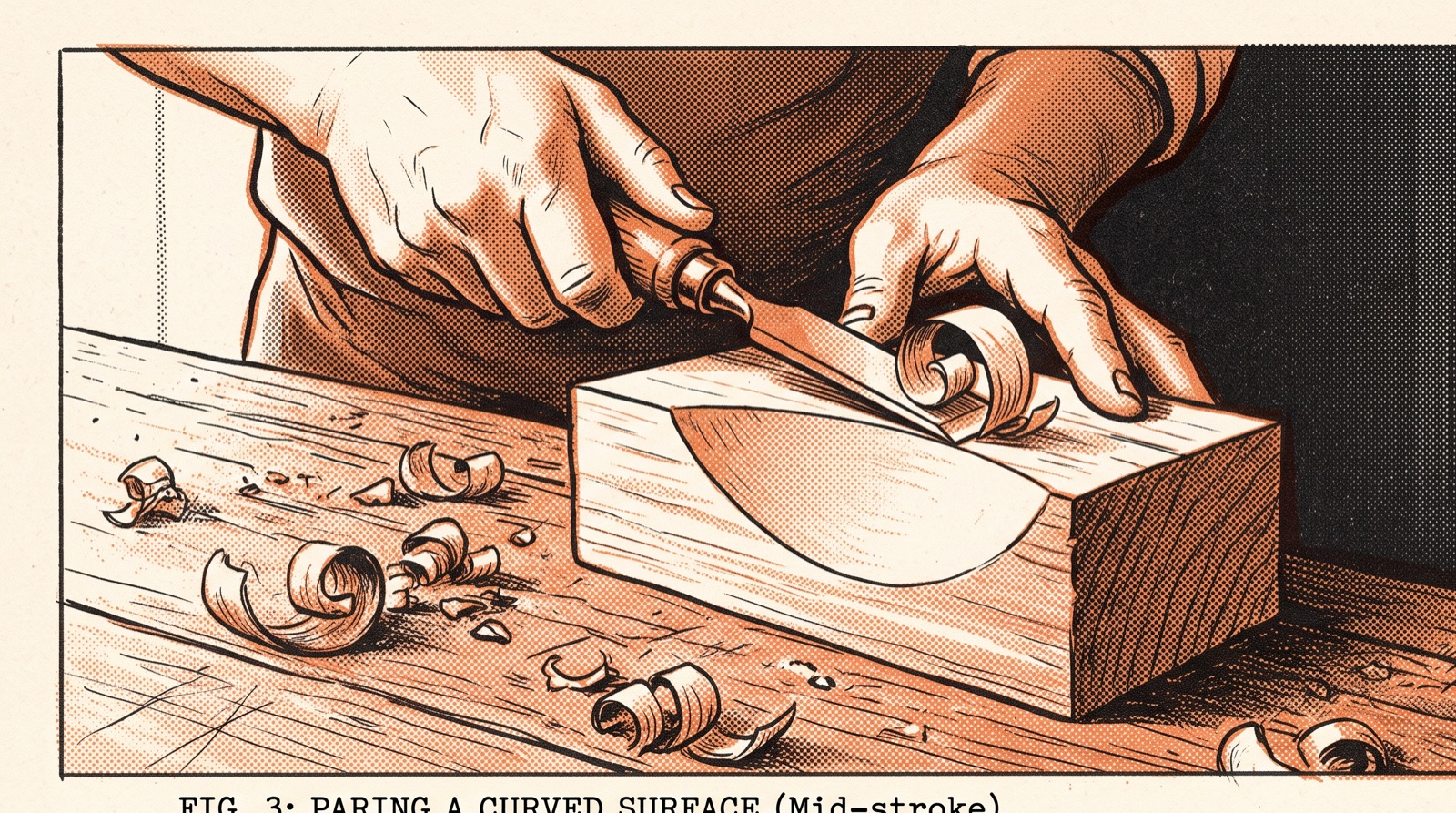 Growth Mindset
, glossary term, Learning.
Growth Mindset
, glossary term, Learning.
 Weak Ties
, glossary term, Social Dynamics.
Weak Ties
, glossary term, Social Dynamics.
 L-Theanine
, glossary term, Nutrition.
L-Theanine
, glossary term, Nutrition.
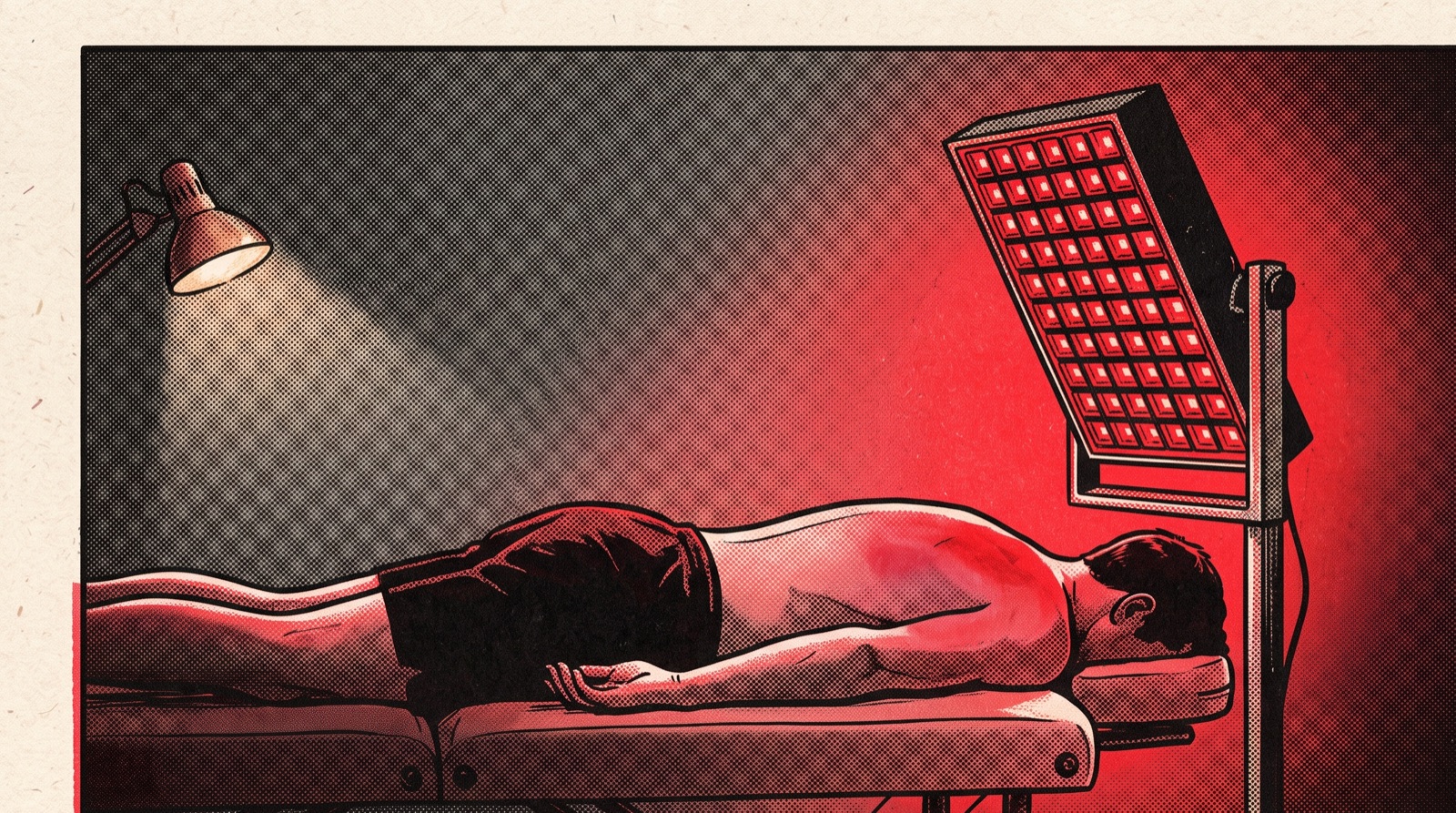 Red Light Therapy
, glossary term, Bio-Performance.
Red Light Therapy
, glossary term, Bio-Performance.
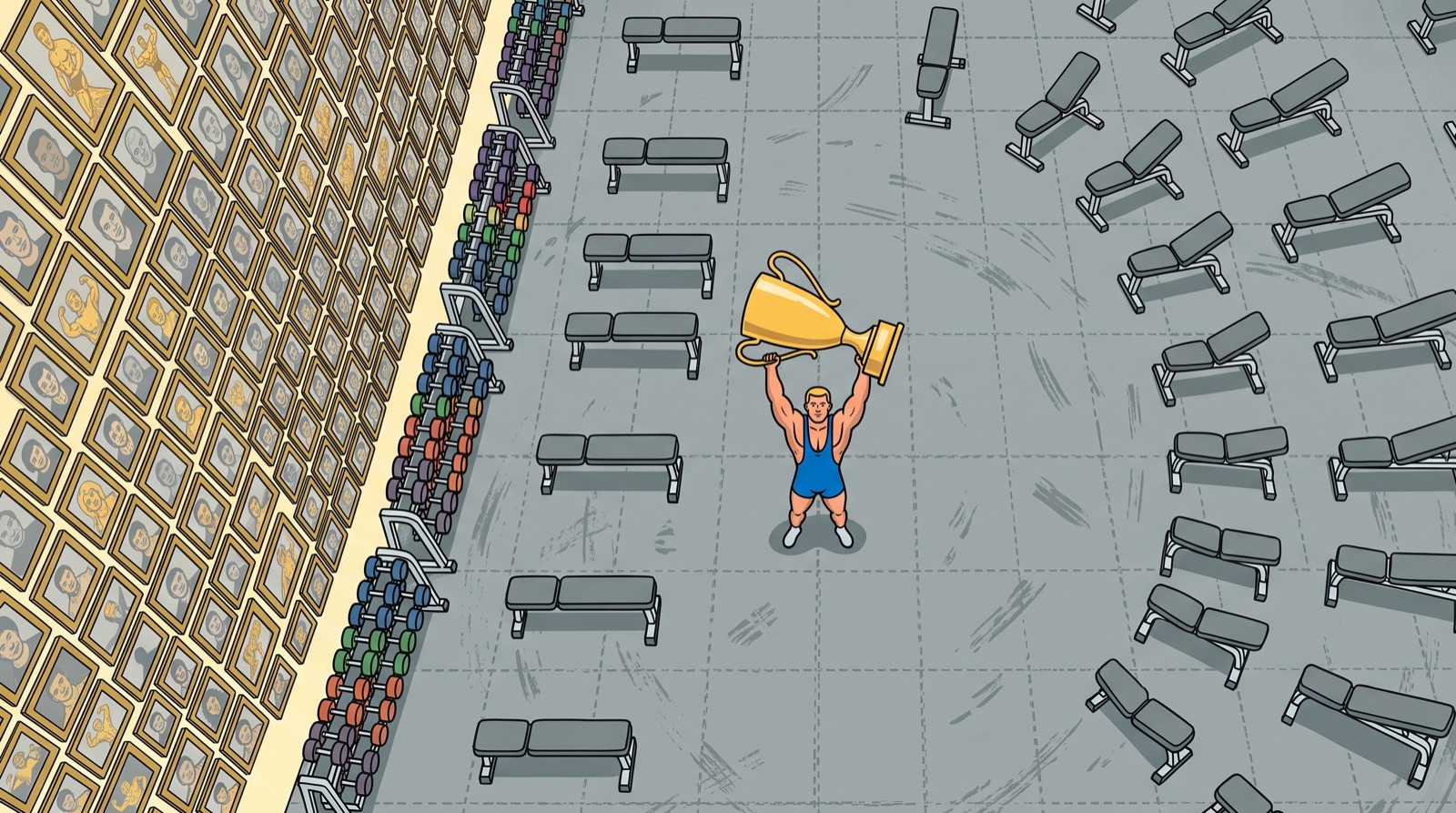 Survivorship Bias
, glossary term, Decision Science.
Survivorship Bias
, glossary term, Decision Science.
 Extrinsic Motivation
, glossary term, Identity.
Extrinsic Motivation
, glossary term, Identity.
 Keystone Habit
, glossary term, Habits.
Keystone Habit
, glossary term, Habits.
 Scarcity Principle
, glossary term, Leadership.
Scarcity Principle
, glossary term, Leadership.
 Executive Function
, glossary term, Learning.
Executive Function
, glossary term, Learning.
 Lion’s Mane
, glossary term, Nutrition.
Lion’s Mane
, glossary term, Nutrition.
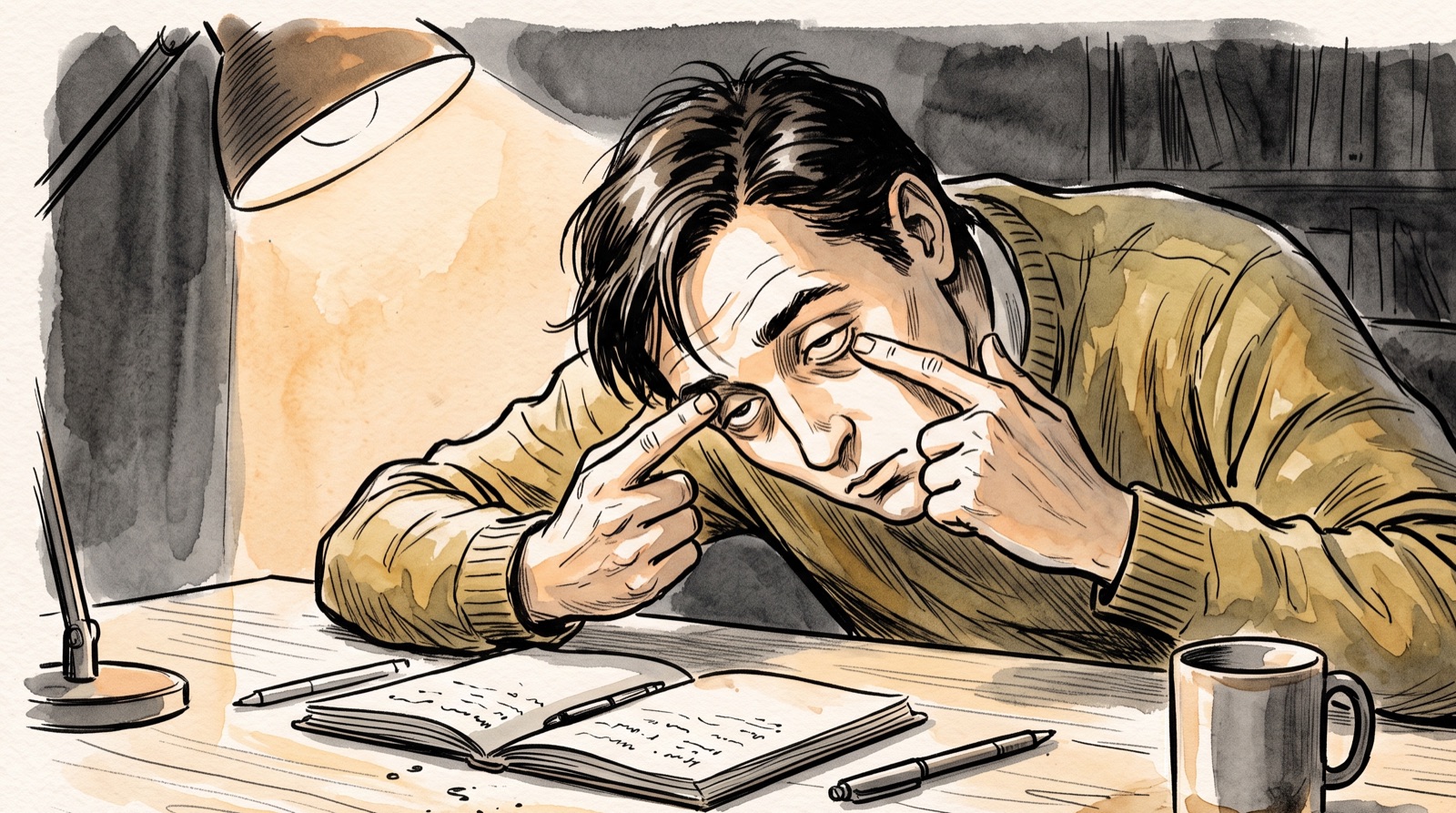 Adenosine
, glossary term, Bio-Performance.
Adenosine
, glossary term, Bio-Performance.
 Tit-for-Tat
, glossary term, Decision Science.
Tit-for-Tat
, glossary term, Decision Science.
 Self-Esteem
, glossary term, Identity.
Self-Esteem
, glossary term, Identity.
 Glycaemic Load
, glossary term, Nutrition.
Glycaemic Load
, glossary term, Nutrition.
 Norepinephrine
, glossary term, Bio-Performance.
Norepinephrine
, glossary term, Bio-Performance.
 Endowment Effect
, glossary term, Decision Science.
Endowment Effect
, glossary term, Decision Science.
 Locus of Control
, glossary term, Identity.
Locus of Control
, glossary term, Identity.
 Postprandial Glucose
, glossary term, Nutrition.
Postprandial Glucose
, glossary term, Nutrition.
 Cold Exposure
, glossary term, Bio-Performance.
Cold Exposure
, glossary term, Bio-Performance.
 Adaptogen
, glossary term, Nutrition.
More in
Adaptogen
, glossary term, Nutrition.
More in the glossary Every term, on the record
Editor’s Picks
GuideLearning
In brief
You prepare for a presentation by reading your slides.
The shortlist
Ten performance fields
The Field Guide
Every field holds a lead story, its routes, and the desk's current picks.Swipe or scroll across all 10 fields. Select one to explore.
Showing 01 of 10, Brain Health & Bio-Performance
HPC · ten performance fields








The Tools
Use the Scan to explore a starting focus, or begin with the 7-Day Baseline. Then choose a practice to follow.
Measure
The Performance Scan
Six systems · 24 questions
One pass over all six systems, in a single sitting.
OutcomeIdentify a system to explore.
- Attention & Focus
- Energy & Recovery
- Consistency & Execution
- Pressure & Regulation
- Decision Quality
- Learning & Adaptation
New here? The Scan can help you choose a focus
Start the scanMeasure
The Self-assessments
Self-assessments with real question banks
Reflect on your reported habits; there are no correct answers.
OutcomeIdentify a pattern to explore.
Establish
The 7-Day Baseline
Seven days · 5–20 minutes a day
A week of small trials at your desk, one a day.
OutcomeA baseline to judge the next ninety against.
- Attention Baseline
- Energy Map
- Recovery Baseline
- Friction Audit
- Focus Trial
- Pressure Map
- Build Your Baseline
Practise
The Protocols
Evidence-graded · daily
A season of practice on one topic, a day at a time.
OutcomeBehaviour change over a season.

Looking for something specific?
New here? The three-minute Performance Scan can suggest a focus, or you can start the 7-Day Baseline directly. Already know what you're after? Search here, or jump straight to it.
The Dispatch

One evidence-graded idea. Every Sunday.
Held to the library's standard, no hype, no affiliate bait, sources on the record.
↑↓ navigate↵ open