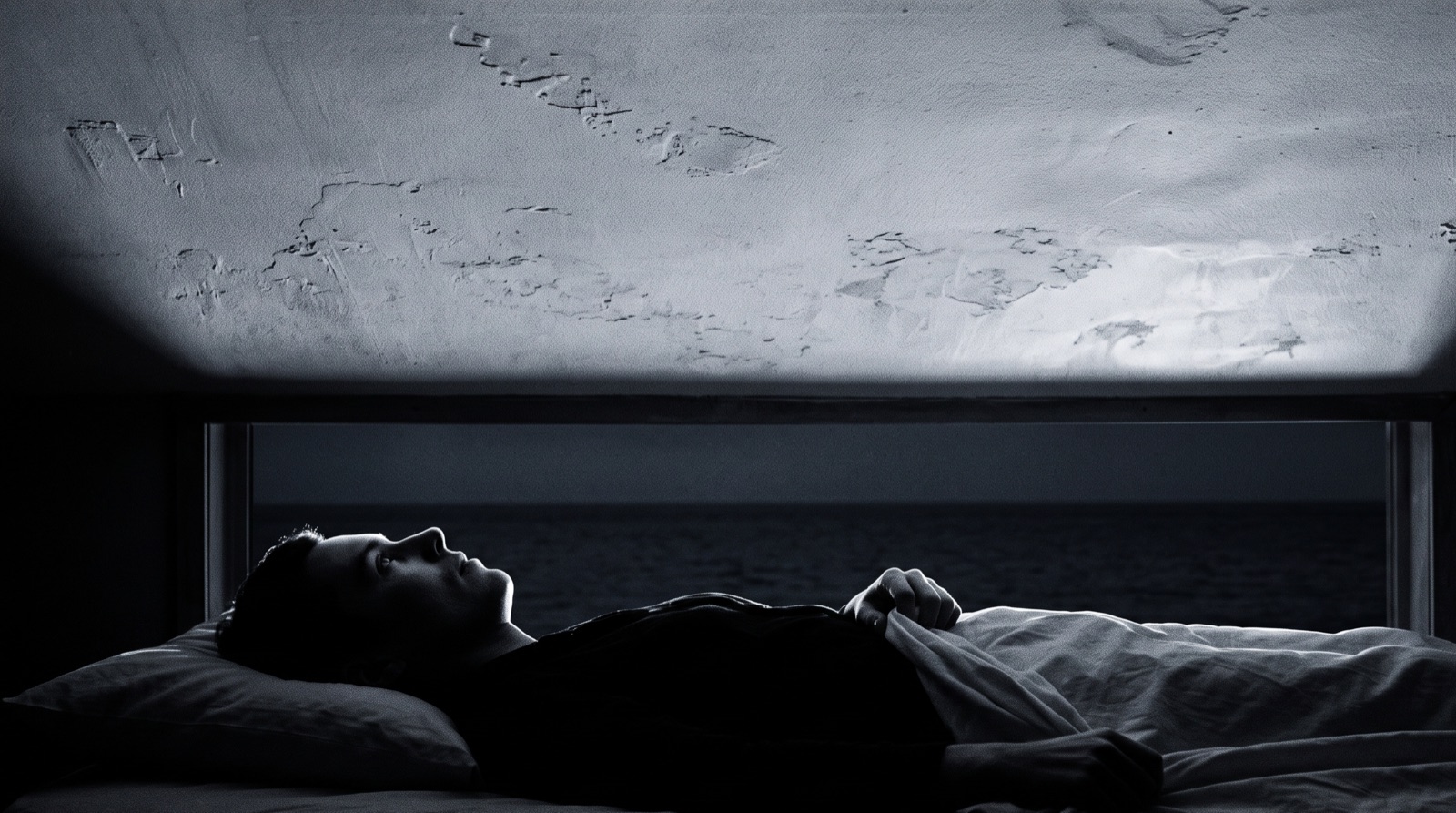
Sleep Onset Latency n.
SOL differs from sleep efficiency (the proportion of time in bed spent asleep) and from MSLT latency, which measures daytime sleepiness rather than overnight sleep initiation.
also known as SOL, sleep latency
The definition
Sleep Onset Latency is the elapsed time from lights-out to the first scored epoch of sleep, measured via polysomnography or estimated from a sleep diary. A standard index of sleep-wake regulation, it typically falls between 10 and 20 minutes in healthy adults; values below 8 minutes indicate pathological sleepiness and values above 30 minutes meet the diagnostic threshold for insomnia.
11.7 min
average daytime sleep latency in healthy adults across 110 MSLT cohorts
ISKANDER ET AL. · 20234
The mechanism
Sleep onset is governed by a mutually inhibitory circuit between wake-promoting arousal neurons and sleep-active neurons in the ventrolateral preoptic area (VLPO) of the hypothalamus3. The two populations suppress each other: when the VLPO gains dominance, arousal tone collapses rapidly, producing the transition from wakefulness to sleep. The speed of this transition is what sleep onset latency measures.
In clinical and research settings, sleep onset is defined as the first epoch of any stage other than wakefulness during a structured assessment1. The Multiple Sleep Latency Test (MSLT) formalises this by offering scheduled nap opportunities across a day and timing how quickly a person transitions to any sleep stage. Across 110 healthy adult cohorts, mean MSLT latency was 11.7 minutes4, establishing the normative reference from which pathological deviations are judged.
SOL is not fixed. A meta-analysis of 169 polysomnographic studies found that latency increases by approximately 1.1 minutes per decade of age2, reflecting a gradual age-related shift in sleep-wake dynamics. Evening light exposure is among the most readily modifiable influences: reading on a light-emitting screen device delays sleep onset by approximately 10 minutes relative to reading a printed book5, pointing to pre-sleep light environments as a modifiable factor in reducing latency.
In practice
Sleep onset latency translates from laboratory metric to lived experience whenever a performer needs to extract recovery from a constrained window.
Worked example
A professional athlete completing an away fixture at 21:30 faces a challenging SOL scenario: internal arousal peaks around the time they need to wind down. Postgame adrenaline, bright arena lighting, and pre-sleep screen use can each push latency above 30 minutes, compressing the total sleep window. Even with eight hours in bed available, a 45-minute onset delay leaves only seven hours and fifteen minutes of actual sleep.
SOL is the overlooked variable: the sleep that counts begins only when onset occurs, not when the light goes out.
Why it matters
SOL sets the effective ceiling on total sleep time in any constrained window. An individual with a latency of 45 minutes and a seven-hour sleep opportunity collects only six and a quarter hours of actual sleep, a shortfall that accumulates across nights. At the clinical extremes, values below 8 minutes indicate pathological sleepiness and values above 30 minutes form part of the diagnostic criteria for insomnia, making SOL one of the few sleep metrics with both objective measurement and clear clinical cutpoints.
Age raises the baseline. A meta-analysis of 169 polysomnographic studies established that SOL lengthens by approximately 1.1 minutes per decade2, underscoring why latency management becomes more relevant as the lifespan advances. Evening light is among the most readily addressable contributors: screen device use before bed delays sleep onset by approximately 10 minutes relative to reading print5. Across the normative reference of 110 MSLT cohorts, mean latency sat at 11.7 minutes4, providing a concrete benchmark for individual comparison.
Questions of record
What is a healthy sleep onset latency?
A healthy sleep onset latency in adults falls between 10 and 20 minutes. Values below 8 minutes point to pathological sleepiness (the body is sleep-deprived or sleep pressure has accumulated beyond normal bounds), while a latency consistently above 30 minutes meets a key diagnostic criterion for insomnia.
Does sleep onset latency increase with age?
Yes. A large meta-analysis of 169 polysomnographic studies found that sleep onset latency increases by roughly 1.1 minutes per decade of age. A 40-year-old can therefore expect a slightly longer latency than at 20, and a 60-year-old longer again, making latency management increasingly relevant with advancing age.
Does screen use at night make it harder to fall asleep?
Yes. Reading on a light-emitting device before bed delays sleep onset by approximately 10 minutes compared with reading a printed book. For someone whose baseline latency sits at 15 minutes, that shift pushes them above 25 minutes and nudges the sleep window meaningfully closer to the insomnia threshold.
What is the difference between sleep onset latency and sleep efficiency?
Sleep onset latency measures how long it takes to fall asleep from lights-out; sleep efficiency measures the proportion of time in bed that is actually spent asleep. Both are quality indicators, but they capture different things: a person can fall asleep quickly yet still have poor efficiency if they wake frequently through the night.