Category 07 / 10 · HiPerformance Culture
Leadership
Teams run on more than talent: they run on presence, candour, and the way decisions get made together.
This collection examines psychological safety, the psychology of power, persuasion and radical candor, tracing what holds up in the research and what is borrowed charisma.
Browse all entries ↓Two-minute wins
Three real starts. No reading list required.Team Flow Assessment: What's Blocking Your Team's Collective Performance?
Go →One findingone sentenceBurnout-driven disengagement is real; conflating it with healthy boundaries is the trend's central error.
Go →First stepstep 01 of 1290-Day Team Flow Protocol: Build the Conditions for Collective Peak Performance
Go →The Best of Leadership
No. 07 · Editorial selection Editor's Pick
Mirror Neurons & Empathy: What the Neuroscience Actually Shows About Reading People
Mirror neurons don't explain empathy alone. Three parallel brain circuits drive social intelligence. Evidence from 52 studies, 1,044 participants.
Also worth your time
- Team Flow: How to Build a Team That Enters Collective Peak Performance States
- Status Games: How Dominance and Prestige Hierarchies Shape Organisations
- Radical Candor: The Complete Framework for High-Stakes Honest Communication
- Persuasion Principles: Cialdini's 7 Influence Frameworks Applied
- Executive Presence: The Evidence-Based System for Gravitas
The concepts this library cites most; New is ordered by publish date.
Long-form investigations
Deep Dives
Long-form investigations with full bibliographies, written to be read and cited.

The Science of Charisma: What Makes Some People Magnetically Compelling
~11 min read
Mirror Neurons and Empathy: The Neural Basis of Reading Other People
~10 min read
The Science of Persuasion: What Cialdini's Research Actually Shows
~12 min read
Power and the Brain: How Authority Changes Your Neurology
~8 min read
The Psychology of Power: What Happens to the Brain When You Gain Authority
~11 min read
Psychological Safety: The Neuroscience Behind Googles Most Important Finding
~8 min read
Attachment Neuroscience: How Early Bonding Patterns Rewire Adult Professional Relationships
~12 min read
The Neuroscience of Loneliness: Why Social Isolation Harms Like Physical Pain
~8 min read
Oxytocin & Trust: The Neuroscience of High-Performance Team Bonding
~8 min read
The Amygdala Hijack in Conflict: Why Rational People Become Irrational Under Social Threat
~8 min read
Anger and the Brain: The Neuroscience of Rage Regulation and When It Serves You
~8 min read
Social Network Neuroscience: How Your Brain Tracks Status, Alliances & Reciprocity
~8 min read
Body Language and the Brain: What Nonverbal Signals Your Nervous System Reads
~8 min read
Mirror Neurons & Empathy: What the Neuroscience Actually Shows About Reading People
~8 min read
Latest Additions
2026-08-23 Leadership - latest
Team Flow: How to Build a Team That Enters Collective Peak Performance States
You have assembled the best people.
Status Games: How Dominance and Prestige Hierarchies Shape Organisations
You have already played a status game today.
Radical Candor: The Complete Framework for High-Stakes Honest Communication
You already know how to give feedback, or at least you think you do.
Persuasion Principles: Cialdini's 7 Influence Frameworks Applied
Every day, you make requests.
Executive Presence: The Evidence-Based System for Gravitas
You have spent years mastering your craft.
Leadership Psychology: The Complete Science of Influence, Teams & Performance
You have probably worked for a bad leader.
Team Flow Assessment: What's Blocking Your Team's Collective Performance?
A 20-scenario, literature-informed structured self-reflection about how you say your team is doing on five conditions linked in the literature to collective peak performance, across five editorial dimensions.
Status Dynamics Assessment: How Are You Playing the Organisational Game?
A 20-scenario, literature-informed structured self-reflection about how you say you navigate organisational status across five editorial dimensions - awareness, strategy, signal reading, capital, and status anxiety.
The newest additions to this pillar, dated as published.
What the evidence says
The findings, in one line each.
The load-bearing conclusions in Leadership, each one traceable to a fully sourced piece. Start here, then go as deep as you like.
Burnout-driven disengagement is real.
Read the breakdown →Expansive postures reliably shift how powerful you feel.
Read the breakdown →Open-plan offices cut face-to-face interaction by ~70% and drive hidden stress.
Read the breakdown →Leading in the Age of Agentic AI: lack experimental validation.
Read the breakdown →The 4-Day Work Week: Wellbeing gains are real and consistent.
Read the breakdown →
Read
The long-form reads: the investigations above, plus goal-organised guides that walk you through.
Practical walkthroughs
Guides
Outcome-organised, do-this-next walkthroughs toward a specific goal. The chapter path is the map.
- Guide
Team Flow: How to Build a Team That Enters Collective Peak Performance States
- The Argument in Brief
- The Short Version
- The Architecture of Team Flow
- Protocols for Building High Performance Teams
- + 9 more chapters
- Guide
Status Games: How Dominance and Prestige Hierarchies Shape Organisations
- The Argument in Brief
- The Short Version
- Dominance vs Prestige: Two Pathways to Social Rank
- Protocols for Shifting from Dominance to Prestige
- + 9 more chapters
- Guide
Radical Candor: The Complete Framework for High-Stakes Honest Communication
- The Argument in Brief
- The Short Version
- The Science of Feedback: What Radical Candor Actually Is
- How to Give Feedback: Protocols, Techniques, and Worked Examples
- + 9 more chapters
- Guide
Persuasion Principles: Cialdini's 7 Influence Frameworks Applied
- The Argument in Brief
- The Short Version
- Cialdini's 7 Influence Principles
- Protocols for Ethical Influence
- + 9 more chapters
- Guide
Executive Presence: The Evidence-Based System for Gravitas
- The Argument in Brief
- The Short Version
- What Executive Presence Actually Is
- How to Build Executive Presence Through Deliberate Practice
- + 9 more chapters
- Guide
Leadership Psychology: The Complete Science of Influence, Teams & Performance
- The Argument in Brief
- The Short Version
- What Leadership Psychology Actually Is
- Protocols, Exercises & Coaching Frameworks
- + 9 more chapters
Reference
Look it up fast: every concept defined and traced, and the whole topic compressed onto a card.
Defined terms
Glossary
Every concept in the category, in plain language and traced to its source, each with its own picture.
 Leadership
Accountability
Accountability is the perceived obligation to explain, justify, and bear consequences for one's decisions and outcomes before an identifiable audience.
 Leadership
Active Listening
Active listening is a communication practice in which the listener fully attends to both the verbal content and emotional tone of a speaker's message, reflects understanding back, and withholds judgement.
 Leadership
Authentic Leadership
Authentic leadership defined: the four-component model of self-awareness, balanced processing, relational transparency, and internalised moral perspective.
 Leadership
Authority Bias
Authority bias is the cognitive tendency to over-weight authority figures' opinions and comply with their directives, regardless of reasoning quality.
 Leadership
Bystander Effect
The bystander effect is the well-documented tendency for individuals to be less likely to intervene in an emergency when other people are present.
 Leadership
Cialdini's Six Principles of Persuasion
Cialdini's Six Principles of Persuasion are six evidence-based influence levers: reciprocity, commitment, social proof, authority, liking, and scarcity.
 Leadership
Collective Intelligence
Collective intelligence is a group's measurable capacity across varied tasks, driven more by social sensitivity and turn-taking than individual IQ.
 Leadership
Conflict Resolution
Conflict resolution is the process by which opposing parties reach a mutually acceptable settlement of a dispute through negotiation, mediation, or behavioural strategy selection.
 Leadership
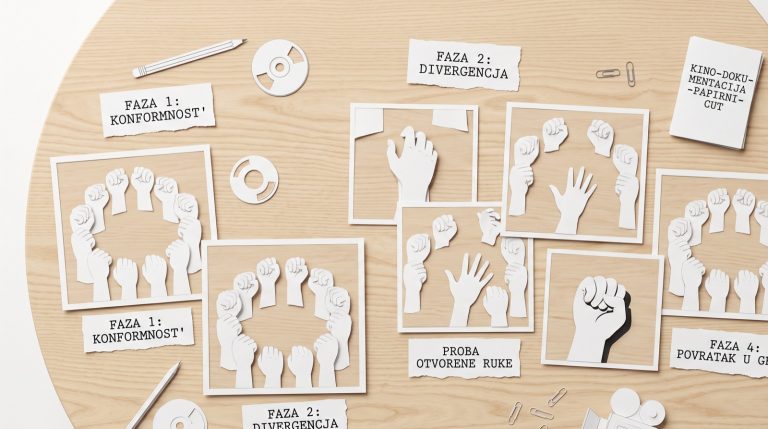
Conformity
Conformity is the process by which individuals adjust their attitudes, beliefs, or behaviour to match those of a group, even when the group position conflicts with their private judgement.
 Leadership
Delegation
Delegation is the deliberate transfer of authority, responsibility, and decision-making power from a leader to a subordinate for a defined task or domain.
 Leadership
Difficult Conversations
Difficult conversations are high-stakes exchanges in which disagreement, emotion, or threat to personal identity generates anxiety and prompts avoidance.
 Leadership
Executive Coaching
Executive coaching is a structured one-to-one development relationship between a professional coach and a leader or manager, designed to improve performance, goal attainment, and organisational effectiveness.
 Leadership
Executive Presence
Executive presence is the cluster of behavioural signals that lead observers to perceive someone as a credible, confident, and capable leader worth following.
 Leadership
Five Dysfunctions of a Team
Five Dysfunctions of a Team is Lencioni's pyramid model of five hierarchical failures that block collective performance, rooted in absent trust.
 Leadership
Gravitas
Gravitas is the quality of commanding authority and inspiring trust through confidence, composure, and clarity: the core of executive presence.
 Leadership
Groupthink
Groupthink is a psychological phenomenon in which the desire for harmony and conformity within a cohesive group overrides realistic appraisal of alternatives.
 Leadership
Mirror Neurons
Mirror neurons are a class of cells first identified in the macaque premotor cortex that fire both when an animal executes a goal-directed action and when it observes the same action performed by another.
 Leadership
Nonviolent Communication (NVC)
Nonviolent Communication (NVC): Rosenberg's four-step conflict framework.
 Leadership
Obedience
Obedience is the social influence process by which an individual complies with the explicit directives of a perceived authority figure, even when those directives conflict with personal conscience or ethical judgement.
 Leadership
Psychological Safety
Psychological safety is a shared team-level belief that members can speak up, ask questions, and acknowledge mistakes without fear of ridicule or punishment.
 Leadership
Radical Candor
Radical Candor is a leadership framework developed by Kim Scott that defines effective management as the intersection of caring personally and challenging directly.
 Leadership
Reciprocity Principle
The reciprocity principle is the social norm compelling return of favours.
 Leadership
Scarcity Principle
The scarcity principle is the psychological tendency to assign greater value to things perceived as rare or limited in availability.
 Leadership
Servant Leadership
Servant leadership is a leadership philosophy in which the leader's primary role is to serve others, placing the growth, wellbeing, and needs of followers above personal status or institutional power.
 Leadership
Situational Leadership
Situational Leadership: Hersey and Blanchard's four-style model for matching leader behaviour to follower development level.
 Leadership
Social Identity Theory
Social identity theory is a social-psychological framework, developed by Henri Tajfel and John Turner, proposing that people derive a significant part of their self-concept from the social groups to which they belong.
 Leadership
Social Proof
Social proof is the psychological tendency to use others' behaviour as evidence of correct action, especially under uncertainty or ambiguity.
 Leadership
Transformational Leadership
Bass's Four-I model of transformational leadership: definition, mechanisms, performance evidence, and how to measure and develop it.
 Leadership
Tuckman's Stages
Tuckman's Stages is a five-phase model of group development that helps leaders diagnose team maturity and adapt their leadership approach for each phase.
Practice
Turn the evidence into something you can run, then see where you stand.
Run the science
Protocols
Step-by-step routines that turn the evidence into a practice you can run. The shape of each method is its blueprint.
- Protocol
90-Day Team Flow Protocol: Build the Conditions for Collective Peak Performance
A 90-day programme for cultivating the conditions of team flow, grounded in the science of psychological safety, team cognition, flow, and trust
- Foundation
- Optimisation
- Mastery
- Protocol
90-Day Status Games Protocol: Navigate Organisational Power With Clarity
A 90-day programme for navigating status honestly, grounded in the science of social rank, dominance and prestige, and earned respect
- Foundation
- Optimisation
- Mastery
- Protocol
90-Day Radical Candor Protocol: Build a Culture of High-Performance Feedback
A 90-day programme for giving feedback with care and candor, grounded in the science of leadership, feedback, psychological safety, and trust
- Foundation
- Optimisation
- Mastery
- Protocol
90-Day Persuasion Protocol: Master Ethical Influence Through Practice
A 90-day programme for ethical persuasion and influence, grounded in the science of compliance, social influence, and reactance
- Foundation
- Optimisation
- Mastery
- Protocol
90-Day Executive Presence Protocol: Build Gravitas, Authority & Visibility
A 90-day programme for building executive presence, grounded in the psychology of composure, warmth, competence, and influence
- Foundation
- Optimisation
- Mastery
Locate yourself
Assessments
Short self-tests that place you on the evidence and personalise the path. Each one is an instrument you operate.
- Assessment
Team Flow Assessment: What's Blocking Your Team's Collective Performance?
Measures: Team Flow Profile
Take the test → - Assessment
Status Dynamics Assessment: How Are You Playing the Organisational Game?
Measures: Status Dynamics Profile
Take the test → - Assessment
Feedback Style Quiz: Where Does Your Approach Fall on the Candor Matrix?
Measures: Feedback Style Profile
Take the test → - Assessment
Influence Style Quiz: Which Persuasion Approaches Suit Your Leadership?
Measures: Leadership Influence Profile
Take the test → - Assessment
Leadership Presence Quiz: What's Limiting Your Executive Impact?
Measures: Executive Presence Gaps
Take the test →
Verdicts
The folklore and the latest hype, run against the research and stamped.
Hype vs evidence
Trends
We weigh the claim against the science and stamp a verdict. The verdict is the headline.
- Trend verdictJun 2026
Burnout-driven disengagement is real; conflating it with healthy boundaries is the trend's central error.
What Is Quiet Quitting? Disengagement vs Healthy Boundaries, Scored
5 sources scored - Trend verdictJun 2026
Expansive postures reliably shift how powerful you feel; the hormone claims are thoroughly debunked.
Does power posing really boost confidence? The evidence reviewed
5 sources scored - Trend verdictJun 2026
Open-plan offices cut face-to-face interaction by ~70% and drive hidden stress; collaboration gains do not materialise.
Are Open-Plan Offices Bad for Collaboration? The Evidence
5 sources scored - Trend verdictJun 2026
Agentic AI creates real psychological disruption; prescribed leadership fixes lack experimental validation.
Leading in the Age of Agentic AI: The Psychological Shifts That Demand New AI Leadership Skills
5 sources scored - Trend verdictJun 2026
Wellbeing gains are real and consistent; maintained output is plausible but mostly self-reported.
The 4-Day Work Week: Does Output Hold When You Cut a Day?
5 sources scored
The Dispatch
The evidence dispatch
What changed in the science, what we re-reviewed, and the one finding worth your attention. Kept private, no spam, ever. Unsubscribe in one click.
Keep exploring
The rest of the field.
Leadership is one of ten categories. Jump to a sibling, or browse a format across every topic.