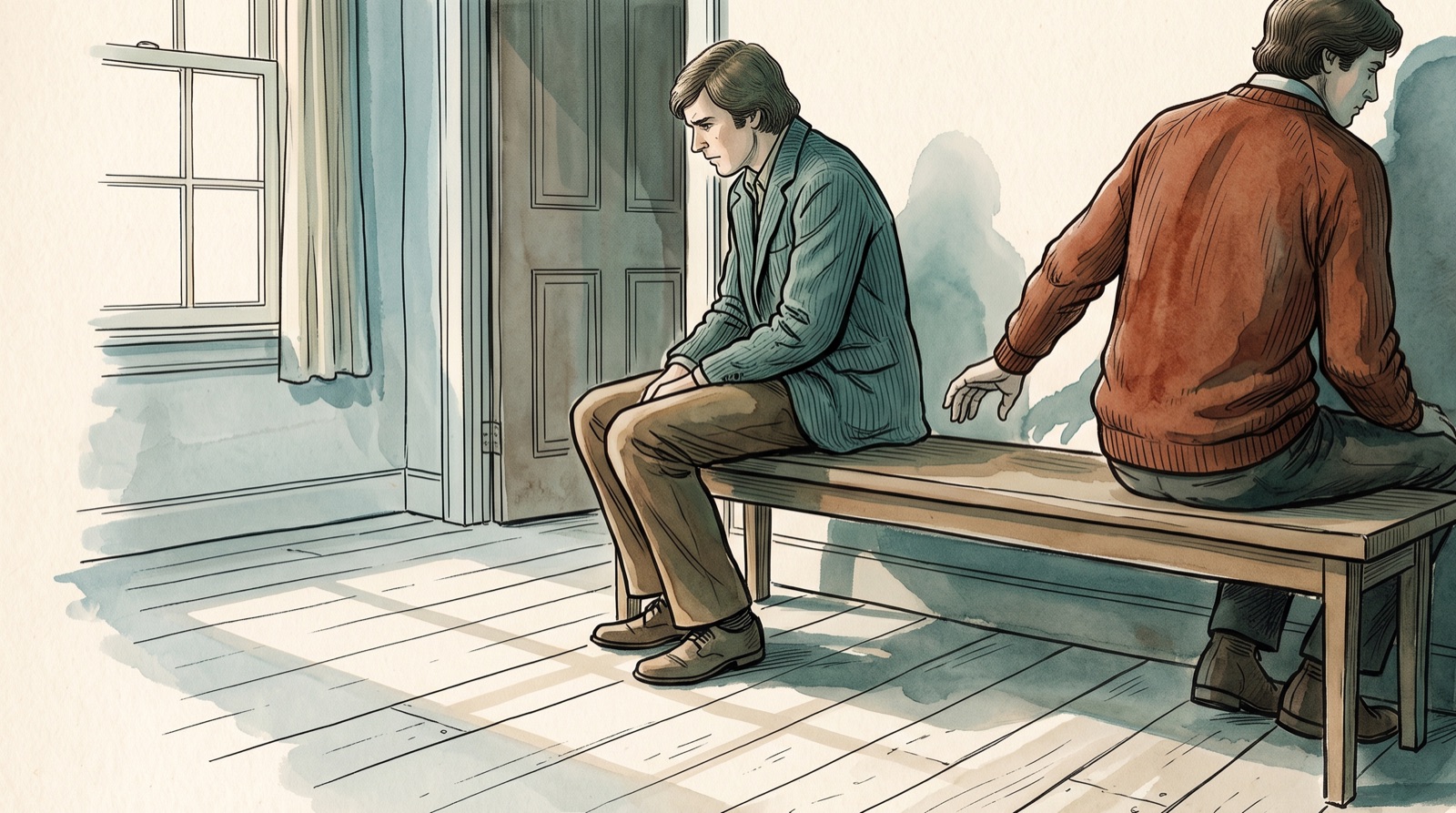
Difficult Conversations n.
The term is sometimes conflated with crucial conversations (Patterson et al.), a related but distinct framework emphasising shared purpose and mutual respect as conversation prerequisites.
The definition
Difficult conversations are high-stakes interpersonal exchanges in which disagreement, emotion, or a threat to personal identity generates sufficient anxiety to prompt avoidance or defensive escalation. Stone, Patton and Heen identify three concurrent sub-conversations running beneath the surface of any such exchange: a dispute about what happened, an emotional undercurrent, and a challenge to one's identity.
The mechanism
Stone, Patton and Heen's framework holds that every difficult conversation operates simultaneously on three distinct layers1. The 'What Happened' conversation centres on disputed facts, attributions of intent, and the allocation of blame; the authors argue that shifting from blame to contribution analysis is the foundational move, because each party's actions typically contribute to the impasse rather than one side bearing sole responsibility. The feelings conversation acknowledges that most difficult exchanges are emotionally driven at their core: unacknowledged emotions surface as leakage or derailment, undermining substantive resolution even when the factual dispute appears settled. The identity conversation is the layer that generates the most defensiveness, posing an implicit question about what the exchange reveals about each participant's competence, values, or character.
Avoidance is the most common response to anticipated difficulty, but Sun and Slepian's work distinguishes two motivationally separate pathways3. When avoidance is driven by conflict concern, it produces activating emotions such as annoyance and frustration that push participants toward exiting the conversation altogether. When driven by privacy concern, it produces inhibiting emotions such as anxiety, resulting in silence rather than withdrawal. Both pathways prevent resolution; the difference is that conflict-driven avoidance tends to escalate, while privacy-driven avoidance tends to fester. Psychological safety, the shared belief that a group or relationship is safe for interpersonal risk-taking, determines whether participants feel able to raise identity-threatening topics without triggering defensive withdrawal2.
In practice
The three-layer model becomes concrete when a performance shortfall conversation between a manager and a direct report is examined.
Worked example
A manager approaches a team member about missed deadlines. The manager believes the issue is a lack of urgency; the team member fears the conversation is really about their competence. Neither names this directly. The manager focuses on process solutions, the team member agrees to surface commitments, but without naming the identity threat on both sides, the conversation concludes without genuine resolution or changed behaviour.
Explicitly naming each sub-conversation would transform this from a surface-level performance review into the kind of exchange that produces genuine understanding.
Why it matters
Persistent avoidance of difficult conversations carries measurable costs. Unresolved tensions accumulate and erode trust, producing greater psychological distress, declining relationship satisfaction, and reduced team learning behaviour over time32. The cost is not merely interpersonal: teams without the psychological safety to surface difficult topics cannot learn from errors, adjust course, or build the collective candour that high performance requires. An unaddressed conflict is not neutral; it is active, shaping perceptions and decisions in ways that compound the original problem.
The case for structured engagement is supported by training evidence. Professionals trained in planning, opening, and conducting difficult conversations report measurable improvements in teamwork, productivity, and personal satisfaction4. The practical implication is that conversational competence is learnable: the three-sub-conversation model gives participants a cognitive map to orient themselves before the exchange begins, reducing the chance that unacknowledged emotions or unexamined identity fears derail what could otherwise be a productive exchange.
Questions of record
What are the three conversations in a difficult conversation?
Stone, Patton and Heen identify three simultaneous sub-conversations: the 'What Happened' conversation (about facts, intent, and blame), the feelings conversation (about the emotions each party carries), and the identity conversation (about what the exchange implies for each person's sense of self). Managing all three is necessary for resolution.
Why do people avoid difficult conversations even when avoidance makes things worse?
Avoidance is driven by two distinct motivations: conflict concern, which produces activating emotions like frustration and pushes people to exit, and privacy concern, which produces inhibiting emotions like anxiety that result in silence. Both responses feel protective in the moment but allow tensions to accumulate and compound.
How do you start a difficult conversation without it becoming a confrontation?
Reframe the opening from a positional assertion ('You need to change X') to a perspective inquiry ('Help me understand how you see X'). This shift signals joint problem-solving rather than debate, reduces the identity threat for both parties, and creates the conditions for productive exchange.
What is the difference between difficult conversations and crucial conversations?
Both terms describe high-stakes exchanges where avoidance is tempting and the cost of failure is significant. 'Difficult conversations' (Stone, Patton and Heen) emphasises the three-layer psychological model beneath the surface. 'Crucial conversations' (Patterson et al.) is a related but distinct training framework that centres on mutual purpose and creating shared meaning.