Habit Loops
Much of what you do each day runs on autopilot: a cue fires, a routine follows, a reward seals the circuit.
This collection maps that loop from basal ganglia wiring to operant conditioning and behaviour change science, testing popular claims, including how long a habit really takes to form, against the published record.
newest 7 Aug 2026
 Most read here · Trend breakdown
Does it really take 21 days to build a habit? →
Most read here · Trend breakdown
Does it really take 21 days to build a habit? →
Editor's Pick · Habit Loops
Behaviour Change Science: The Mechanisms Behind Why Habits Form and Break
The neuroscience of behavior change: why habits take 66 days to form, how stress hijacks them, and what 52 peer-reviewed studies reveal about lasting change.
Deep dive · 18 Jun 2026
A route through this shelf
Reading order
Measure yourself
Habit Strength Quiz: Which Cues and Rewards Are Driving Your Behaviour?Get a baseline before you change anything. 20 questions; scored on real dimensions.
Read the evidence
Behaviour Change Science: The Mechanisms Behind Why Habits Form and BreakThe evidence in full, 50 references on the record.
Apply it
90-Day Habit Loop Protocol: Engineer 3 High-Impact Habits From ScratchA written method to run: 12 weeks.
Check the hype
Do Keystone Habits Work? The Science Behind Habit CascadesKeystone habits produce real but inconsistent spillover; the guaranteed cascade is not supported by evidence.
The complete shelf, unpaginated
Holdings
Deep Dives
Long-form investigations with full bibliographies.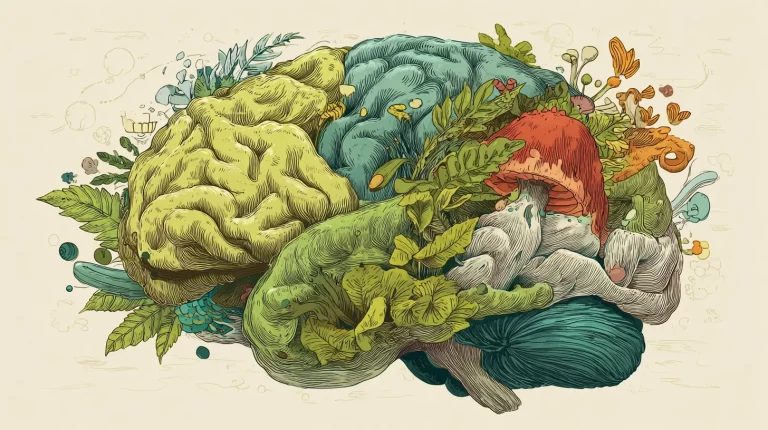 The Neuroscience of Habits: How the Basal Ganglia Automates BehaviourThe neuroscience of habits explained: how dopamine, the basal ganglia, and corticostriatal circuits turn deliberate actions into automatic routines.Deep dive · 18 Jun 2026
 Behaviour Change Science: The Mechanisms Behind Why Habits Form and BreakThe neuroscience of behavior change: why habits take 66 days to form, how stress hijacks them, and what 52 peer-reviewed studies reveal about lasting change.Deep dive · 18 Jun 2026
 The Habit Loop: How Cue-Routine-Reward Creates Automatic BehaviorThe neuroscience of habit loops: how cue-routine-reward wires behavior into basal ganglia circuits. 31 peer-reviewed sources on habit formation science.Deep dive · 18 Jun 2026
Guides
Structured, chaptered field manuals.
Protocols
Multi-week programmes with a written method.
Assessments
Scored self-assessments with real question banks.
Trend Breakdowns
Claims from the feed, checked against their sources. Do Keystone Habits Work? The Science Behind Habit CascadesKeystone habits produce real but inconsistent spillover; the guaranteed cascade is not supported by evidence.5 sources scored · 19 Jun 2026
 Habit Stacking: Does Anchoring New Habits to Old Ones Actually Work?Cue-anchoring works for habit initiation, but formation timelines are far more variable than popular frameworks suggest.6 sources scored · 18 Jun 2026
- Does it really take 21 days to build a habit?The 21-day figure is a myth: controlled research puts median habit formation at 66 days, ranging from 18 to 335.5 sources scored · 18 Jun 2026
Glossary
Defined terms, each with its own entry. Reward System: Definition and the Brain Architecture of ReinforcementThe reward system is the brain's mesolimbic dopamine circuit that encodes prediction errors and drives reinforcement learning and habit formation.Glossary term · 18 Jun 2026
 Operant Conditioning: Skinner's Definition and the Reinforcement-Schedules SystemOperant conditioning shapes voluntary behaviour through its consequences. Skinner's reinforcement schedules, extinction, and habit formation explained.Glossary term · 18 Jun 2026
 Habit Loop: Duhigg's Definition and the Cue-Routine-Reward ArchitectureThe habit loop is the neurological cycle of cue, routine, and reward that automates daily behaviour. Understand the mechanism and how to change it.Glossary term · 18 Jun 2026
 Classical Conditioning: Definition, Mechanism and How Pavlovian Learning Shapes HabitsClassical conditioning explains how neutral cues become automatic triggers. The science behind habits, phobias, drug cravings, and exposure-based therapy.Glossary term · 18 Jun 2026
 Basal Ganglia: Definition, Function and Role in Habit FormationThe basal ganglia are subcortical nuclei that convert deliberate action into automatic habit through dopamine-driven chunking of routine sequences.Glossary term · 18 Jun 2026
Search Console, latest pull
Most read on this shelf
- Does it really take 21 days to build a habit?Trend breakdown
- Do Keystone Habits Work? The Science Behind Habit CascadesTrend breakdown
- Behaviour Change Science: The Mechanisms Behind Why Habits Form and BreakDeep dive
- Reward SystemGlossary term
- Habit Stacking: Does Anchoring New Habits to Old Ones Actually Work?Trend breakdown