Category 03 / 10 · HiPerformance Culture
Decisions
Judgement fails in predictable ways, and knowing the failure modes is the first defence.
This pillar covers the science of high-stakes decisions, from the anchoring effect and confirmation bias to game theory and probabilistic thinking. Mental models and frameworks are weighed against the research, not repeated because they sound clever.
Browse all entries ↓Two-minute wins
Three real starts. No reading list required.Decision Fatigue Test: How Well Are You Managing Choice Overload?
Go →One findingone sentenceChoice overload is real, but only under four specific conditions; the universal effect has near-zero evidence.
Go →First stepstep 01 of 1290-Day Probabilistic Thinking Protocol: Build Bayesian Intuition
Go →The Best of Decisions
No. 03 · Editorial selection Editor's Pick
The Framing Effect: How Identical Information Changes Your Decisions
The framing effect changes decisions by 50 percentage points. The neuroscience of why identical information produces opposite choices, and how to override it.
Also worth your time
- Do Premortems Work? The Science of Imagining Failure Before It Happens
- Cognitive Bias Test: Which Thinking Errors Hijack Your Decisions?
- What Is Choice Overload? Do Too Many Options Really Backfire?
- The Overconfidence Effect: Why Experts Are Wrong More Often Than They Think
- Calibration Test: How Well-Calibrated Are Your Predictions?
- Decision Fatigue Test: How Well Are You Managing Choice Overload?
- Game Theory for Performance: Nash Equilibria & Real-World Advantage
- The Decision-Making Framework: Build Your Complete Mental Operating System
- The OODA Loop: Observe-Orient-Decide-Act for Competitive Advantage
- Mental Models List: 20 Cross-Disciplinary Thinking Tools for Elite Decision-Making
The concepts this library cites most; New is ordered by publish date.
Long-form investigations
Deep Dives
Long-form investigations with full bibliographies, written to be read and cited.
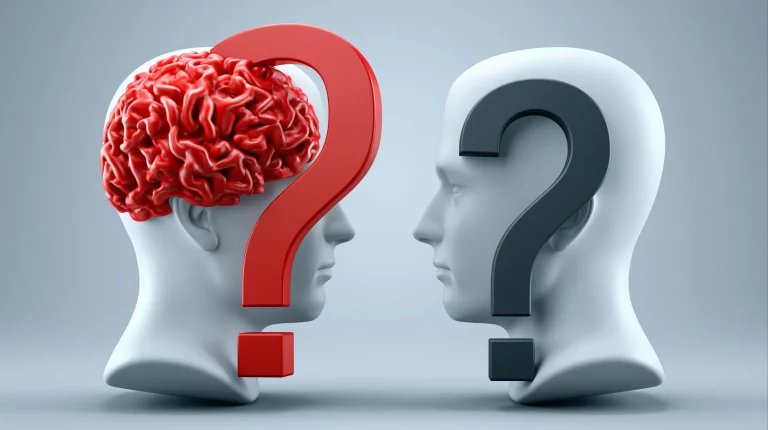
Cognitive Dissonance: The Psychology of Belief Conflict & Attitude Change
~13 min read
The Anchoring Effect: How the First Number You Hear Hijacks Every Decision After
~10 min read
The Availability Heuristic: Why Vivid Events Feel More Likely Than They Are
~10 min read
Confirmation Bias: The Neuroscience of Motivated Reasoning & Selective Evidence
~9 min read
Why Incompetence Feels Like Competence: The Dunning-Kruger Effect Examined
~10 min read
The Overconfidence Effect: Why Experts Are Wrong More Often Than They Think
~8 min read
The Placebo Effect: The Neuroscience of How Belief Physically Changes Biology
~12 min read
The Framing Effect: How Identical Information Changes Your Decisions
~8 min read
Why We Keep Throwing Good Resources After Bad: The Sunk Cost Fallacy Examined
~11 min read
First Principles Thinking: The Neuroscience of Reasoning from Ground Truth
~8 min read
Latest Additions
2026-08-18 Decisions - latest
Decision Fatigue Test: How Well Are You Managing Choice Overload?
A 20-scenario, literature-informed structured self-reflection across five dimensions of decision load - how much you're carrying, whether you notice the signs of strain, how well you simplify repeat choices, how you time consequential decisions, and how much you delegate or eliminate outright. This adds up your selected answers about decision-making habits and systems; it is not a real-time test of judgement quality.
Game Theory for Performance: Nash Equilibria & Real-World Advantage
You make dozens of strategic decisions every week, negotiations, resource allocations, competitive positioning, team coordination.
The Decision-Making Framework: Build Your Complete Mental Operating System
Every day, you make hundreds of consequential choices, what to prioritise, whom to trust, where to invest your time and capital.
The OODA Loop: Observe-Orient-Decide-Act for Competitive Advantage
You've been taught that good decisions come from careful analysis, weigh the options, calculate the risks, choose the best path.
Probabilistic Thinking: Reasoning Under Uncertainty With Bayesian Logic
You make thousands of decisions under uncertainty every year, and most of them wrong, for a specific and fixable reason.
Mental Models List: 20 Cross-Disciplinary Thinking Tools for Elite Decision-Making
Your brain defaults to pattern-matching shortcuts that were well-suited for ancestral environments and that produce predictable errors in modern decision contexts: allocating capital, hiring executives, managing complex relationships.
Cognitive Biases: The Field Guide to Thinking Errors and Debiasing Under Pressure
You make approximately 35,000 decisions per day, and the vast majority happen without conscious deliberation.
Calibration Test: How Well-Calibrated Are Your Predictions?
A 20-scenario, literature-informed structured self-reflection across five dimensions of probabilistic thinking - confidence calibration, base-rate use, outside-view discipline, belief updating, and overconfidence patterns.
The newest additions to this pillar, dated as published.
What the evidence says
The findings, in one line each.
The load-bearing conclusions in Decisions, each one traceable to a fully sourced piece. Start here, then go as deep as you like.
The first number you hear anchors every judgment that follows, even when you know it is arbitrary.
Read the investigation →The sunk-cost fallacy is wired into loss-aversion circuitry, which is why knowing about it rarely stops you.
Read the investigation →Experts are wrong more often than they think: confidence and accuracy are only loosely coupled.
Read the investigation →Identical information produces opposite decisions depending only on how it is framed.
Read the investigation →Confirmation bias runs your reasoning by default; overriding it takes deliberate, structured doubt.
Read the investigation →
Read
The long-form reads: the investigations above, plus goal-organised guides that walk you through.
Practical walkthroughs
Guides
Outcome-organised, do-this-next walkthroughs toward a specific goal. The chapter path is the map.
- Guide
Game Theory for Performance: Nash Equilibria & Real-World Advantage
- The Argument in Brief
- The Short Version
- Core Framework: The Architecture of Strategic Interaction
- Practical Application: Protocols for Strategic Advantage
- + 9 more chapters
- Guide
The Decision-Making Framework: Build Your Complete Mental Operating System
- The Argument in Brief
- The Short Version
- Core Framework: What the Decision Making Process Actually Is and How It Works
- Practical Application: Protocols That Upgrade Your Decision Making Process
- + 9 more chapters
- Guide
The OODA Loop: Observe-Orient-Decide-Act for Competitive Advantage
- The Argument in Brief
- The Short Version
- What the OODA Loop Actually Is
- How to Apply the OODA Loop
- + 9 more chapters
- Guide
Probabilistic Thinking: Reasoning Under Uncertainty With Bayesian Logic
- The Argument in Brief
- The Short Version
- Core Framework of Bayesian Thinking
- Practical Application of Bayesian Thinking
- + 9 more chapters
- Guide
Mental Models List: 20 Cross-Disciplinary Thinking Tools for Elite Decision-Making
- The Argument in Brief
- The Short Version
- What a Mental Models List Actually Is and How It Works
- How to Use a Mental Models List in Practice
- + 9 more chapters
- Guide
Cognitive Biases: The Field Guide to Thinking Errors and Debiasing Under Pressure
- The Argument in Brief
- The Short Version
- What Cognitive Biases Actually Are and How They Work
- Evidence-Based Techniques That Actually Work
- + 9 more chapters
Reference
Look it up fast: every concept defined and traced, and the whole topic compressed onto a card.
Defined terms
Glossary
Every concept in the category, in plain language and traced to its source, each with its own picture.
 Decisions
Anchoring Bias
The first number you meet pulls every later estimate toward it, even when it is arbitrary.
 Decisions
Antifragility
Antifragility is the property of a system that gains capability or value from exposure to volatility, stress, or disorder, rather than merely surviving it.
 Decisions
Availability Heuristic
You judge how likely something is by how easily an example springs to mind.
 Decisions
Bandwagon Effect
A belief or behaviour spreads as more people adopt it, regardless of its merit.
 Decisions
Bayes' Theorem
A rule for updating a belief by combining its prior odds with the strength of new evidence.
 Decisions
Black Swan
Black swan is a term coined by Nassim Nicholas Taleb to describe a rare, unpredictable event carrying extreme consequences yet rationalised as foreseeable only in hindsight.
 Decisions
Cognitive Dissonance
The discomfort of holding conflicting beliefs, which pushes us to rationalize one away.
 Decisions
Confirmation Bias
You seek and weight evidence that fits what you already believe, and wave the rest away.
 Decisions
Dunning-Kruger Effect
The least skilled often overrate themselves, because the skill to judge is the skill they lack.
 Decisions
Endowment Effect
Endowment effect is a cognitive bias in which people assign disproportionately higher value to objects they own compared to identical objects they do not own.
 Decisions
Expected Value
Expected value is the probability-weighted average of all possible outcomes of a decision, computed by multiplying each outcome's magnitude by its probability of occurring and summing the results.
 Decisions
First Principles Thinking
Reasoning up from what must be true, rather than down from analogy or convention.
 Decisions
Framing Effect
The same facts drive different choices depending only on how they are worded.
 Decisions
Fundamental Attribution Error
Fundamental attribution error is the tendency to over-attribute other people's behaviour to character or personality while discounting situational forces.
 Decisions
Halo Effect
The halo effect is a cognitive bias in which a single salient positive impression of a person distorts judgements about their unrelated qualities.
 Decisions
Hanlon's Razor
Hanlon's Razor is a cognitive heuristic advising that one should never attribute to malice what can be adequately explained by incompetence, negligence, or error.
 Decisions
Hindsight Bias
Hindsight bias is the tendency to believe, after learning an outcome, that one would have predicted it beforehand.
 Decisions
IKEA Effect
The IKEA effect is a cognitive bias in which people assign disproportionately higher value to products they have partially assembled themselves.
 Decisions
Inversion
Inversion is the mental model that reasons backwards from failure rather than forwards to success, surfacing risks optimism systematically hides.
 Decisions
Loss Aversion
Losses loom larger than equivalent gains, so we work harder to avoid them than to win.
 Decisions
Mere Exposure Effect
The mere exposure effect is the bias whereby repeated contact with a stimulus generates preference for it, independent of its actual quality.
 Decisions
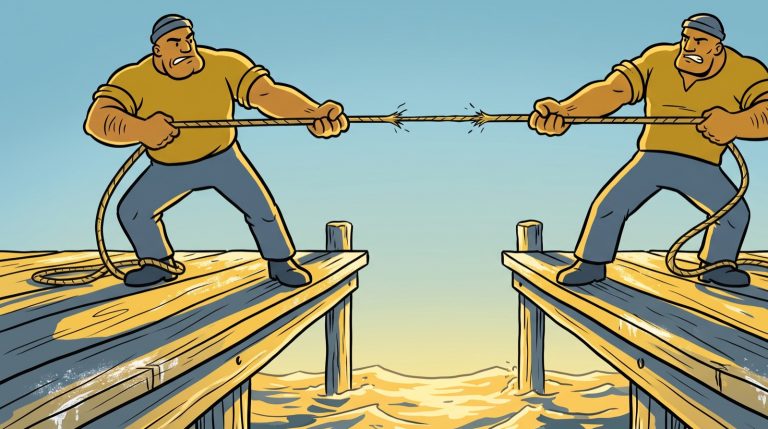
Nash Equilibrium
Nash equilibrium is a solution concept in non-cooperative game theory in which no player can improve their outcome by unilaterally changing their strategy, given the strategies chosen by all other players.
 Decisions
Negativity Bias
Negativity bias is the cognitive tendency for negative events, emotions, and information to exert a disproportionately greater influence on thought, behaviour, and memory than equivalent positive experiences.
 Decisions
Occam's Razor
Occam's razor is the principle of parsimony, which holds that when two explanations account for the same evidence equally well, the simpler one should be preferred.
 Decisions
OODA Loop
OODA loop is a four-stage decision cycle developed by United States Air Force Colonel John Boyd to model how individuals and organisations process competing information under pressure.
 Decisions
Opportunity Cost
Opportunity cost is the value of the best foregone alternative whenever a choice is made.
 Decisions
Optimism Bias
We expect good outcomes for ourselves more readily than the base rates justify.
 Decisions
Overconfidence Bias
Our confidence in our own judgments routinely outruns how accurate they actually are.
 Decisions
Pareto Principle (80/20 Rule)
The Pareto principle, also known as the 80/20 rule, states that roughly 80 per cent of outcomes arise from 20 per cent of causes.
 Decisions
Prisoner's Dilemma
The Prisoner's Dilemma is a canonical game-theory scenario in which two rational agents each choose to cooperate or defect, without knowing the other's choice.
 Decisions
Prospect Theory
People judge gains and losses from a reference point, not absolute outcomes, and weigh the two unevenly.
 Decisions
Recency Bias
The most recent information weighs too heavily, crowding out the longer record.
 Decisions
Second-Order Thinking
Second-order thinking is a deliberate reasoning strategy in which the decision-maker traces the downstream consequences of an action beyond its immediate effects, asking 'and then what?' at each step.
 Decisions
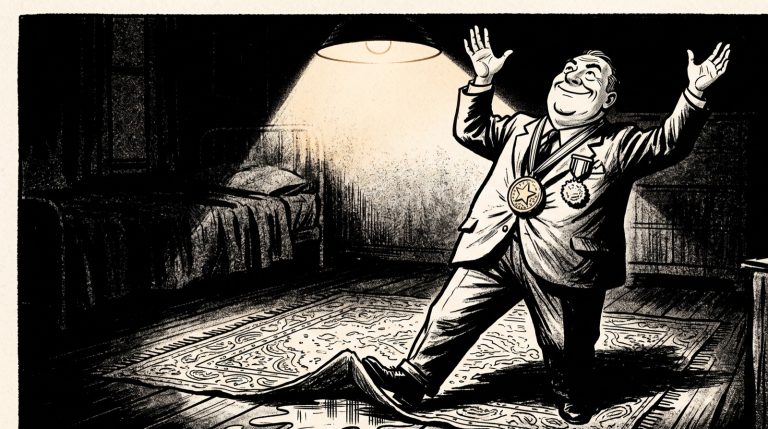
Self-Serving Bias
Self-serving bias: the tendency to attribute success to ability and failure to external causes.
 Decisions
Status Quo Bias
Status-quo bias is the tendency to prefer the current state of affairs and to treat any deviation from it as a loss.
 Decisions
Sunk Cost Fallacy
You keep pouring into a losing course because of what you have already spent, not what lies ahead.
 Decisions
Survivorship Bias
Survivorship bias is the cognitive error of concentrating on entities that passed a selection process while overlooking those that did not, thereby producing a distorted picture of the full population.
 Decisions
Tit-for-Tat
Tit-for-tat: a game theory strategy that cooperates first, mirrors its opponent's last move, and won Axelrod's tournaments without beating a single rival.
Practice
Turn the evidence into something you can run, then see where you stand.
Run the science
Protocols
Step-by-step routines that turn the evidence into a practice you can run. The shape of each method is its blueprint.
- Protocol
90-Day Probabilistic Thinking Protocol: Build Bayesian Intuition
A 90-day programme in calibrated reasoning and probability estimation
- Foundation
- Optimisation
- Mastery
- Protocol
90-Day OODA Loop Protocol: Compress Your Decision Cycle for Competitive Advantage
A 90-day programme for building fast, adaptive decision cycles
- Foundation
- Optimisation
- Mastery
- Protocol
90-Day Mental Models Protocol: Build Your Cross-Disciplinary Thinking Toolkit
A 90-day applied programme in decision science and reasoning frameworks
- Foundation
- Optimisation
- Mastery
- Protocol
90-Day Strategic Thinking Protocol: Apply Game Theory to Every High-Stakes Decision
A 90-day programme in applied strategic-interaction reasoning
- Foundation
- Optimisation
- Mastery
- Protocol
90-Day Cognitive Debiasing Protocol: Systematically Eliminate Your Worst Thinking Errors
A 90-day structured programme in practical decision procedures for five common cognitive biases
- Foundation
- Optimisation
- Mastery
Locate yourself
Assessments
Short self-tests that place you on the evidence and personalise the path. Each one is an instrument you operate.
- Assessment
Decision Fatigue Test: How Well Are You Managing Choice Overload?
Measures: Decision Fatigue Blind Spots
Take the test → - Assessment
Calibration Test: How Well-Calibrated Are Your Predictions?
Measures: Calibration Weak Points
Take the test → - Assessment
Decision Speed Assessment: How Fast Is Your OODA Loop?
Measures: Decision Speed
Take the test → - Assessment
Mental Models Assessment: Which Thinking Frameworks Are You Missing?
Measures: Mental Models Quiz
Take the test → - Assessment
Strategic Thinking Assessment: How Well Do You Read the Game?
Measures: Strategic Thinking Test
Take the test → - Assessment
Cognitive Bias Test: Which Thinking Errors Hijack Your Decisions?
Measures: Cognitive Bias
Take the test →
Verdicts
The folklore and the latest hype, run against the research and stamped.
Hype vs evidence
Trends
We weigh the claim against the science and stamp a verdict. The verdict is the headline.
- Trend verdictJun 2026
Choice overload is real, but only under four specific conditions; the universal effect has near-zero evidence.
What Is Choice Overload? Do Too Many Options Really Backfire?
5 sources scored - Trend verdictJun 2026
The risk-identification effect is real; the evidence that premortems improve actual decisions is thinner.
Do Premortems Work? The Science of Imagining Failure Before It Happens
5 sources scored - Trend verdictJun 2026
Sleep genuinely aids insight, but the unconscious-thought shortcut without real sleep lacks reliable support.
Should You Sleep on a Decision? Unconscious Thought vs. Real Sleep, Scored
6 sources scored - Trend verdictJun 2026
The finite-resource model has failed replication; real fatigue after sustained work has a different mechanism.
Decision Fatigue: Is Willpower Really a Finite Resource?
5 sources scored
The Dispatch
The evidence dispatch
What changed in the science, what we re-reviewed, and the one finding worth your attention. Kept private, no spam, ever. Unsubscribe in one click.
Keep exploring
The rest of the field.
Decisions is one of ten categories. Jump to a sibling, or browse a format across every topic.