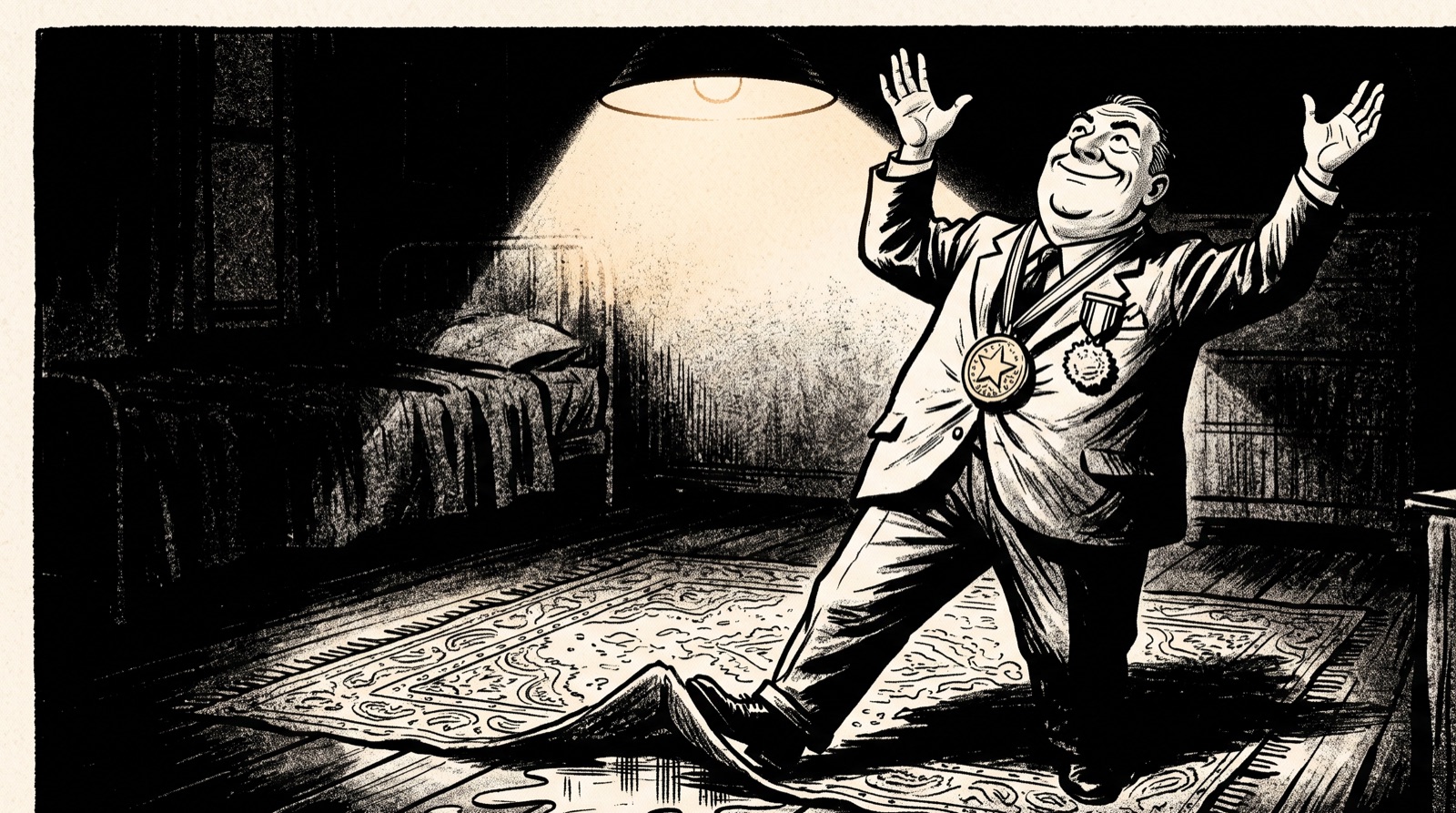
Self-Serving Bias n.
At the group level, the same pattern appears in teams that credit collective wins to effort whilst attributing losses to referees or adverse conditions.
The definition
Self-Serving Bias is the systematic tendency to attribute successful outcomes to one's own ability or effort, and to attribute failures to external causes such as bad luck or task difficulty. The pattern operates through two routes: a motivational drive to protect self-esteem, and expectancy-based processing in which success feels internally caused because it was anticipated.
0.62
standardised mean difference for self-serving attribution across 10,515 athletes
ALLEN ET AL. · 20194
The mechanism
Miller and Ross's foundational 1975 review proposed two competing explanations for the asymmetric attribution pattern: a motivational account, in which self-esteem protection drives the distortion, and an information-processing account, in which people expect to succeed, so success confirms a prior expectation and gets attributed internally whilst unexpected failure gets attributed to circumstance.1 Zuckerman's 1979 re-analysis of the accumulated evidence found robust self-serving effects across most experimental paradigms and argued that the motivational account better explains the data than the purely cognitive model Miller and Ross favoured.2
The magnitude of the effect is not fixed. Campbell and Sedikides's meta-analysis of 266 findings confirmed that ego threat, high task importance, and public performance all significantly amplify the credit-blame asymmetry.3 This moderator pattern carries a critical implication: the bias is not merely a background hum but a signal that increases in amplitude precisely when accurate diagnosis matters most.
The effect generalises beyond the laboratory to competitive performance environments. A meta-analysis of 69 sport studies covering 10,515 athletes found a standardised mean difference of 0.62 for internal success attribution versus external failure attribution.4 That effect size constitutes a systematic and measurable distortion in how performers interpret the causes of their results.
In practice
The bias emerges clearly in any setting where performance is evaluated and self-concept is at stake.
Worked example
A product manager's pitch fails to secure budget. Reviewing the outcome, she attributes the rejection to poor timing, an unsympathetic committee, and a cautious financial climate. Her team's analytical work, she reasons, was sound; external conditions were simply unfavourable. Correctable flaws in the pitch structure, the framing of the financials, and the handling of objections go unexamined.
The bias converts a recoverable setback into a missed learning opportunity by routing the causal explanation away from controllable factors.
Why it matters
By blocking accurate causal analysis after failure, the bias converts every loss into a missed learning opportunity. Performers who attribute poor outcomes to bad luck or the quality of their opponents rather than to their own decisions cannot identify correctable errors. Suboptimal strategies persist not because the performer lacks the capacity to improve but because the feedback loop that should drive improvement has been severed.4
The problem is structural rather than incidental. Campbell and Sedikides's meta-analysis established that the intensity of the distortion rises under ego threat and high task importance.3 High-stakes environments and consequential decisions are precisely the contexts where accurate post-event diagnosis carries the highest value, making the bias a systematic degradation of decision quality at the moments when clear thinking matters most.
Questions of record
What is self-serving bias?
Self-serving bias describes the asymmetric pattern of causal attribution in which successes are credited to personal ability or effort and failures are blamed on external factors such as bad luck or task difficulty. Two mechanisms drive it: self-esteem protection, and expectancy-based processing in which anticipated outcomes feel internally caused.
What causes self-serving bias: motivation or cognition?
Both accounts have empirical support. Miller and Ross identified an information-processing route in which success confirms prior expectations and therefore feels internally caused. Zuckerman's re-analysis found stronger support for a motivational route, in which self-esteem protection drives the asymmetric attribution pattern rather than expectancy alone.
When is self-serving bias strongest?
The bias intensifies under ego threat, high task importance, and public performance. A meta-analysis of 266 findings confirmed that all three conditions significantly increase the magnitude of credit-blame asymmetry, so high-stakes situations produce the greatest distortion in causal reasoning.
How can self-serving bias be reduced?
Pre-mortem exercises and structured after-action reviews counter the bias by requiring participants to generate both internal and external causal explanations before self-protective attributions solidify. Lowering ego threat through anonymous reporting and blameless post-mortems also improves the accuracy of causal reasoning across a team.
Sources
Appears in
- Impostor SyndromeGlossary