The Psychology of Power: What Happens to the Brain When You Gain Authority.
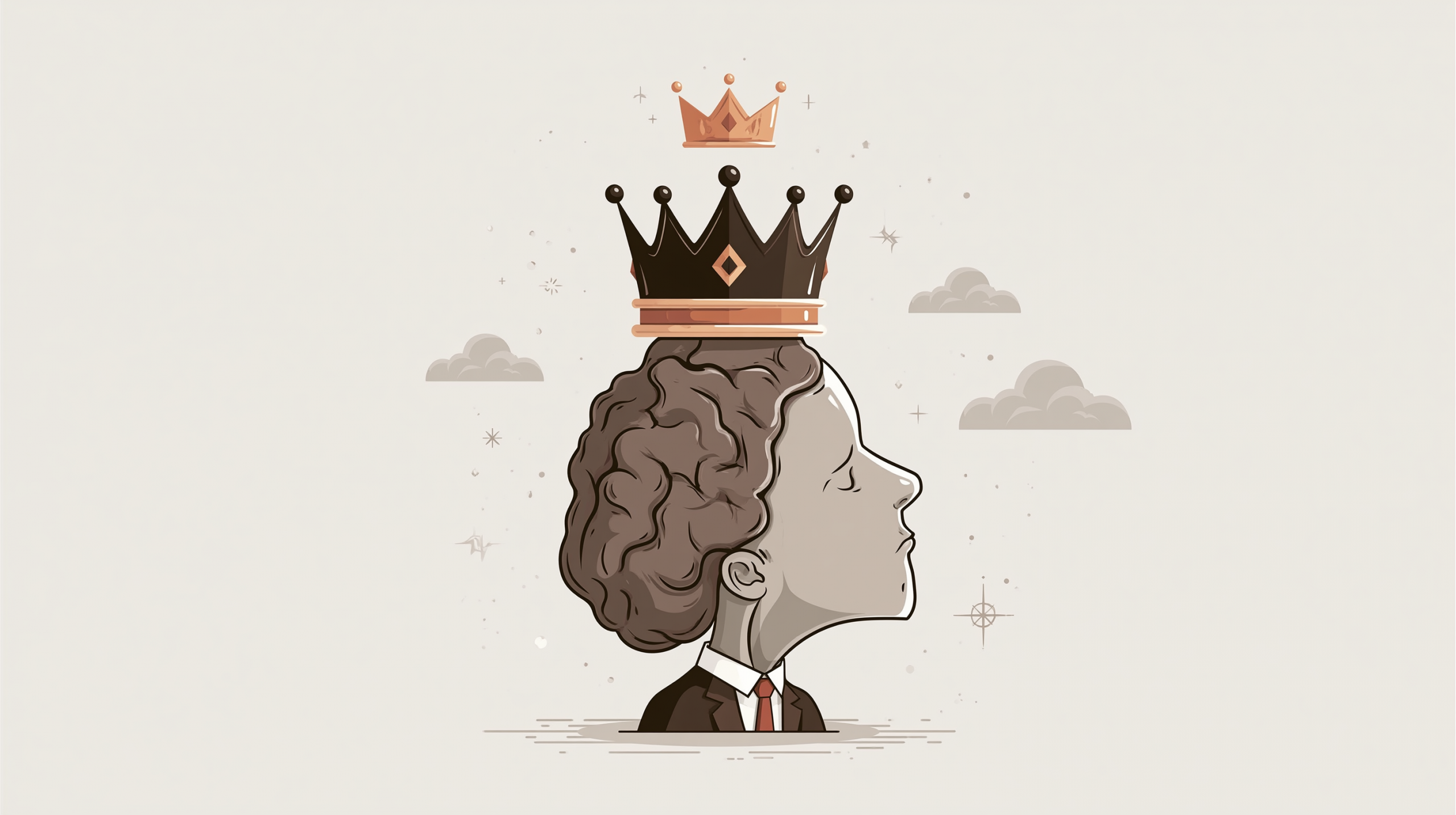
Power does not reveal character. It rewires the neural circuits responsible for empathy, moral judgment, and social perception, and the transformation begins before the power-holder notices. Here is what the science actually says, and what to do with it.
01The Milgram Setup
What a 1963 obedience experiment revealed about authority and the brain
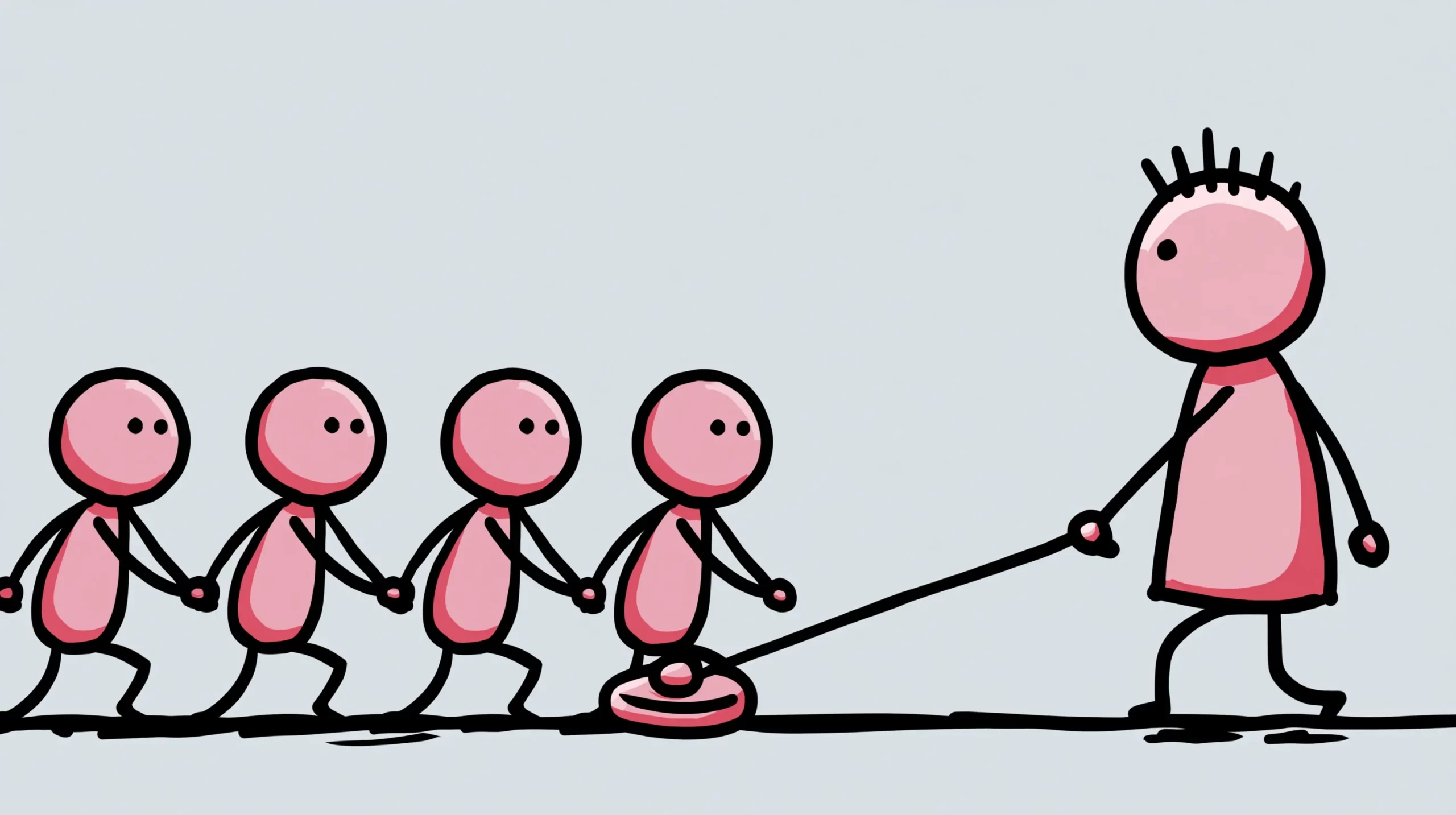
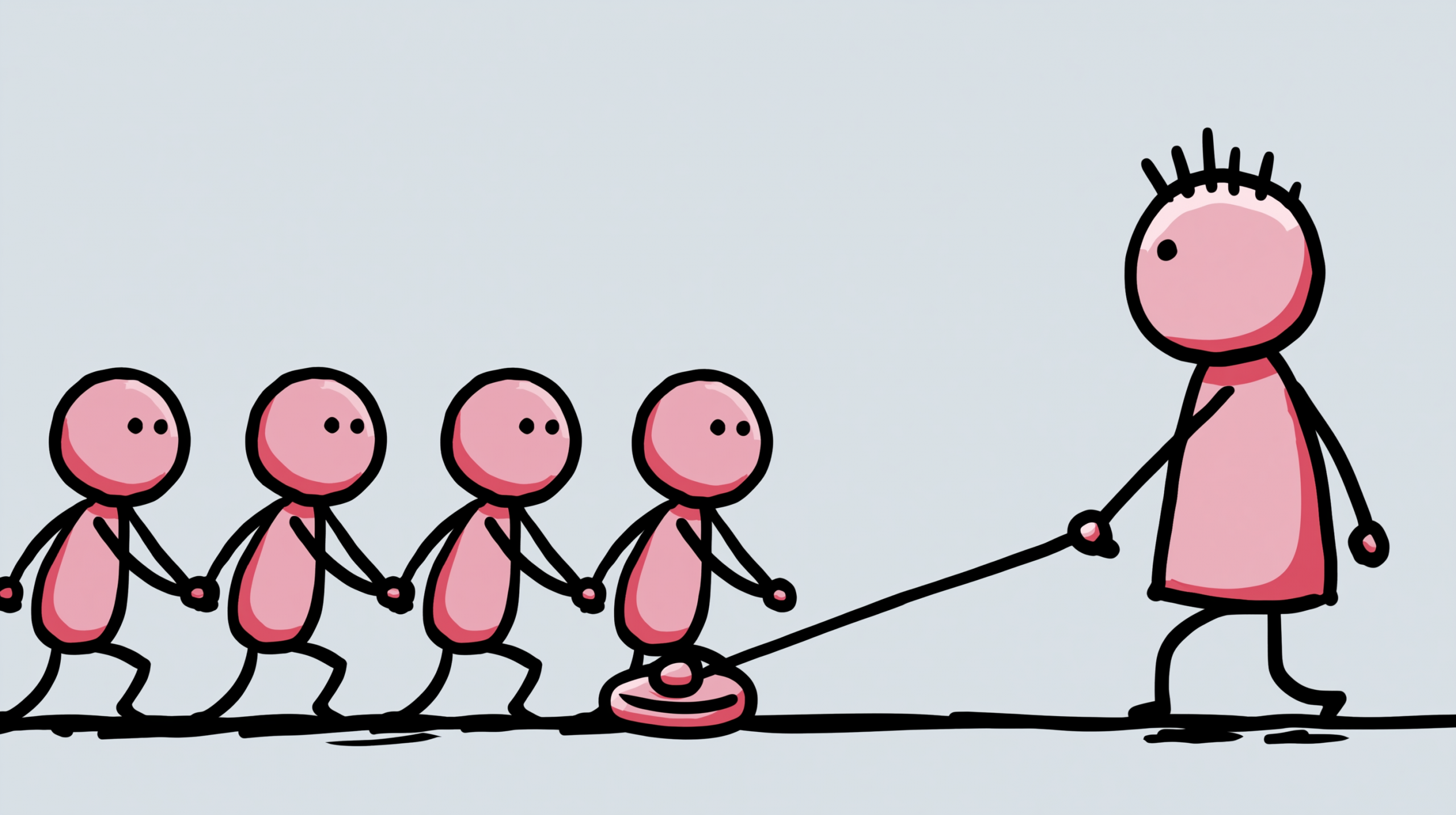
In 1963, Stanley Milgram brought ordinary people into a laboratory at Yale University and asked them to deliver what they believed were potentially lethal electric shocks to a stranger.[1] Sixty-five per cent complied.[2] The finding, one of the most replicated in the history of psychology, was not about cruelty. It was about what happens to the human brain when someone else holds the authority. The person pressing the button did not become evil. They became obedient. And obedience to authority, Milgram understood, was not a character flaw. It was a neurological event: the presence of an authority figure restructured how participants processed moral information, how they weighted consequences, how they perceived the suffering of another person sitting behind a wall. Kipnis demonstrated the other side of this equation a decade later. Managers given arbitrary power over workers began to devalue those workers' contributions and increase psychological distance, the first empirical evidence that power corrupts the power-holder, not just the subordinate.[3] The psychology of power does not begin with the powerful. It begins with the fact that human brains are built to recalibrate in the presence of rank.
That recalibration runs in both directions. The person who gains authority undergoes a transformation at least as profound as the person who defers to it. Over the past two decades, a convergence of neuroimaging, transcranial magnetic stimulation, neuroendocrine assays, and large-scale behavioural experiments has documented what that transformation looks like at the level of neural circuits. Power activates the brain's behavioural approach system: the motivational architecture that drives reward-seeking, risk tolerance, and goal pursuit.[4] It suppresses the motor resonance system that allows one brain to simulate what another brain is feeling.[12] It weakens the coupling between the brain regions that compute self-interested valuation and the regions that apply moral brakes.[17] The result is not a person who has chosen to stop caring. It is a person whose neural hardware has quietly made caring harder.
The scale of the evidence is no longer debatable. A 2025 meta-analysis published in Psychological Bulletin synthesised 1,712 effect sizes drawn from 813 independent samples, 432 manuscripts, and 269,534 participants.[21] The conclusion: the approach-inhibition theory of power (the framework proposing that elevated power activates approach and suppresses inhibition) is broadly confirmed across two decades of empirical testing. Power changes how the brain operates. The question that remains is what, precisely, to do about it.
The reason this matters for anyone who leads (or works under someone who does) is that the transformation is automatic. Hogeveen, Inzlicht, and Obhi's landmark TMS study demonstrated that the mirroring suppression was not a deliberate choice or a side effect of social distance.[12] It was a default neurological response to holding power. The motor cortex simply stopped simulating others' actions with the same fidelity. This is not a metaphor. It is a measurement. And it means that the leader who insists they still "get" their team may be reporting an experience their motor cortex no longer supports.
Dacher Keltner, whose research group at Berkeley has studied the psychology of power for over two decades, calls this the power paradox: the social skills that win you influence (empathy, attunement, generosity) are the first casualties of having it.[22] The paradox is not philosophical. It is neurochemical. Power triggers dopamine and testosterone surges that orient the brain toward reward and away from threat.[9][23] It reduces the cortisol vigilance that keeps social behaviour cautious and calibrated. The hormonal climate shifts, and the cognitive architecture follows.
What makes this especially dangerous is that the person undergoing the change is usually the last to notice. Power reduces metacognitive accuracy: the ability to assess one's own cognitive performance.[6] The powerful believe they are reading the room when they are reading themselves. They believe they are taking perspectives when they are projecting. The transformation is invisible from the inside, which is precisely why it requires structural countermeasures rather than good intentions.
02The Mechanism
The Neural Loop That Turns Leaders Into Liabilities
The mechanism begins with a motivational shift. When a person gains power (through promotion, election, or social dynamics) the brain's behavioural approach system (BAS) activates.[4] This is not a subtle psychological preference. It is a measurable change in neural activity. The BAS drives reward-seeking, risk tolerance, goal pursuit, and action orientation. It is mediated by dopaminergic pathways that connect the ventral striatum, prefrontal cortex, and amygdala, the same circuits that process monetary reward, sexual attraction, and substance-related pleasure.[18][13][33] Shared neural coding for social hierarchy and reward value has been documented in primate amygdala, confirming that rank and reward are processed through overlapping circuits.[33] Keltner, Gruenfeld, and Anderson formalised this in 2003 as the approach-inhibition theory: power activates approach; powerlessness activates inhibition.[4] Sixteen years of subsequent testing, culminating in the 2025 meta-analysis of 1,712 effect sizes, confirms the framework is robust.[21]
The practical consequence is immediate. Power-holders become more action-oriented: more likely to take a card in a risky game, to act against an environmental nuisance, to choose quickly in a social dilemma.[5] Guinote's 2017 review showed that power energises thought, speech, and action; it orients cognition toward salient goals and magnifies self-expression while reducing attention to peripheral information.[15] That matters because the "peripheral information" power filters out includes other people's emotional states, knowledge gaps, and perspectives. The cognitive efficiency that power delivers comes at the cost of social perception.
The neurochemistry is equally telling. Mehta and Josephs demonstrated that testosterone's relationship to dominant behaviour depends on cortisol: testosterone predicts dominance only when cortisol is low.[9] High cortisol (the signature of chronic stress) blocks the hormonal conditions for effective authority. In non-human primates, Sapolsky's 25-year Amboseli baboon dataset showed that high-ranking animals with stable hierarchies had both the lowest cortisol and the lowest atherosclerosis.[18] Human research on rank and cortisol suggests a parallel: the physiology of effective power requires a specific dual-hormone climate, the interaction between the hypothalamic-pituitary-gonadal axis (HPG, governing testosterone) and the hypothalamic-pituitary-adrenal axis (HPA, governing cortisol), not just raw dominance drive.[30]
The power-corruption neural loop: dopaminergic approach activation from status gain suppresses motor-cortex mirroring (MEP amplitude drops, Hogeveen et al. 2014), eroding empathic accuracy; this weakens the dlPFC moral brake, leaving the vmPFC’s self-interest signal unopposed, the neural architecture of hubris syndrome, confirmed across 1,712 effect sizes.
Diagram · HPC
The second stage of the loop is where the damage becomes personal. As the approach system fires, the brain's mirror neuron system (the motor cortex circuitry that simulates observed actions) goes quiet. Hogeveen, Inzlicht, and Obhi's 2014 experiment is the cleanest demonstration.[12] Using transcranial magnetic stimulation, they measured motor-evoked potentials (MEPs) while participants watched a hand squeezing a ball. Participants primed into high-power states showed significantly lower MEP amplitudes than those in low-power states. The motor cortex was no longer resonating with what it saw. The mirroring suppression was automatic, not mediated by social distance or explicit motivation. It was a default neural consequence of power.
This matters because motor resonance is a foundation of empathic accuracy. When your motor cortex simulates another person's actions, it contributes to your ability to infer their intentions, read their emotions, and predict their behaviour.[12] When that simulation quiets, other people become less legible. Galinsky and colleagues showed the downstream effect across four experiments: high-power participants drew the letter "E" in a self-oriented direction (failing to consider the viewer's perspective), anchored excessively on their own knowledge states, and showed significantly impaired emotion recognition.[6]
The combined effect is a leader who is neurologically less equipped to understand the people they lead and who simultaneously becomes more confident in their social judgments. Power increases what psychologists call illusory transparency (the belief that one's internal states are obvious to others) while simultaneously reducing the accuracy of social perception.[6][15]
03Evidence
The Five Strongest Studies on How Power Changes the Brain
01The claim
The single load-bearing finding
The hero study finds Significant MEP reduction.
Not all evidence is created equal. A behavioural experiment with 40 undergraduates and a self-report questionnaire does not carry the same weight as a TMS study with direct physiological measurement or a meta-analysis synthesising 1,712 effect sizes. The hierarchy below ranks the five strongest studies in the psychology of power by methodological weight: design quality, measurement precision, causal clarity, replication record, and field influence. The ranking is editorial. It reflects judgment about which findings the field should trust most.
Pooled estimate
Significant MEP reduction
02How we measured
Ranking the power studies
Studies scored on design, sample, rigour, causality, replication, citations.
Replication is the decisive criterion here: the power paradox literature has a troubled replication record, so studies that provide direct physiological measurement or a 269,000-participant synthesis carry disproportionate weight.
Rubric weights
03The spread
Heterogeneity across 5 studies
Methodological quality across the ranked studies.
What the hierarchy reveals is that the psychology of power is not a single finding waiting for replication. It is a convergent body of evidence (neural, hormonal, and behavioural) pointing to the same conclusion through different methodological lenses. The TMS work catches the mirroring system suppressing in real time.[12] The fMRI bribery paradigm maps the prefrontal circuitry of moral failure.[17] The neuroendocrine work shows that the system depends on a specific hormonal climate that chronic stress destroys.[9]
Rubric spread
86
→ 62 /100
Highest to lowest rubric score across the ranked studies.
04What does not hold
Negative knowledge
What the evidence base does not support.
One pattern deserves particular attention. Across the five hierarchy studies, the most replicable findings involve power's effects on perception: what leaders see, feel, and simulate. The perspective-taking impairment (Galinsky, 2006) has been replicated extensively and is one of the most-cited results in social psychology.[6] The mirroring suppression (Hogeveen, 2014) has partial replications with consistent directional effects.[12] The corruption circuitry is newer but mechanistically precise.[17]
5 trials. One pooled answer.
Below: the anchor study in full; then the forest plot at scale; then the supporting trials in ranked order.
01Anchor
Power changes how the brain responds to others
Power suppresses the brain's mirroring system automatically, the neurological foundation of empathic accuracy degrades as a default consequence of authority.
TMS provides direct physiological measurement of motor cortex output. No other study in power psychology catches the brain in the act of suppressing social resonance with this level of mechanistic specificity.
Rubric breakdown
The strongest studies, ranked by methodological weight.
Each scored 0–100 against a six-criterion rubric, tagged by design and year; the anchor leads. No study in this set reaches the rubric-90 tier.
02
Power and perspectives not taken
Across four experiments and a correlational study, high-power participants drew the letter E from their own perspective (failing to adjust for the viewer), anchored excessively on privileged knowledge, and showed significantly impaired emotion recognition accuracy.
82/100
03
Neural basis of corruption in power-holders
vmPFC encoded an integrative value signal for bribe acceptance; dlPFC activity specifically predicted rejection when third-party harm was present. Negative functional coupling between vmPFC and right dlPFC determined moral action.
80/100
04
Testosterone and cortisol jointly regulate dominance
Testosterone positively predicted dominant leadership behaviour only when cortisol was low. At high cortisol, the relationship reversed: testosterone negatively predicted dominance. The interaction replicated across a leadership task and a competitive re-entry paradigm.
68/100
05
Power increases hypocrisy
High-power participants condemned others' cheating more severely but cheated more themselves. The moral hypocrisy effect reversed under illegitimate power conditions, suggesting that perceived legitimacy moderates the double standard.
62/100
04Stakes
The Organisational Cost of Neurological Blind Spots
When the power loop operates without structural interruption, it degrades four systems simultaneously, and the damage compounds because leaders cannot see it from inside the loop.
Empathic Collapse
The mirroring suppression documented by Hogeveen (2014) has a direct organisational consequence: leaders progressively lose the ability to read their teams accurately.[12] Gruenfeld and colleagues showed that under power conditions, approach toward others is driven more by their goal-usefulness than their human qualities. People become instruments.[7] The leader who "doesn't have time for feelings" is not making a strategic choice; they are describing a neurological state.
misread emotional cues, surprised by resignations, "I had no idea they felt that way"
Strategic Isolation
Half of CEOs report feeling lonely in their role; 61% say it hinders their performance; among first-time CEOs who experience loneliness, 70% report negative impact.[27] Zumaeta identified executive isolation as progressive disconnection from candid feedback, diverse perspectives, and genuine peer relationships, a structural condition that impairs strategic thinking.[16] Isolation is not a feeling. It is a signal-quality problem. The leader without honest input is navigating with degraded instruments.
echo chambers, sycophantic feedback, "nobody tells me the truth anymore"
Moral Drift
Owen and Davidson's analysis of political leaders identified hubris syndrome, an acquired personality disorder emerging from prolonged, unconstrained power, with 14 behavioural symptoms including impulsive action, contempt for others' opinions, and messianic self-belief.[8] Owen noted that affected leaders "acted as if they had suffered a traumatic brain injury."[29] Recent clinical analyses have proposed hubris syndrome for formal inclusion in classification systems.[32] The syndrome is acquired, not innate: it develops with the duration and extent of power held. Lammers and colleagues' moral hypocrisy findings confirm the mechanism: power holders exempt themselves from standards they enforce on others.[10]
double standards, "rules are for other people," escalating risk tolerance, ethical shortcuts justified by strategic necessity
Workforce Damage
Approximately 22 million US workers (13.6% of the workforce) report experiencing abusive supervision.[11][28] Mackey and colleagues' meta-analysis confirmed consistent associations with counterproductive work behaviours, reduced job satisfaction, and turnover intention.[14] A systematic review called for clearer definitions and better measurement of abusive supervision, distinguishing followers' evaluations from leaders' behaviour.[31] A 2024 systematic review found that all articles examining destructive leadership reported negative effects on mental health.[19] The stakes are not abstract. They are measured in attrition rates, disability claims, and, in some populations, associations with suicidal ideation.
walking on eggshells, chronic anxiety, disengagement, talented people quietly leaving
05Protocol
A 4-Step Power Calibration Protocol
Every countermeasure works by deliberately re-engaging the neural circuits that power suppresses: the mirror system, the dlPFC moral brake, and perspective-taking, before decisions are made.
The protocol, as a sequence.
Pre-Decision → Structural → Quarterly → Daily
Deliberate Perspective Rotation
Before any significant decision, explicitly adopt the perspective of each person it will affect, write one sentence from their vantage point.
Perspective-taking reactivates the same cognitive circuits that power suppresses (Galinsky et al., 2006).[6] This is a targeted countermeasure to the approach-inhibition shift: it forces the inhibition system back online for the duration of the exercise.
Believing you already understand others' perspectives. High-power individuals systematically overestimate their perspective-taking accuracy, the very skill power degrades is the one leaders feel most confident about.[6]
Psychological Safety Architecture
Design formal systems, not exhortations, that allow subordinates to challenge decisions without career risk.
Edmondson's field study of 51 work teams demonstrated that psychological safety predicts learning behaviour, which mediates team performance.[25] Goleman's foundational analysis of what makes a leader identified empathy and self-awareness as the differentiating competencies, but these are precisely the capacities the neural loop degrades.[24] Safety offsets the social distance that power creates.
Peer Advisory Network
Maintain a group of 3–5 genuine peers, people with no career stake in flattering you, and meet quarterly with an explicit invitation to challenge.
CEO loneliness impairs strategic thinking and decision quality; 71% of CEOs who sought peer support reported that company performance improved.[27] Peers counter the echo chamber that the power loop constructs.
Confusing advisors (who have a service relationship) with genuine peers (who tell you things you do not want to hear). Boards, coaches, and consultants are not peers: their incentive structures are misaligned for the candour this requires.[16]
Hormonal Climate Management
Manage chronic cortisol through non-negotiable recovery protocols, sleep architecture, physical activity, and deliberate stress discharge.
The dual-hormone hypothesis demonstrates that testosterone's dominance benefits are blocked by chronic cortisol elevation.[9] Stress does not just make leaders tired: it neurochemically defeats the hormonal conditions for adaptive authority. The leader who pushes through chronic stress is degrading the biochemical substrate of effective power.
Assuming leadership stamina is about endurance. Chronic cortisol elevation suppresses the hormonal climate (high T, low cortisol) that enables effective dominance. The biochemistry of power requires recovery, not grit.
06Verdict
The verdict.
Bottom line
The brain that holds power is not the brain you hired. Build for the one you actually have.
The argument
The neuroscience of power is no longer a collection of suggestive findings. It is an architecturally coherent body of evidence, confirmed across TMS, fMRI, neuroendocrine assays, and the largest meta-analytic synthesis ever conducted in power psychology, demonstrating that authority systematically degrades the neural systems responsible for empathy, moral judgment, and social perception. The degradation is automatic, invisible from the inside, and self-reinforcing. It does not require bad intentions. It requires only the absence of structural countermeasures. Any organisation that promotes people into positions of authority without addressing the neurological consequences of that authority is running a system designed to produce the failures it claims to prevent.
The most important implication of this research is not that leaders should try harder. Trying harder uses the very circuits that power has compromised. The implication is that organisations need to build structural systems (perspective rotation protocols, psychological safety architecture, peer accountability networks, recovery mandates) that do the work that individual neurology can no longer be trusted to do on its own.[20][25] The intervention is institutional, not personal.
This reframes a century of conversation about leadership character. From Machiavelli to modern executive coaching, the dominant assumption has been that power reveals who you are. The neuroscience says otherwise.[4][12][17] Power reveals what the brain does when approach circuits activate, mirroring systems quiet, and prefrontal coupling weakens. The person who emerged from Milgram's laboratory having delivered 450 volts was not a different person. They were the same person in a neurological state that authority had produced.[1][2] The leader who has lost the ability to read their team is not callous. They are operating a brain that power has reconfigured.
That distinction matters because it changes the solution. You cannot coach someone out of a neurological state. You can build systems that counteract it. You can design decision processes that force perspective rotation before major choices. You can create accountability structures that provide the moral information the leader's own dlPFC can no longer generate alone. You can make recovery (not endurance) the measure of leadership fitness.[9] The science is clear enough to act on. The only question is whether organisations are willing to treat the neuroscience of power with the same seriousness they apply to financial risk, cybersecurity, or operational safety.[20][8]
No comparison figure runs here. The prose above does not resolve to one clean effect size to set against another, and this magazine does not manufacture a number to fill the space. The verdict stands on the evidence as written.
The Neural Loop Is Real
Power activates approach circuits, suppresses the mirroring system, weakens prefrontal moral regulation, and feeds back into itself. This is not metaphor, it has been measured at every stage using TMS, fMRI, and neuroendocrine assays across two decades of controlled experiments and a 269,534-participant meta-analysis.[21][12][17]
The Damage Is Invisible From Inside
The same neural changes that impair judgment also impair the leader's ability to detect that their judgment has been impaired. Metacognitive accuracy declines with power, the leader who feels most confident in their social perception is often the least accurate.[6][15] This is why individual self-correction fails and structural systems are not optional.
Structural Friction Is the Only Reliable Countermeasure
Perspective rotation, psychological safety design, peer accountability, and hormonal climate management each target a specific stage of the neural loop. The intervention is institutional, not personal, because the neurology that needs correcting is the same neurology that would need to decide to correct itself.[25][6][9]
Put it to work
Where this science goes next on HPC
07Bibliography
The bibliography.
-
01
Journal
doi: 10.1037/h0040525
Behavioral study of obedience
-
02
Journal
no doi
Obedience to authority: An experimental view
-
03
Journal
doi: 10.1037/h0033390
Does power corrupt? Journal of Personality and Social Psychology, 24(1), 33–41
-
04
Review
doi: 10.1037/0033-295x.110.2.265
Power, approach, and inhibition
-
05
Journal
doi: 10.1037/0022-3514.85.3.453
From power to action
-
06
Journal
doi: 10.1111/j.1467-9280.2006.01824.x
Power and perspectives not taken
-
07
Journal
doi: 10.1037/0022-3514.95.1.111
Power and the objectification of social targets
-
08
Journal
doi: 10.1093/brain/awp008
Hubris syndrome: An acquired personality disorder? A study of US Presidents and UK Prime Ministers over the last 100 years
-
09
Journal
doi: 10.1016/j.yhbeh.2010.08.020
Testosterone and cortisol jointly regulate dominance: Evidence for a dual-hormone hypothesis
-
10
Journal
doi: 10.1177/0956797610368810
Power increases hypocrisy: Moralizing in reasoning, immorality in behavior
-
11
Review
doi: 10.1177/0149206307300812
Abusive supervision in work organizations: Review, synthesis, and research agenda
-
12
Journal
doi: 10.1037/a0033477
Rubric 86/100
Power changes how the brain responds to others
-
13
Journal
doi: 10.3389/fnins.2015.00154
Neural mechanisms of social dominance
-
14
Meta
doi: 10.1177/0149206315573997
Abusive supervision: A meta-analysis and empirical review
-
15
Review
doi: 10.1146/annurev-psych-010416-044153
How power affects people: Activating, wanting, and goal seeking
-
16
Journal
doi: 10.1177/1548051818774548
Lonely at the Top: How Do Senior Leaders Navigate the Need to Belong?
-
17
Journal
doi: 10.7554/eLife.63922
Neural basis of corruption in power-holders
-
18
Journal
doi: 10.1098/rstb.2020.0444
Neural systems that facilitate the representation of social rank
-
19
Meta
no doi
Systematic review: Relationship between destructive leadership styles and health workers' mental health
-
20
Journal
doi: 10.1080/19420889.2023.2246793
On power and its corrupting effects
-
21
Meta
doi: 10.1037/bul0000500
The approach-inhibition theory of power: A meta-analytic test and synthesis
-
22
Book
no doi
The power paradox: How we gain and lose influence
-
23
Book
no doi
The winner effect: The neuroscience of success and failure
-
24
Review
no doi
What makes a leader? Harvard Business Review, 76(6), 93–102
-
25
Journal
doi: 10.2307/2666999
Psychological safety and learning behavior in work teams
-
26
Journal
no doi
Culture's consequences: International differences in work-related values
-
27
Review
no doi
It's time to acknowledge CEO loneliness
-
28
Review
no doi
Abusive supervision: A systematic literature review
-
29
Journal
no doi
Hubris syndrome
-
30
Journal
doi: 10.1177/0146167218757456
Power corrupts, but control does not
-
31
Meta
doi: 10.1016/j.leaqua.2021.101540
Abusive supervision: A systematic review and fundamental rethink
-
32
Journal
no doi
Consider the hubris syndrome for inclusion in our classification systems
-
33
Journal
no doi
Shared neural coding for social hierarchy and reward value in primate amygdala
No entries match the current filter and search.
The protocol card
The Psychology of Power: What Happens to the Brain When You Gain Authority
One sheet. The four moves, in the order the day runs them.
-
01
Pre-Decision
Deliberate Perspective Rotation
Before any significant decision, explicitly adopt the perspective of each person it will affect, write one sentence from their vantage point.
AvoidBelieving you already understand others' perspectives. High-power individuals systematically overestimate their perspective-taking accuracy, the very skill power degrades is the one leaders feel most confident about.
-
02
Structural
Psychological Safety Architecture
Design formal systems, not exhortations, that allow subordinates to challenge decisions without career risk.
AvoidExpecting people to "just speak up." Subordinates in high-power-distance relationships correctly perceive that candour is risky. Safety requires structural design (anonymous channels, protected dissent protocols, explicit norms) not the leader's open-door platitude.
-
03
Quarterly
Peer Advisory Network
Maintain a group of 3–5 genuine peers, people with no career stake in flattering you, and meet quarterly with an explicit invitation to challenge.
AvoidConfusing advisors (who have a service relationship) with genuine peers (who tell you things you do not want to hear). Boards, coaches, and consultants are not peers: their incentive structures are misaligned for the candour this requires.
-
04
Daily
Hormonal Climate Management
Manage chronic cortisol through non-negotiable recovery protocols, sleep architecture, physical activity, and deliberate stress discharge.
AvoidAssuming leadership stamina is about endurance. Chronic cortisol elevation suppresses the hormonal climate (high T, low cortisol) that enables effective dominance. The biochemistry of power requires recovery, not grit.
hiperformanceculture.com · 33 sources · 3 April 2026



How this was made
The desk, the instrument, and when this page is next examined.
- Desk
- HPC Editorial
- Instrument
- 6 weighted criteria, 100 points see every score
- Register
- 33 sources, 22 with a resolving DOI read them
- Reading time
- 22 min read
Revision log
- First published.
- Last revised. Sources re-checked against the register above.
- Next review Due by , or earlier if a new controlled trial or systematic review lands.
THE HAND-OFF. Performance Scan: find your limiting factor. Three minutes, 24 questions, six systems. Your answers never leave your device.