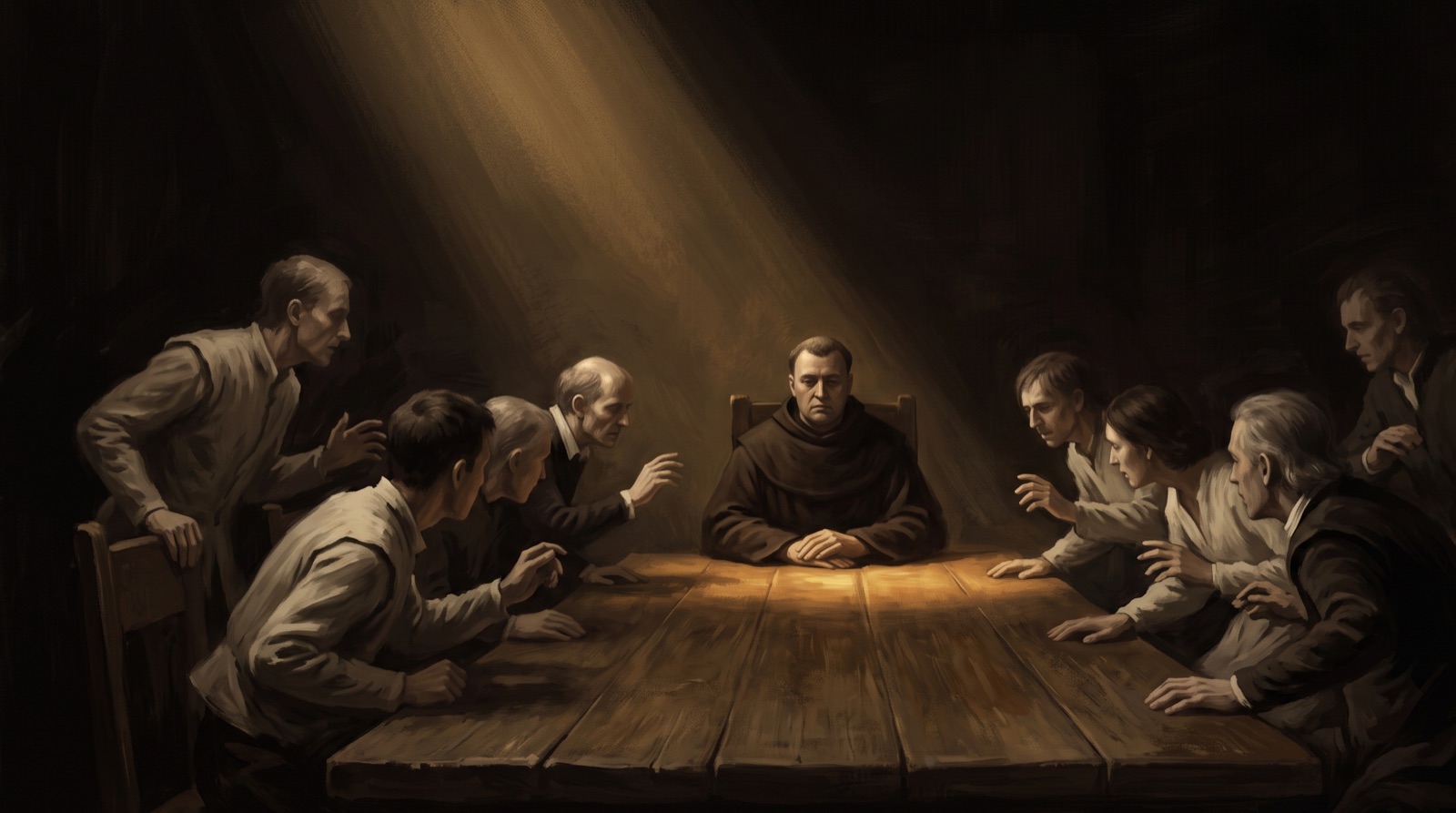
Gravitas n.
Though often conflated with charisma, gravitas is not exuberance or personal magnetism; it is authority earned through demonstrated composure and consistency.
The definition
Gravitas is the quality of commanding authority and inspiring sustained trust through a consistent combination of projected confidence, composure under pressure, and communication clarity. Rooted in Roman civic virtue, it is now recognised as the foundational component of executive presence, signalling that a leader carries the weight to be followed when the stakes are highest.
10
core executive presence characteristics identified by senior professionals, with gravitas anchoring the list
DAGLEY & GASKIN · 20141
The mechanism
Research into executive presence identifies three core dimensions through which gravitas operates: projected confidence (the signalling of certainty and authority), interpersonal integrity (consistency between stated values and observed behaviour), and communication ability (precision, economy, and apparent command of material)1. Judge et al.'s meta-analysis across 73 samples found the Big Five predictors most strongly associated with leadership emergence and effectiveness to be extraversion and low neuroticism, which map directly onto gravitas's authority-projection and composure dimensions, respectively3.
Jackson (2020) demonstrated high convergent validity between the classical Roman construct of gravitas and modern transformational leadership scales, a finding with a striking implication: the quality Roman senators recognised in a consul has persisted, structurally intact, through 2,000 years of organisational contexts2. This durability suggests gravitas is not a stylistic preference but a stable human signal for competent, trustworthy authority.
The behavioural marker most visible to observers is composure under pressure, and that composure is trainable. Torrence and Connelly (2019) found that leaders employing cognitive reappraisal (reframing threat as challenge before high-stakes encounters) and situation modification outperformed those who relied on emotional suppression, with the difference reflected in both decision quality and follower trust ratings4. Gravitas therefore functions less like a fixed trait and more like a practised discipline: the surface signal is calm authority; the underlying mechanism is deliberate regulation.
In practice
The most telling test of gravitas is the unscripted high-stakes encounter, where composure and authority must be present without preparation.
Worked example
A division head learns mid-board meeting that a flagship product launch has failed. Rather than deflecting blame or projecting anxiety, the division head pauses, acknowledges the shortfall precisely and without embellishment, and reframes the path forward with clear priorities and a defined timeline. The room's perception of the leader's capability rises, not falls.
The pause and the clear reframe are gravitas in operation: composure converted into perceived authority.
Why it matters
Among the factors senior professionals weigh when assessing colleagues for C-suite advancement, gravitas ranks higher than appearance and communication style combined1. Leaders who project calm authority in high-stakes situations are perceived as more trustworthy and produce higher-quality strategic decisions, a relationship Torrence and Connelly measured directly through follower trust ratings4.
The compounding dimension is personality. Gravitas is partly constituted by extraversion and emotional stability; leaders who do not possess these traits by disposition are perceived as less credible even before they speak, and face a higher threshold for earning the trust that gravitas conveys3. This is not insurmountable: slowing speech cadence, practising cognitive reappraisal before high-stakes conversations, and structuring communication for precision are three practised routes to the same signal14.
Questions of record
What is gravitas in leadership and why does it matter?
Gravitas in leadership is the quality of commanding authority and inspiring trust through projected confidence, composure under pressure, and communication clarity. Senior professionals consistently rank it as the most important element of executive presence, ahead of appearance and communication style, and describe it as decisive in C-suite selection.
Can gravitas be learned or is it an innate trait?
Gravitas has both dispositional and trainable components. Extraversion and emotional stability form its personality foundation, but the most visible dimension, composure under pressure, responds to practice. Leaders who use cognitive reappraisal before high-stakes encounters produce measurably higher decision quality and earn stronger follower trust ratings than those who rely on suppression.
How does composure under pressure relate to gravitas?
Composure under pressure is the most legible behavioural marker of gravitas: the visible signal that informs observers a leader has the steadiness to be trusted with high stakes. Torrence and Connelly demonstrated that leaders who achieve this through cognitive reappraisal earn higher follower trust and produce better strategic decisions than those who suppress emotion.
How is gravitas different from charisma?
Gravitas and charisma are distinct qualities. Charisma inspires enthusiasm and emotional followership; gravitas inspires confidence and trust through composed authority. Jackson's research aligns gravitas with transformational leadership and cross-cultural trait stability, while charisma is more volatile and context-dependent, and can be absent in leaders who nonetheless carry substantial gravitas.
Sources
Appears in
- Executive PresenceGlossary