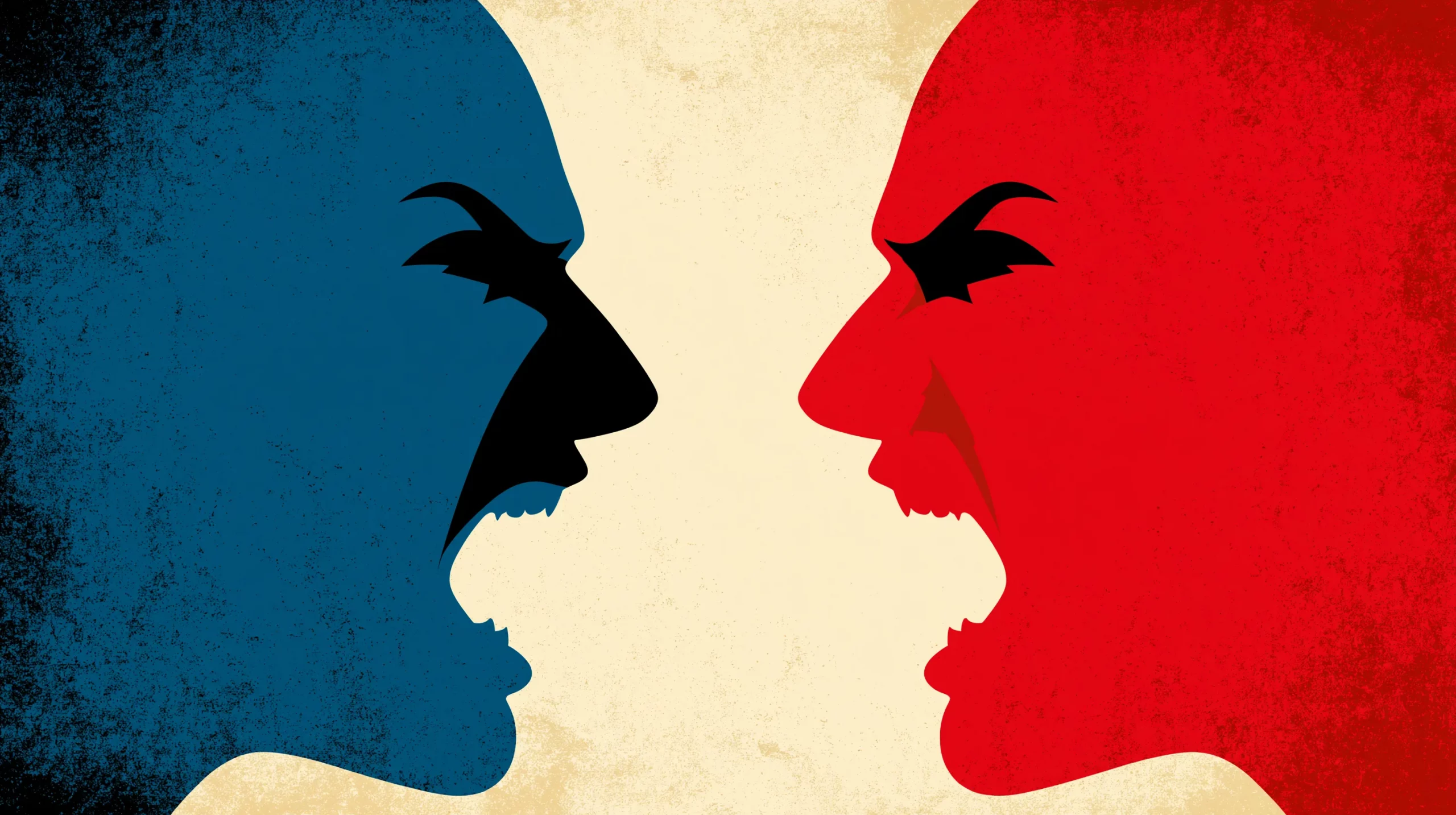
The Neuroscience of Anger: How Rage Regulation Works, and When It Serves You.
Anger is not a design flaw. It is an approach-motivation system with documented benefits for goal attainment and social bargaining, but the same neural circuitry that makes anger useful can multiply acute cardiac risk nearly fivefold within two hours when dysregulated, and the largest meta-analyses now identify which regulation strategies work, which backfire, and why the popular catharsis model has it exactly backwards. Here is what the science actually says, and what to do with it.
01The Approach Signal
Anger evolved as a bargaining tool, and the default regulation strategies make it worse
Nearly eight percent of American adults, roughly one in twelve, meet diagnostic criteria for inappropriate anger, defined as frequent, intense episodes accompanied by behavioural manifestation and functional impairment.[1] That number comes not from a clinical sample or a self-help survey but from the National Epidemiologic Survey on Alcohol and Related Conditions, a structured diagnostic interview administered to 34,653 adults, one of the largest probability samples in psychiatric epidemiology. During the COVID-19 pandemic, the figure surged: a Gallup-tracked longitudinal study found anger prevalence in US adults jumped 11.3 percentage points above the 2019 baseline, reaching nearly a quarter of the adult population.[32] The anger neuroscience behind these numbers reveals something the prevalence data alone cannot. Anger is not a single phenomenon with a single neural signature. It is an approach-related affect, a motivational state that moves the organism toward the stimulus rather than away from it, and that distinction changes everything about how you should think about managing it.[5]
The popular model is straightforward: anger is destructive, the amygdala triggers it, the prefrontal cortex restrains it, and mature adults learn to suppress it. That model is wrong in almost every particular. Sell, Tooby, and Cosmides demonstrated across multiple studies that anger correlates with formidability, with physical strength predicting anger proneness (r = 0.38–0.47 in men), suggesting the emotion evolved not as a malfunction but as a recalibrational signal, a system designed to alter the cost-benefit calculations of social partners when their behaviour imposes unacceptable costs.[4][33] Lench and colleagues' 2024 experimental series showed that induced anger improved goal attainment on challenging tasks: participants who felt angry solved significantly more difficult puzzles than controls.[24] The problem was never the emotion. The problem, as the regulation data now make ruthlessly clear, is what happens after it fires.
The regulatory question is not abstract. Mostofsky, Penner, and Mittleman's systematic review of nine case-crossover studies found that in the two hours following an anger outburst, acute cardiovascular event risk climbed to an incidence rate ratio of 4.74, though heterogeneity across the contributing studies was extreme (I²=92.5%), and the MI-specific estimate is more conservative at 3.52.[18] Chida and Steptoe's meta-analysis of 25 prospective studies in healthy populations found that chronic anger and hostility predicted a 19% increase in coronary heart disease risk over follow-up periods measured in years and decades.[19] The acute trigger data and the chronic prospective data tell different stories about different timescales, but they converge on the same conclusion: anger that is poorly regulated, not anger itself, carries measurable physiological cost.
That convergence makes the regulation evidence urgent. Pop, Nechita, Miu, and Szentágotai-Tătar's 2025 meta-analysis mapped the full landscape of anger regulation strategies across 81 studies, and the findings are not what most people expect.[12] Rumination, the mental act of replaying the anger-inducing event, showed the strongest positive correlation with trait anger (r = 0.42, k=32 studies), meaning the strategy most people default to is precisely the one that sustains the fire. Suppression followed (r = 0.24). Acceptance showed a robust negative association (r = −0.32). More surprising still, cognitive reappraisal showed a modest inverse association (r = −0.13), suggesting that "reframe your thinking" is not the strongest lever in the toolkit.[12]
02The Mechanism
The Rage Circuit: From Amygdala Activation to Prefrontal Regulation in Six Seconds
The circuit begins faster than conscious awareness permits. Blair's cognitive neuroscience review of anger identified the amygdala as the primary node for threat appraisal, receiving sensory input via a rapid thalamo-amygdala pathway that delivers a crude signal in approximately 12 milliseconds, well before cortical processing has resolved the stimulus into something identifiable.[3] That subcortical speed exists for the same reason a smoke alarm is set to high sensitivity: the cost of a false alarm is trivial compared to the cost of a missed fire. Full amygdala activation, incorporating cortical feedback and contextual evaluation, takes approximately 200 milliseconds.[3][13] In that window, the brain has already initiated a physiological cascade.
The cascade runs downward. The amygdala activates the hypothalamus, triggering the hypothalamic-pituitary-adrenal axis (HPA axis) and the sympathetic-adrenomedullary system (SAM system). Cortisol and norepinephrine flood the bloodstream. Heart rate climbs. Blood flow redirects toward large muscle groups. The body prepares for approach, not flight or freeze. Carver and Harmon-Jones's landmark Psychological Bulletin review established that anger is fundamentally an approach-related affect: unlike fear, which motivates withdrawal, anger energises movement toward the threat.[5] Harmon-Jones confirmed the neural correlate using EEG: trait anger predicts increased left frontal asymmetry, the same activation pattern associated with appetitive motivation and goal-directed behaviour.[6][29]
The four-node rage circuit, thalamus low road to amygdala appraisal to hypothalamic HPA · SAM cascade to prefrontal regulation, where the amygdala fires in 12 ms and the prefrontal cortex requires 6+ seconds to mount an inhibitory response.
Diagram · HPC
Anger's neurochemistry differs from fear's in ways that explain why angry people move forward rather than back. Nelson and Trainor's Nature Reviews Neuroscience synthesis identified the key modulators: testosterone lowers the threshold for aggressive responding, but not through a simple dose-response. The testosterone-to-cortisol ratio matters more than absolute testosterone levels.[7][8] A high ratio, elevated testosterone with low cortisol, predicts reactive aggression more reliably than either hormone alone. Serotonin is the third variable: low serotonergic function reduces impulse control, releasing the brake on aggression that testosterone alone only loosens.[8][9] The popular "high testosterone causes anger" framing ignores the cortisol and serotonin mediators that actually determine whether arousal translates into action.
The regulatory half of the circuit sits in the prefrontal cortex. The ventromedial prefrontal cortex (vmPFC) and dorsolateral prefrontal cortex (dlPFC) provide top-down inhibition of amygdala output, but this engagement is slow. Full prefrontal executive function requires a minimum of six seconds to come online, and even then its effectiveness depends on the connectivity between prefrontal and limbic regions.[31] Fulwiler and colleagues' resting-state fMRI study found that amygdala–orbitofrontal connectivity is significantly reduced in individuals with high trait anger: the regulatory brake exists, but its wiring is weaker.[10] Sorella and colleagues confirmed the structural dimension: individuals with high trait anger show measurable differences in both structural and functional brain networks connecting the amygdala to prefrontal regions.[35]
03Evidence
The 5 Strongest Studies on Anger Neuroscience, Regulation, and Cardiovascular Risk
01The claim
The single load-bearing finding
The hero study finds 4.74× IRR.
Ranking evidence on anger neuroscience requires distinguishing between what anger does acutely (the two-hour cardiac window), what it does chronically (the decade-long CHD trajectory), and what modifies both (the regulation strategies). The five studies ranked below represent the methodological leaders across these three dimensions. The ranking uses a 100-point rubric scoring design quality, sample scope, measurement rigour, causal inference strength, independent replication, and field influence through citation count.
Pooled estimate
4.74× IRR
02How we measured
Grading the anger trials
Studies scored on design, sample, rigour, causality, replication, citations.
For anger research, causality is achievable at the acute timescale through case-crossover designs, but the chronic cardiovascular risk estimates rest on observational cohorts where confounding remains impossible to fully exclude.
Rubric weights
03The spread
Heterogeneity across 5 studies
Methodological quality across the ranked studies.
The hierarchy reveals a pattern that the popular anger literature misses. The cardiovascular data (Mostofsky, Chida & Steptoe) establish the stakes. The regulation data (Pop et al., O'Dean et al., Bjureberg et al.) identify the levers. Most people know anger is bad for health yet default to the regulation strategies that make it worse. That gap is the central insight the evidence base delivers.
Rubric spread
85
→ 68 /100
Highest to lowest rubric score across the ranked studies.
04What does not hold
Negative knowledge
What the evidence base does not support.
Lench et al.'s goal-attainment findings complicate the picture.[24][34] Anger can improve performance on challenging tasks, and even enhance athletic output, as Lane and colleagues demonstrated in running performance studies,[36] but only when the arousal is brief, targeted, and followed by regulatory engagement. The approach-motivation framework predicts this: anger energises movement toward obstacles, and under the right conditions (short duration, clear target, available prefrontal regulation), that energy is productive.
5 trials. One pooled answer.
Below: the anchor study in full; then the forest plot at scale; then the supporting trials in ranked order.
01Anchor
Outbursts of anger as a trigger of acute cardiovascular events: a systematic review and meta-analysis
A single anger outburst carries measurable acute cardiovascular risk, the strongest causal evidence available for the acute anger-cardiac link, though the pooled magnitude should be interpreted as a signal of substantial risk elevation rather than a precise multiplier.
Largest case-crossover meta-analysis on acute anger-cardiovascular events; the self-controlled design provides the strongest available causal architecture for studying acute triggers; convergence across nine independent studies despite high heterogeneity.
Rubric breakdown
The strongest studies, ranked by methodological weight.
Each scored 0–100 against a six-criterion rubric, tagged by design and year; the anchor leads. No study in this set reaches the rubric-90 tier.
02
The Association of Anger and Hostility With Future Coronary Heart Disease: A Meta-Analytic Review of Prospective Evidence
Anger and hostility were associated with a 19% increased risk of coronary heart disease in 25 healthy-population prospective studies (HR 1.19, 95% CI: 1.05–1.35) and a 24% increase in those with existing CHD, with the harmful effect greater in men than women.[19]
81/100
03
Anger and emotion regulation strategies: a meta-analysis
Rumination showed the strongest positive association with anger (r = 0.42, k=32 studies); suppression followed (r = 0.24). Acceptance showed a robust negative association (r = −0.32), while reappraisal showed a modest inverse relationship (r = −0.13). Trait anger showed stronger associations than state anger; clinical samples showed larger associations between anger and avoidance/suppression.[12]
74/100
04
The associations and effects of mindfulness on anger and aggression: A meta-analytic review
Mindfulness interventions produced anger reduction of d = −0.48 (medium effect) and aggression reduction of d = −0.61 (medium effect) versus control groups across 95 experimental anger studies and 38 experimental aggression studies. Trait mindfulness was inversely associated with anger (r = −0.23) and aggression (r = −0.19). Effect sizes were equivalent across clinical, forensic, healthy adult, medical, and student populations.[17]
72/100
05
Targeting maladaptive anger with brief therapist-supported internet-delivered emotion regulation treatments: A randomized controlled trial
The combined mindful emotion awareness plus cognitive reappraisal condition (MEA+CR) produced aggression reduction of d = 0.43 versus single modality, rising to d = 0.90 for aggression and d = 0.80 for anger rumination in the high-baseline anger subgroup. Both standalone conditions were effective; the combination was specifically superior for individuals with elevated baseline anger pathology. Retention was 88% at three-month follow-up.[15]
68/100
04Stakes
The Cost of Dysregulated Anger Across Four Systems
When anger regulation fails, through rumination, suppression, or chronic hostility, the consequences are not just emotional. They are cardiovascular, cognitive, social, and psychiatric, with effects that compound over decades.
Cardiovascular
Mostofsky's meta-analysis establishes acute risk: a single anger outburst multiplies cardiovascular event risk approximately 4–5× within two hours (I²=92.5% means this varies substantially across individuals and contexts).[18] Titova and colleagues' prospective cohort (N=47,077) extends the timeline: frequent anger predicted heart failure (HR 1.19), atrial fibrillation (HR 1.16), and CVD mortality (HR 1.23), though notably not myocardial infarction in this design, suggesting the acute trigger and chronic risk mechanisms may differ.[20] Trudel-Fitzgerald's 20-year longitudinal follow-up of 17,352 men found anger expression associated with a 17% increase in CVD mortality.[21]
Chest tightness after arguments, elevated resting heart rate, blood pressure spikes during conflict
Cognitive
Chronic anger degrades the same prefrontal circuits required for complex decision-making. The fMRI evidence shows that anger provocation reduces medial prefrontal connectivity with the amygdala in reactive individuals, meaning the brain's regulatory architecture becomes less effective precisely when it is most needed.[11][13] Rumination compounds the problem: the cognitive resources spent replaying the anger event are resources unavailable for the task at hand, creating a measurable working memory tax.[23][26]
Difficulty concentrating after conflict, rumination loops that intrude on unrelated work, impaired decision quality under interpersonal stress
Social & Relational
Brady and colleagues' analysis of 12.7 million tweets found that expressions of moral outrage received disproportionate social reinforcement, likes and shares, creating a feedback loop where anger expression is rewarded even as its relational costs accumulate.[2] Sell et al.'s formidability research shows anger serves as a bargaining tool, but the signal degrades through overuse: chronic anger erodes the social credit that makes anger effective as a negotiation signal.[4][33] The most counterintuitive finding is Chapman et al.'s (2013): emotion suppression, the opposite extreme, predicted a 35% increase in all-cause mortality and a 70% increase in cancer mortality over 12 years (N=729), suggesting that neither chronic expression nor chronic suppression is adaptive.[22]
Relationships that deteriorate after conflict, colleagues who disengage, social withdrawal after anger episodes
Psychiatric
Anger rumination is transdiagnostically associated with both internalising and externalising psychopathology, the same ruminative process that sustains anger also predicts anxiety and depression.[23][27] Pop et al.'s meta-analysis showed that clinical samples have larger associations between anger and avoidance/suppression, suggesting that maladaptive regulation is not just a risk factor for psychopathology but a maintaining mechanism.[12] The pandemic anger surge (+11.3 percentage points) disproportionately affected individuals with pre-existing mental health vulnerabilities.[32]
Anger episodes followed by depressive crashes, anxiety that presents as irritability, intrusive angry thoughts that disrupt sleep
05Protocol
A 4-Step Anger Regulation Protocol Based on 118 Studies
The protocol below is not anger management. It is anger signal architecture, replacing the default regulatory loop (rumination → amplification) with an evidence-based sequence (awareness → acceptance → reappraisal → action) that targets the six-second prefrontal engagement window.
The protocol, as a sequence.
Onset → First minute → Minutes 2–5 → Post-episode
The Physiological Brake
Use slow-paced breathing (6 breaths/min) within the first 6 seconds of anger onset. A meta-analysis of 31 studies (N=1,133) found slow-paced breathing reduces cardiovascular arousal and negative affect, it buys time for the prefrontal cortex to engage.[26]
The six-second window between amygdala activation and prefrontal regulation is the most critical moment. Slow breathing activates the parasympathetic brake, lowering heart rate and norepinephrine, the same neurochemicals that degrade prefrontal function when elevated.[9]
Waiting until anger is "unmanageable" to start breathing. The window is six seconds, not six minutes.
Mindful Observation
Label the anger without acting on it, observe the sensation rather than engaging with the narrative, a process researchers call affect labelling. O'Dean et al.'s meta-analysis of 118 studies found mindfulness produces d=−0.48 anger reduction across populations.[17]
Mindful observation interrupts the rumination loop, the r=0.42 amplification pathway, by decoupling the emotional signal from the cognitive narrative. Acceptance (r=−0.32) outperforms reappraisal (r=−0.13) as an anger regulation strategy precisely because it does not require the cognitive resources that anger has already degraded.[12]
Trying to "reframe" the situation immediately. Reappraisal requires prefrontal resources that are still coming online, acceptance works with fewer cognitive demands.
Cognitive Reappraisal
Once the initial arousal has decreased, reappraise the trigger by generating alternative interpretations. Bjureberg et al.'s RCT showed the combination of mindful emotion awareness plus reappraisal produced the strongest effects (d=0.90 in high-anger subgroup).[15][28]
Reappraisal works, the fMRI evidence shows it activates prefrontal control regions and downregulates the amygdala through the amygdala–prefrontal regulatory pathway, but it works best when deployed after the initial arousal has been reduced by steps 1 and 2.[30] The Bjureberg data show that combining mindful awareness with reappraisal outperforms either alone.
Skipping the awareness step and jumping straight to reappraisal. The evidence shows combination is superior specifically because reappraisal alone has a modest effect on anger (r=−0.13).[12]
Rumination Block
Replace post-event rumination with a structured debrief or deliberate distraction. Bushman's experiment showed rumination after anger produces more aggression than doing nothing; Pop et al. confirmed rumination is the strongest anger amplifier (r=0.42).[25][12]
The post-episode period is where most anger regulation fails. The event is over, but the brain continues replaying it, maintaining cortisol elevation, sustaining amygdala activation, and preventing prefrontal recovery. Deliberate distraction or structured debriefing breaks the loop.[20][14]
Journaling about the anger event in the first hour, this is functionally indistinguishable from rumination. If debriefing is needed, delay it until emotional arousal has subsided.
06Verdict
The verdict.
"The question is never whether you feel anger. The question is what your brain does with it in the next six seconds.", Editorial synthesis, HiPerformance Culture
Bottom line
Anger is not a design flaw to be patched. It is a signal to be routed, and the routing, not the signal, determines whether it builds or destroys.
The argument
The anger neuroscience evidence base, 37 sources spanning meta-analyses of hundreds of studies, prospective cohorts tracking tens of thousands of lives over decades, and randomised controlled trials with active comparator designs, converges on a conclusion that contradicts the cultural default: anger is not a primitive impulse to be suppressed but an approach-motivation system with documented adaptive functions, and the strategies most people use to regulate it (rumination, suppression, cathartic venting) are precisely the strategies the evidence identifies as counterproductive. The cardiovascular stakes are real, a 4–5× acute risk elevation and a 19% chronic CHD increase, but they attach not to anger itself but to anger that persists through dysregulated processing. Replace the regulatory architecture and you change the outcome.
Anger neuroscience does not argue that anger is harmless or that feeling rage is a sign of psychological health. It argues that the emotion is a signal, an approach-motivation signal calibrated by evolution to alter the cost-benefit calculations of social partners, and that the signal's consequences depend entirely on what happens in the seconds and minutes after it fires.[37] Sell, Tooby, and Cosmides showed that anger tracks formidability because it functions as a bargaining tool.[4] Lench showed it improves goal attainment under challenge.[24] Mostofsky showed it can trigger a heart attack.[18] These are not contradictions. They are the same system producing different outcomes based on regulatory context.
The practical implication is specific: the default regulatory loop, feel anger, ruminate, suppress, ruminate more, is the most cardiovascularly expensive sequence available. Pop et al.'s r = 0.42 for rumination-anger association is not an abstract correlation. It is a description of the neural loop that sustains cortisol, maintains amygdala activation, degrades prefrontal function, and produces the chronic hostility pattern that Chida and Steptoe linked to a 19% CHD increase.[12][19] Replacing that loop with awareness-acceptance-reappraisal, a sequence the experimental evidence supports and the Bjureberg RCT showed produces near-large effects in the most distressed subgroups, is not a personality change. It is a signal processing upgrade.
If you have followed the evidence to this point, what changes is not the emotion but your relationship to it. The six-second window is real. The rumination trap is quantified. The alternative pathway is evidence-based. The rest is practice.
Same emotion. Opposite strategies.
Anger is approach motivation
Anger neuroscience establishes that rage is not a primitive hijack but an approach-related motivational state with documented adaptive functions, goal attainment, social bargaining, norm enforcement, that evolved to move the organism toward obstacles, not away from them.[5][24]
Dysregulation compounds across systems
When anger persists through rumination, the same circuit that improves performance produces compounding cardiovascular, cognitive, social, and psychiatric damage. The strongest amplifier is the strategy most people instinctively use: replaying the event.[12][18][19]
Replace the default loop
The evidence identifies a specific regulatory sequence, physiological braking, mindful observation, delayed reappraisal, rumination blocking, that produces medium-to-large effect sizes (d=0.48–0.90) across populations and targets the six-second prefrontal engagement window.[17][15]
Put it to work
Where this science goes next on HPC
07Bibliography
The bibliography.
-
01
Cohort
doi: 10.1017/S1092852914000182
Prevalence and correlates of anger in the community: results from a national survey
-
02
Journal
doi: 10.1126/sciadv.abe5641
How social learning amplifies moral outrage expression in online social networks
-
03
Journal
doi: 10.1002/wcs.154
Considering anger from a cognitive neuroscience perspective
-
04
Journal
doi: 10.1073/pnas.0904312106
Formidability and the logic of human anger
-
05
Journal
doi: 10.1037/a0013965
Anger is an approach-related affect: evidence and implications
-
06
Journal
doi: 10.1037/0022-3514.74.5.1310
Anger and frontal brain activity: EEG asymmetry consistent with approach motivation despite negative affective valence
-
07
Review
doi: 10.1038/nrn2174
Neural mechanisms of aggression
-
08
Review
doi: 10.1007/s11031-011-9264-3
Testosterone, cortisol, and serotonin as key regulators of social aggression: A review and theoretical perspective
-
09
Journal
doi: 10.1007/s11011-024-01393-w
Stress, hypothalamic-pituitary-adrenal axis, hypothalamic-pituitary-gonadal axis, and aggression
-
10
Journal
doi: 10.1093/scan/nst127
Amygdala–orbitofrontal resting state functional connectivity is associated with trait anger
-
11
Journal
doi: 10.1007/s11682-018-9945-6
Anger provocation increases limbic and decreases medial prefrontal cortex connectivity with the left amygdala in reactive aggressive violent offenders
-
12
Meta
doi: 10.1038/s41598-025-91646-0
Rubric 74/100
Anger and emotion regulation strategies: a meta-analysis
-
13
Meta
doi: 10.1007/s12144-022-03143-6
A systematic review of neural, cognitive, and clinical studies of anger and aggression
-
14
Journal
doi: 10.1371/journal.pone.0209029
Sequential effects of reappraisal and rumination on anger during recall of an anger-provoking event
-
15
RCT
doi: 10.1037/ccp0000769
Rubric 68/100
Targeting maladaptive anger with brief therapist-supported internet-delivered emotion regulation treatments: A randomized controlled trial
-
16
Meta
doi: 10.1023/A:1018763902991
Cognitive-behavioral therapy in the treatment of anger: A meta-analysis
-
17
Meta
doi: 10.1016/j.cpr.2025.102584
Rubric 72/100
The associations and effects of mindfulness on anger and aggression: A meta-analytic review
-
18
Meta
doi: 10.1093/eurheartj/ehu033
Rubric 85/100
Outbursts of anger as a trigger of acute cardiovascular events: a systematic review and meta-analysis
-
19
Meta
doi: 10.1016/j.jacc.2008.11.044
Rubric 81/100
The association of anger and hostility with future coronary heart disease: A meta-analytic review of prospective evidence
-
20
Journal
doi: 10.1093/ehjopen/oeac050
Anger frequency and risk of cardiovascular morbidity and mortality
-
21
Journal
doi: 10.1097/PSY.0000000000000948
Specificity in associations of anger frequency and expression with different causes of mortality over 20 years
-
22
Journal
doi: 10.1016/j.jpsychores.2013.07.014
Emotion suppression and mortality risk over a 12-year follow-up
-
23
Journal
doi: 10.1007/s10608-017-9860-y
Rumination and psychopathology: Are anger and depressive rumination differentially associated with internalizing and externalizing psychopathology? Cognitive Therapy and Research
-
24
Journal
doi: 10.1037/pspa0000350
Anger has benefits for attaining goals
-
25
Journal
doi: 10.1177/0146167202289002
Does venting anger feed or extinguish the flame? Catharsis, rumination, distraction, anger, and aggressive responding
-
26
Meta
doi: 10.1007/s12671-023-02294-2
Slow-paced breathing, cardiovascular and emotion functions: A meta-analysis and systematic review
-
27
Journal
doi: 10.1037/0022-006X.44.4.681
The treatment of chronic anger through cognitive and relaxation controls
-
28
RCT
doi: 10.1007/s10942-025-00589-y
Online emotion regulation-based intervention for reducing anger: A randomized controlled trial
-
29
Review
doi: 10.1177/1754073913477509
What is approach motivation? Emotion Review, 5(3), 291–295
-
30
Journal
no doi
The effect of cognitive reappraisal on reactive aggression: An fMRI study
-
31
Journal
doi: 10.1038/s41598-021-97751-0
Functions of the ventromedial prefrontal cortex in emotion regulation under stress
-
32
Journal
no doi
Trends in negative emotions throughout the COVID-19 pandemic in the United States
-
33
Journal
doi: 10.1098/rspb.2008.1177
Human adaptations for the visual assessment of strength and fighting ability from the body and face
-
34
Journal
no doi
The regulatory properties of anger under different goal orientations
-
35
Journal
doi: 10.1111/ejn.15537
Structural and functional brain networks of individual differences in trait anger and anger control
-
36
Journal
doi: 10.3389/fpsyg.2020.01663
When anger motivates: Approach states selectively influence running performance
-
37
Journal
no doi
Anger as a basic emotion and its role in personality building and pathological growth
No entries match the current filter and search.
The protocol card
The Neuroscience of Anger: How Rage Regulation Works, and When It Serves You
One sheet. The four moves, in the order the day runs them.
-
01
Onset · 0–6 sec
The Physiological Brake
Use slow-paced breathing (6 breaths/min) within the first 6 seconds of anger onset. A meta-analysis of 31 studies (N=1,133) found slow-paced breathing reduces cardiovascular arousal and negative affect, it buys time for the prefrontal cortex to engage.
AvoidWaiting until anger is "unmanageable" to start breathing. The window is six seconds, not six minutes.
-
02
First minute
Mindful Observation
Label the anger without acting on it, observe the sensation rather than engaging with the narrative, a process researchers call affect labelling. O'Dean et al.'s meta-analysis of 118 studies found mindfulness produces d=−0.48 anger reduction across populations.
AvoidTrying to "reframe" the situation immediately. Reappraisal requires prefrontal resources that are still coming online, acceptance works with fewer cognitive demands.
-
03
Minutes 2–5
Cognitive Reappraisal
Once the initial arousal has decreased, reappraise the trigger by generating alternative interpretations. Bjureberg et al.'s RCT showed the combination of mindful emotion awareness plus reappraisal produced the strongest effects (d=0.90 in high-anger subgroup).
AvoidSkipping the awareness step and jumping straight to reappraisal. The evidence shows combination is superior specifically because reappraisal alone has a modest effect on anger (r=−0.13).
-
04
Post-episode
Rumination Block
Replace post-event rumination with a structured debrief or deliberate distraction. Bushman's experiment showed rumination after anger produces more aggression than doing nothing; Pop et al. confirmed rumination is the strongest anger amplifier (r=0.42).
AvoidJournaling about the anger event in the first hour, this is functionally indistinguishable from rumination. If debriefing is needed, delay it until emotional arousal has subsided.
hiperformanceculture.com · 37 sources · 6 April 2026


How this was made
The desk, the instrument, and when this page is next examined.
- Desk
- HPC Editorial
- Instrument
- 6 weighted criteria, 100 points see every score
- Register
- 37 sources, 33 with a resolving DOI read them
- Reading time
- 22 min read
Revision log
- First published.
- Last revised. Sources re-checked against the register above.
- Next review Due by , or earlier if a new controlled trial or systematic review lands.
THE HAND-OFF. Performance Scan: find your limiting factor. Three minutes, 24 questions, six systems. Your answers never leave your device.