
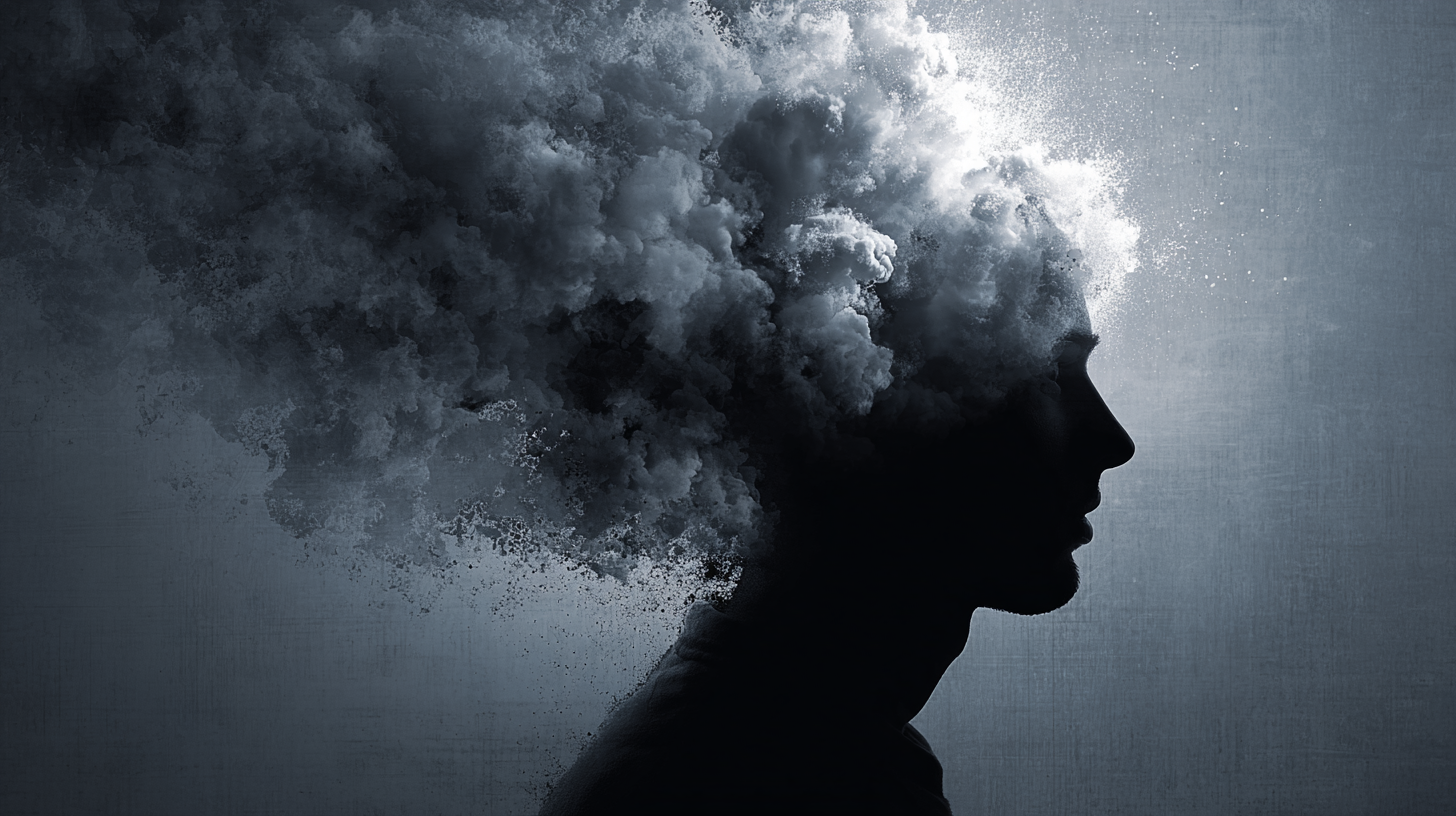
Willpower and Ego Depletion: What the Evidence Shows About Self-Control.
Does willpower run out as the day wears on? The popular fuel-tank model said yes, but large repeat studies found little support for it. What remains is a smaller effect after long, hard effort, and better ways to work with it. Here is what the science actually says, and what to do with it.
01Does Willpower Run Out?
What the Big Replication Studies Found, and What Still Holds
Does willpower run out as the day goes on? For years, psychology said yes. In a famous experiment, some students had to resist sweets and eat radishes instead. They then gave up sooner on a hard puzzle than students who had resisted nothing.[1] The idea became known as ego depletion.[1] Its claim was simple: willpower is a limited fuel, and every act of self-control burns some of it.[1][2] If that were true, the best advice would be to ration it.
The idea felt true. After a long afternoon of resisting distractions, it is easy to give in to junk food at night. The researchers behind the first studies called their account the strength model. In it, self-control draws on one limited store of energy. Like a muscle, it tires with use.[6]
The muscle image was neat, but later research found the explanation behind it largely wrong.[16][23] That does not mean self-control never tires. This article sets out what the big repeat studies found. It then looks at what may be going on when self-control feels harder after long effort, and at what helps.
The first big crack came from a check on the evidence itself. A meta-analysis pools the results of many studies. One such analysis, of eighty-three studies, had reported a sizeable average effect size (d, a standard measure of how big a difference is) of 0.62.[9] A later analysis of the same studies tested for publication bias: studies with no effect tend to go unpublished, which inflates averages. After correcting for it, the estimate shrank, and in some models it fell to about zero.[20]
Then came a much larger test of the standard method, which uses two tasks in a row. People first do a task that takes self-control, such as crossing out letters under tricky rules, or an easy version of it. Then everyone does a second task, to see whether the hard first task made them worse. Twenty-three laboratories in several countries ran one pre-registered version of this study on more than two thousand people.[23] Pre-registered means the plan and analysis were fixed in advance. The effect was too small to tell apart from zero. For the task it used, the classic effect did not replicate.
Does that mean the idea is dead? Not quite, and the question still matters because self-control is part of daily life. In one study using experience sampling, about two hundred adults reported on their desires as they went through their day. In this mostly student sample, attempts to resist a desire were reported at about one in five sampling moments.[19]
So the question was never whether self-control can feel harder after a demanding day; most people know it can. The question was what causes that feeling, when it matters, and whether the fuel-tank picture was doing more harm than good.[5][34]
02The Mechanism
What May Be Happening When Self-Control Flags
The first explanation was simple. Its authors proposed that self-control uses up blood sugar (glucose). In their account, the prefrontal cortex, the front part of the brain most involved in self-control, runs short of fuel.[4][3] Researchers called people "depleted" after a demanding self-control task, and the theory made a clear prediction: give depleted people a sugary drink, and their self-control should recover. Early experiments reported that glucose drinks restored performance after a self-control task.[3]
The glucose hypothesis sounded logical: if self-control takes effort, and effort takes energy, a fuel model seemed obvious. Its authors called willpower "more than a metaphor."[3]
Later work did not support the fuel account. Across three experiments, performance after a demanding task depended on both glucose ingestion and beliefs about willpower. Only participants with a limited-resource view performed better with sugar than with a sugar substitute.[22] The experiments did not establish the mechanism. Later tests of willpower beliefs, which did not involve glucose, found belief effects weaker, as the evidence section shows.
A proposed chain, not a tested one. In the first sample of one study, 44 adults, EEG after forty-five minutes of hard self-control tasks recorded more sleep-like delta waves over a frontal cluster of electrodes than after easier versions; source modelling pointed to the left inferior frontal gyrus and right temporal regions. A separate, earlier study found a weaker error signal (the ERN) after self-control. The link from these to failing impulse control is an interpretation.
Diagram · HPC
If self-control fatigue is not about running out, what is it? Two newer models offer answers.
The first, the process model, holds that long effort changes what you want to do, rather than draining a store.[16] Attention drifts from "have-to" goals toward "want-to" goals, such as rewards and quick pleasures. After a long day of careful work, the sofa can start to look better than the gym. The system is not empty; it has changed its priorities. An earlier brain study fits this: after a self-control task, people showed a weaker error-related negativity, a brain signal that appears when you notice a mistake.[10] The brain's error alarm grew quieter, as if people cared less about their errors.
The second, the opportunity cost model, treats the feeling of mental effort as a signal about value, not a fuel gauge.[21] The brain keeps weighing whether the task in hand is worth it compared with other things you could do. When the answer tilts toward no, effort feels harder and motivation drops. On this view, revising for an exam with a party next door feels harder than in a quiet library, even with the same energy. This fits a finding that troubled the fuel model: in lab studies, offering enough money made up for the depletion effect.[13] If willpower were truly used up, a cash reward should not bring it back; the finding points to motivation, not supply.
A brain-recording study from a single research centre offers a clue to what else may be going on.[31] The study had two samples of healthy adults. Some first spent forty-five minutes on hard self-control tasks; others did easier versions of the same tasks. Only the first sample, of 44, had brain recordings, made with electroencephalography (EEG), which picks up electrical activity through the scalp. In that sample, 86% of the easier-task group and 41% of the hard-task group chose the peaceful option in a one-shot Hawk and Dove game, a single round in which a player picks an aggressive or a peaceful move. A second sample of 403 repeated the behavioural pattern without EEG.
After the hard tasks, the EEG showed more delta-wave activity, the slow waves typical of deep sleep. It appeared over a frontal cluster of electrodes. Modelling of where the signal came from pointed to two areas: the left inferior frontal gyrus, a fold in the lower frontal lobe, and right temporal regions, at the side of the head. That matters because the change was local. Sleep research calls this local sleep: small patches of the brain briefly act as if asleep while the rest stays awake.[31]
This result is consistent with local fatigue in the brain, one proposed explanation. It is one study, in its own sample and tasks, and it reports a group result, not a fixed limit for everyone. It does not show that the slow waves caused the difference in peaceful choices.
That finding also bears on a view at the other extreme: that willpower has no limit at all. Earlier lab experiments tested executive control, the skills used to plan, focus and hold back impulses. Controlling attention, updating memory or managing emotions each briefly reduced people's capacity for it.[8] Local fatigue in the brain may be one reason this capacity has limits. The process model and the neural fatigue model, the local-fatigue account, might be complementary, but how they relate still needs testing.
03Evidence
The Five Studies That Redefined Self-Control Science
01The claim
The single load-bearing finding
The hero study finds 44 adults with EEG.
The five studies below are ordered by editorial judgement. Each was scored on a six-part rubric. The order also weighs what each study changed in the field, so it does not follow the scores exactly. The score chart below ranks them by score alone. Read in order, they tell a consistent story.[9][20][23] The original effect was inflated, and two large pre-registered tests found it near zero on their task sequences. A different task found a small effect, and one brain-recording study suggested a possible mechanism.
Key study result
44 adults with EEG
02How we measured
Scoring the depletion studies
Studies scored on design, sample, rigour, causality, replication, citations.
Because the ego depletion literature is built on paradigm-dependent effects and inflated small-sample estimates, this rubric prioritises objective physiological markers and pre-registered multi-lab designs over citation counts or historical influence.
Rubric weights
03The spread
Heterogeneity across 5 studies
Methodological quality across the ranked studies.
The effect sizes went from very large in the first small studies to near zero in the two large pre-registered tests, then to small with a different task. That is a story of correction, not failure. The first experiments may have caught something real, but their samples were too small to measure it well. Publication bias then inflated the average, as the opening showed.[20][29] A standard correction for missing studies cut the pooled average by more than a fifth, and stricter methods pushed it further toward zero.[20]
Rubric spread
85
→ 58 /100
Highest to lowest rubric score across the ranked studies.
04Beyond the top five
Wider evidence
What the wider evidence adds.
A different task did produce a small effect: twelve labs had people name the ink colours of colour words in a Stroop task, then do an eye-movement task.[30] An earlier meta-analysis, including published and unpublished studies, reported a medium estimate; that estimate came from a tentative subset using three types of task.[29] The twelve-lab result, from one specific task sequence, was smaller.[30] One proposed explanation is that the effect appears after long, demanding effort and fades when effort is brief, but these comparisons across studies did not test it.
5 studies, ranked.
Below: the anchor study in full; then every study's rubric score; then the supporting studies in ranked order.
01Anchor
Prolonged exertion of self-control causes increased sleep-like frontal brain activity and changes in aggressivity and punishment
In one study's first sample, people who had done hard self-control tasks showed more sleep-like slow waves over frontal electrodes than people who did easier versions. This is consistent with local fatigue, one proposed explanation.
It is the only study in this set to measure behaviour and brain activity together, in its first sample. That brings data, not just theory, to the debate about mechanism. It is still one study and needs repeating elsewhere.
Rubric breakdown
The strongest studies, ranked by methodological weight.
Each scored 0 to 100 against a six-criterion rubric, tagged by design and year; the anchor leads. No study in this set reaches the rubric-90 tier.
02
A Multilab Preregistered Replication of the Ego-Depletion Effect
Twenty-three laboratories in several countries ran the same standard protocol and found d = 0.04. That is too small to tell apart from zero. This was the study that broke the ego depletion consensus.
83/100
03
Ego depletion: Is the active self a limited resource?
Four experiments found that exerting self-control on one task made people worse at a second, unrelated one. In the first experiment, the gaps in how long the radish group kept at the puzzle, compared with the two control groups, were very large (approximately d = 1.8 to 2.0). Such large estimates from small samples, about fifteen to twenty-two people per group across the experiments, are now seen as almost certainly inflated.
58/100
04
Ego depletion, Is it all in your head? Implicit theories about willpower affect self-regulation
Participants who believed willpower is not a limited resource showed no ego depletion effect; those who believed it is limited showed the usual pattern.[14] A field part of the study followed people over time. In it, these beliefs predicted self-control in daily life during demanding periods.[14] A larger pre-registered test later found no evidence, in exploratory analyses, that willpower beliefs changed the effect.[32]
60/100
05
A Multilab Replication of the Ego Depletion Effect
Twelve laboratories used a Stroop colour-word task followed by an antisaccade eye-movement task, a different sequence from the letter-crossing task. They found a small but statistically significant effect: d = 0.10 overall. It rose to d = 0.16 after excluding participants who seemed to answer at random.
81/100
04Stakes
The Downstream Cost of Getting the Model Wrong
A wrong model of self-control fatigue leads to wrong advice, for people and for workplaces.
Decision Quality
Decision fatigue is the idea that making many choices in a row can wear down later self-control and judgement. In one set of studies, shoppers who had made more decisions showed less self-control on lab tasks afterwards.[11] Like other early depletion studies, these came before the large replications. When self-control flags, later choices may get less care. That is not because you are out of fuel, but because the brain may put less effort into each one. Making big choices early, and turning small repeated ones into rules, may help protect them.
impulsive purchases after a long run of decisions, agreeing to things you'd normally refuse, choosing the default option without thinking
Life Outcomes
Trait self-control is a person's usual level of self-control. In a large study, people higher in it had better grades, mental health and relationships, and fewer psychological problems. High self-control showed no sign of a downside.[18] This link holds whether or not the fuel model is right. It concerns a stable trait, not the short-term tiredness this article is about. One general theory of crime treats low self-control as central to criminal behaviour.[35]
chronic procrastination, underperformance relative to ability, relationships strained by impulsive behaviour
Organisational Cost
Workplaces that expect full self-control all day ignore evidence that long, hard mental effort can lower later performance in some settings. A well-known study of parole rulings is often cited as proof of depletion. It is better read as a cautionary tale, because its pattern may reflect how cases were scheduled.[15] The problem is not individual weakness but how the work is designed. Spacing out hard decisions and building in breaks are changes of that kind.
long meetings that produce nothing, back-to-back decisions without recovery, "productivity" cultures that deplete the people they claim to optimise
Self-Regulation Failure
Self-regulation is the wider skill of steering your own behaviour. One framework sees its failures as a common thread in overeating, substance misuse, money problems and conflict with others.[5] The framework describes several possible routes to self-regulation failure.[5] Routines and surroundings are practical places to look for changes.
snapping at your partner after a disciplined workday, breaking your diet after weeks of compliance, doom-scrolling as an escape from effort
05Protocol
A Four-Step Plan to Ease the Load on Self-Control
These are everyday habits informed by the studies above. No study has tested the four together. They are not a treatment for any condition, and none involves sugar or food.
The protocol, as a sequence.
When alert → Pre-Commitment → As needed → Ongoing
Time Demanding Tasks
Schedule demanding tasks at a time you usually feel alert. For example, start the report you keep putting off before you open email. These four habits have not been tested together.
No study here tested the best time of day for hard tasks. The brain-recording study found more sleep-like brain waves over the front of the head after forty-five minutes of hard self-control tasks than after easier versions.[31] Choosing a time when you feel alert is a practical guess, not a tested schedule.
Checking email or social media before deep work, which adds decisions before the real demands arrive.[11]
Automate with If-Then Plans
Write if-then plans for likely challenges: "If [situation], then [response]."
In a meta-analysis of nearly a hundred studies, these plans, called implementation intentions, had a medium-to-large effect on reaching goals (d = 0.65).[24] If-then plans can make a response easier to start when its cue appears.[24] Starting it can become more automatic; automaticity means acting with little deliberate thought. One example: "If my phone buzzes while I am writing, then I leave it face down until my break."
Vague intentions without a specific cue and response, such as "I'll eat better".
Recover with Positive Affect
Take a brief break when needed; try an activity that improves your mood.
In early lab studies, a lift in mood (positive affect), more than neutral rest, restored self-control after a depleting task.[12] No study here tested how long or how often to take breaks in daily life.
Assuming any break will do; in those lab studies, neutral rest helped less than a lift in mood.[12]
Offload to Habits
For any recurring self-control demand, build a habit. Repeat the behaviour in a consistent context so that starting it can become more automatic. For example, lay out your running kit the night before and run at the same time each morning.
Nearly half of daily actions are habits that, once formed, need little self-control.[26][27] In a twelve-week study of habit formation, fitted curves for 39 participants estimated a median of about two months to approach their own automaticity plateau, the level of automaticity the fitted curve approaches, with estimates ranging from under three weeks to more than eight months.[25] An experience-sampling study found that people high in self-control met fewer temptations, rather than resisting more of them.[33]
Relying on motivation to start the behaviour rather than on cues in your surroundings; the cue, not your resolve, triggers a habit.[36]
06Verdict
The verdict.
Bottom line
The useful question is not how much willpower you have, but how your days are set up to need less of it.
The argument
The ego depletion model was one of the most influential theories of self-control in psychology, and its central claim was largely wrong. Two large pre-registered tests did not find the effect the fuel idea predicted: they found effects near zero on their task sequences. A third large replication, with a different task, found a small effect. One brain-recording study found more sleep-like brain waves over the front of the head after long, hard effort than after easier tasks. Self-control fatigue is not a flaw of character or an excuse. It is better treated as a design problem: lower the demands, time hard tasks well, and let habits carry routine choices.
Does willpower run out, then? Not like fuel, but long, hard self-control can leave you less able or less willing to keep going. The twelve-lab replication, the brain-recording study and the process model each suggest this in their own way.[30][31][16] The plan's tools are behavioural strategies, each with its own evidence. None was shown to change the brain activity measured in the recording study.
The arc of this research shows how science is meant to work. A bold claim sparks a wave of studies, and repeat studies show it was overstated. Better methods then give a more accurate picture. The field now knows more than it did before, even though the original claim turned out to be mostly wrong.[20][23]
The practical step is to stop rationing willpower and start lowering the demands on it. Make fewer decisions on the spot, build more routines, and do hard tasks at your best hours. Start with one change from the plan above, such as an if-then plan for the hardest moment of your day. Needing that support is not a sign of weakness.
Easier tasks, or forty-five minutes of hard effort first.
The Model Was Wrong
The original model held that self-control uses up a limited store. Two large pre-registered tests found effects near zero on the task sequences they used. A smaller, more conditional effect remains, and its mechanism is still unsettled.
Wrong Model, Wrong Advice
A decade of advice was built on the fuel-tank image: save willpower, drink glucose, accept running out. It was unhelpful because it treated self-control fatigue as a supply problem. People were told their lapses meant they had run empty, when newer accounts propose shifting priorities or local brain fatigue instead.
Design, Don't Conserve
The approach the evidence supports is to lower the demands on self-control through routines, a better-designed environment and timing, not to ration a limited resource. If-then plans, habits built through repetition and mood-lifting breaks are behavioural strategies with their own evidence.
Put it to work
Where this science goes next on HPC
07Bibliography
The bibliography.
-
01
Journal
doi: 10.1037/0022-3514.74.5.1252
Ego depletion: Is the active self a limited resource? Journal of Personality and Social Psychology, 74(5), 1252–1265
-
02
Review
doi: 10.1037/0033-2909.126.2.247
Self-regulation and depletion of limited resources: Does self-control resemble a muscle?
-
03
Journal
doi: 10.1037/0022-3514.92.2.325
Self-control relies on glucose as a limited energy source: Willpower is more than a metaphor
-
04
Review
doi: 10.1177/1088868307303030
The physiology of willpower: Linking blood glucose to self-control
-
05
Review
doi: 10.1207/s15327965pli0701_1
Self-regulation failure: An overview
-
06
Journal
doi: 10.1111/j.1467-8721.2007.00534.x
The strength model of self-control
-
07
Journal
doi: 10.1080/00224549909598404
Longitudinal improvement of self-regulation through practice: Building self-control strength through repeated exercise
-
08
Journal
doi: 10.1037/0096-3445.136.2.241
Attention control, memory updating, and emotion regulation temporarily reduce the capacity for executive control
-
09
Meta
doi: 10.1037/a0019486
Ego depletion and the strength model of self-control: A meta-analysis
-
10
Journal
doi: 10.1111/j.1467-9280.2007.02004.x
Running on empty: Neural signals for self-control failure
-
11
Journal
doi: 10.1037/0022-3514.94.5.883
Making choices impairs subsequent self-control: A limited-resource account of decision making, self-regulation, and active initiative
-
12
Journal
doi: 10.1016/j.jesp.2006.05.007
Restoring the self: Positive affect helps improve self-regulation following ego depletion
-
13
Journal
doi: 10.1177/0146167203029007008
Mechanisms of self-control failure: Motivation and limited resources
-
14
Journal
doi: 10.1177/0956797610384745
Rubric 60/100
Ego depletion, Is it all in your head? Implicit theories about willpower affect self-regulation
-
15
Journal
doi: 10.1073/pnas.1018033108
Extraneous factors in judicial decisions
-
16
Journal
doi: 10.1177/1745691612454134
What is ego depletion? Toward a mechanistic revision of the resource model of self-control
-
17
Journal
doi: 10.1037/a0014635
Self-affirmation and self-control: Affirming core values counteracts ego depletion
-
18
Journal
doi: 10.1111/j.0022-3506.2004.00263.x
High self-control predicts good adjustment, less pathology, better grades, and interpersonal success
-
19
Journal
doi: 10.1037/a0026545
Everyday temptations: An experience sampling study of desire, conflict, and self-control
-
20
Meta
doi: 10.3389/fpsyg.2014.00823
Publication bias and the limited strength model of self-control: Has the evidence for ego depletion been overestimated?
-
21
Journal
doi: 10.1017/S0140525X12003196
An opportunity cost model of subjective effort and task performance
-
22
Journal
doi: 10.1073/pnas.1313475110
Beliefs about willpower determine the impact of glucose on self-control
-
23
Journal
doi: 10.1177/1745691616652873
A multilab preregistered replication of the ego-depletion effect
-
24
Meta
doi: 10.1016/S0065-2601(06)38002-1
Implementation intentions and goal achievement: A meta-analysis of effects and processes
-
25
Journal
doi: 10.1002/ejsp.674
How are habits formed: Modelling habit formation in the real world
-
26
Journal
doi: 10.1111/j.1467-8721.2006.00435.x
Habits, A repeat performance
-
27
Review
doi: 10.1037/0033-295X.114.4.843
A new look at habits and the habit–goal interface
-
28
Journal
doi: 10.1016/j.concog.2012.01.008
Mindfulness meditation counteracts self-control depletion
-
29
Meta
doi: 10.1007/s00426-017-0862-x
An updated meta-analysis of the ego depletion effect
-
30
Journal
doi: 10.1177/1948550619887702
A multilab replication of the ego depletion effect
-
31
Journal
doi: 10.1073/pnas.2404213121
Rubric 85/100
Prolonged exertion of self-control causes increased sleep-like frontal brain activity and changes in aggressivity and punishment
-
32
Journal
doi: 10.1177/0956797621989733
A multisite preregistered paradigmatic test of the ego-depletion effect
-
33
Journal
doi: 10.1177/1948550616679237
What's so great about self-control? Examining the importance of effortful self-control and temptation in predicting real-life depletion and goal attainment
-
34
Journal
doi: 10.1177/17456916221146158
The willpower paradox: Possible and impossible conceptions of self-control
-
35
Book
no doi
A General Theory of Crime
-
36
Book
no doi
Good Habits, Bad Habits: The Science of Making Positive Changes That Stick
No entries match the current filter and search.
The protocol card
Willpower and Ego Depletion: What the Evidence Shows About Self-Control
One sheet. The four moves, in the order the day runs them.
-
01
When alert
Time Demanding Tasks
Schedule demanding tasks at a time you usually feel alert. For example, start the report you keep putting off before you open email. These four habits have not been tested together.
AvoidChecking email or social media before deep work, which adds decisions before the real demands arrive.
-
02
Pre-Commitment
Automate with If-Then Plans
Write if-then plans for likely challenges: "If [situation], then [response]."
AvoidVague intentions without a specific cue and response, such as "I'll eat better".
-
03
As needed
Recover with Positive Affect
Take a brief break when needed; try an activity that improves your mood.
AvoidAssuming any break will do; in those lab studies, neutral rest helped less than a lift in mood.
-
04
Ongoing
Offload to Habits
For any recurring self-control demand, build a habit. Repeat the behaviour in a consistent context so that starting it can become more automatic. For example, lay out your running kit the night before and run at the same time each morning.
AvoidRelying on motivation to start the behaviour rather than on cues in your surroundings; the cue, not your resolve, triggers a habit.
hiperformanceculture.com · 36 sources · 5 April 2026

How this was made
The desk, the instrument, and when this page is next examined.
- Desk
- HPC Editorial
- Instrument
- 6 weighted criteria, 100 points see every score
- Register
- 36 sources, 34 with a resolving DOI read them
- Reading time
- 22 min read
Revision log
- First published.
- Last revised. Sources re-checked against the register above.
- Next review Due by , or earlier if a new controlled trial or systematic review lands.
THE HAND-OFF. Performance Scan: find your limiting factor. Three minutes, 24 questions, six systems. Your answers never leave your device.