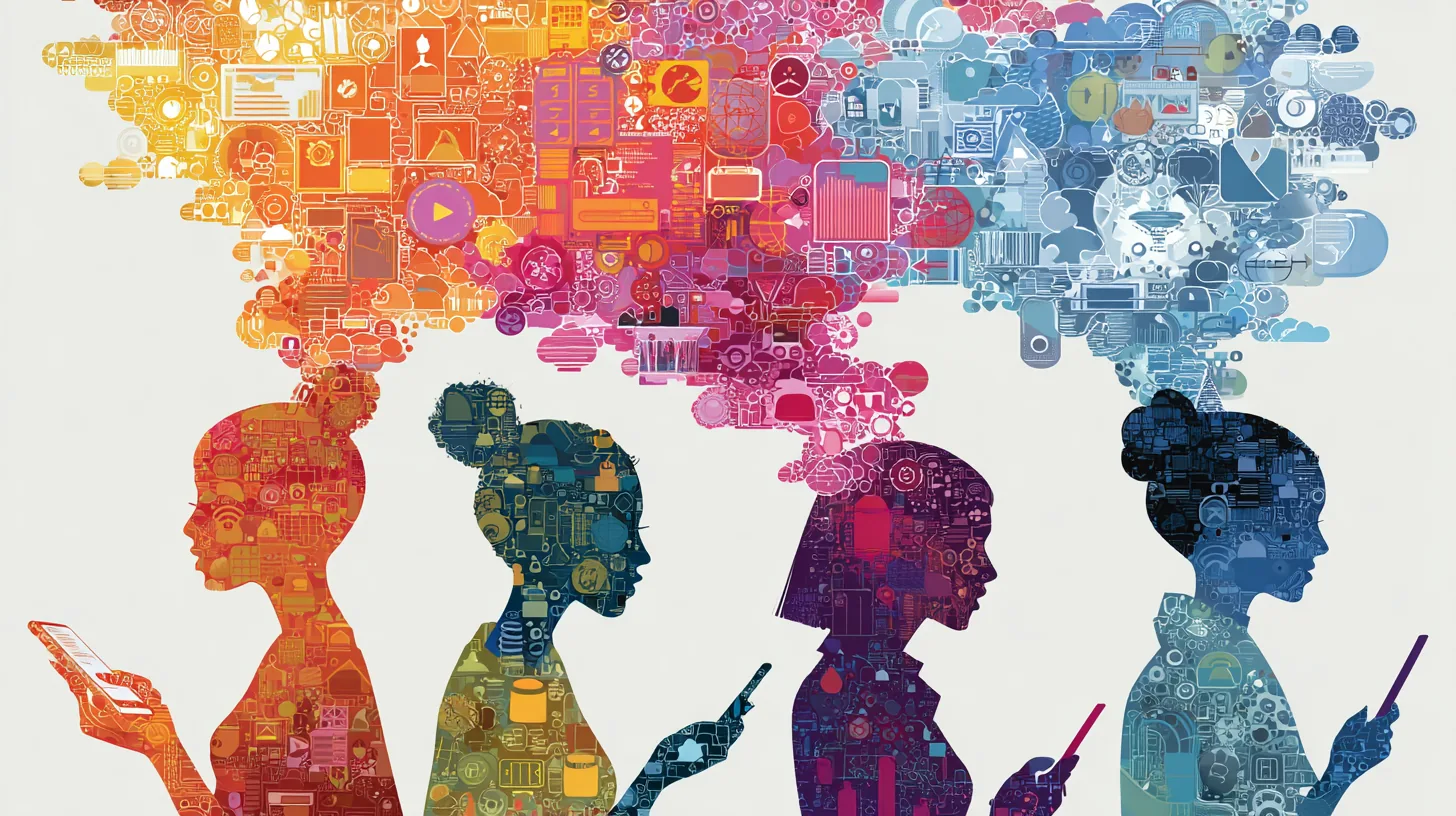
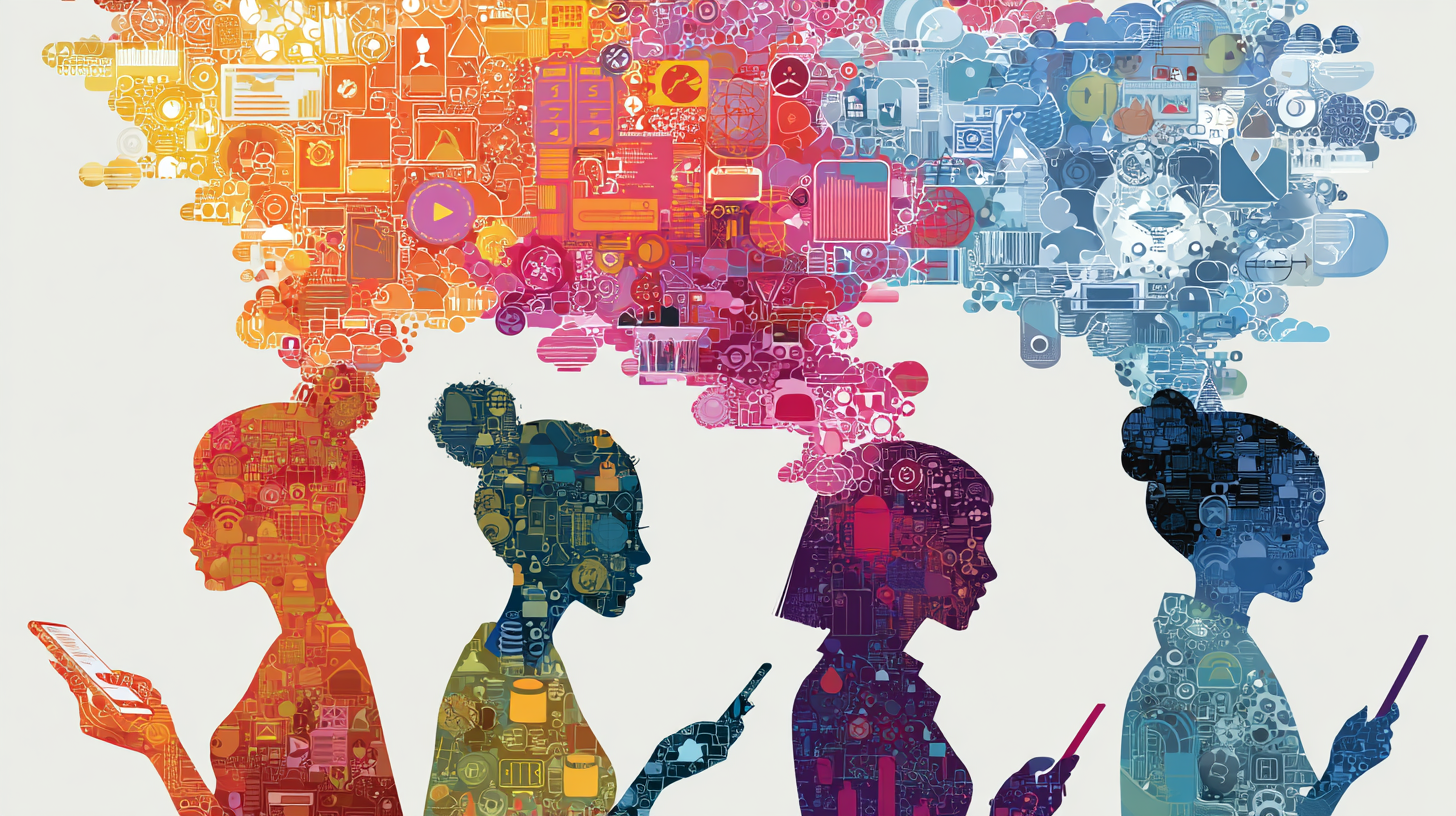
The Dopamine Loop That Hijacks Your Attention: Social Media Brain Science.
Social media platforms exploit the brain's reward prediction error system, the same dopamine circuit that evolved to detect food and mates, turning variable social feedback into a self-reinforcing loop that degrades prefrontal control, compresses attention, and reshapes neural architecture. Here is what the science actually says, and what to do with it.
01Schultz's Revelation
Dopamine fires for the cue, not the content
The average human spends 141 minutes per day on social media.[1] That figure, drawn from DataReportal's global tracking data encompassing social networking and messaging platforms, sounds like a scheduling problem, two hours and twenty-one minutes that could be spent elsewhere. It is not a scheduling problem. It is a neurochemical one. Those 141 minutes are not distributed evenly across the day like meals or meetings. They arrive in dozens of micro-sessions, each lasting seconds, each triggered by a notification or a craving that feels indistinguishable from hunger. The phone lights up. The thumb moves. The scroll begins. And somewhere deep in the midbrain, a circuit that evolved to detect ripe fruit and social allies fires as though something important has happened.[4]
More than 5.04 billion people, over 63 per cent of the world's population, now use social media.[2] Among American adolescents aged thirteen to seventeen, 95 per cent report using at least one platform, and more than a third describe their use as "almost constant."[3] These are not statistics about a technology preference. They are statistics about a species-wide behavioural shift that arrived faster than any cultural change in human history, driven by a variable-ratio reinforcement schedule that behavioural psychology identified decades ago in gambling research, and that Silicon Valley's engagement engineers have since refined into the most effective attention-capture system ever built.[4][26]
The question this article addresses is not whether social media is "bad." That framing is useless. The question is mechanical: what exactly happens inside the brain when you scroll, and why does the behaviour persist even when the person using the platform knows it is making them feel worse?
The answer begins with a neuroscientist named Wolfram Schultz, whose work on reward prediction error signalling in the 1990s revealed something counterintuitive about dopamine.[4] The popular image, dopamine as the "pleasure chemical," released when something good happens, is wrong. Schultz demonstrated that dopamine neurons in the ventral tegmental area fire not when a reward arrives, but when the brain detects that a reward might arrive.[5][6] The signal is anticipatory. It encodes the prediction of reward, not the experience of it. That distinction changes everything about how social media works on the brain, because platforms are designed to maximise exactly this signal: unpredictable, intermittent social feedback that keeps the anticipation circuit running indefinitely.
This article traces that circuit from its molecular origins through five of the strongest studies in the field, into the real-world consequences of chronic activation, and toward a protocol built on the evidence rather than on wellness intuition. The neuroscience is more advanced than the public conversation suggests. The mechanism is not mysterious. The evidence is not ambiguous. What is lacking is not knowledge but translation, the gap between what researchers have measured and what most people understand about their own scrolling behaviour.
The gap matters because social media use is not simply a time-management failure. It is, at the neural level, a hijacked habit loop, one that operates through the same striatal circuitry that encodes all automatised behaviour, from tying shoes to reaching for a cigarette.[24][25]
02The Mechanism
Inside the Reward Loop: How Social Media Rewires the Brain's Dopamine System
The circuit starts in the ventral tegmental area, a cluster of dopamine-producing neurons near the brainstem that functions as the brain's novelty-and-reward detector.[4] When Schultz recorded from these neurons in primates in 1997, he discovered that they did not fire in response to juice, they fired in response to the cue that predicted juice.[4] Once the animal learned the association, the dopamine signal shifted backward in time: from the reward itself to the stimulus that predicted the reward. And when the reward failed to appear after the cue, dopamine activity dropped below baseline, a negative prediction error that registered as something close to disappointment.[5][6]
That two-component architecture, a positive signal for better-than-expected outcomes and a negative signal for worse-than-expected outcomes, is the engine that social media exploits. Every notification is a cue. Every refresh of the feed is a pull of the lever. The platform does not need to deliver a reward every time. It needs to deliver rewards unpredictably, because unpredictability is what maximises the dopamine prediction error signal.[5] This is not a metaphor. It is the same variable-ratio schedule that Skinner identified in operant conditioning and that casino designers have used for decades.[4][26]
Sherman's landmark 2016 fMRI study provided the first direct neural evidence that social media feedback activates this circuit in humans. When adolescents viewed Instagram-style photos with many versus few likes inside the scanner, the nucleus accumbens, the brain's primary reward-processing hub, showed significantly greater activation (p < .00001 for own photos).[7] The effect was not subtle, and it was not limited to a single region. The caudate, putamen, and VTA all responded to the like-count manipulation, confirming that the full mesolimbic reward pathway engages when social endorsement is quantified and displayed.[7]
A social cue fires VTA dopamine neurons via reward prediction error; the resulting dopamine surge activates reward circuitry while simultaneously suppressing the prefrontal cortex’s braking signal, making disengagement neurologically costly.
Diagram · HPC
Sherman's study revealed a second finding that is arguably more important than the reward activation. When adolescents viewed risky content, photos of drinking, smoking, dangerous behaviour, that had received many likes, their cognitive control networks showed decreased activation.[7] The brain regions responsible for saying "wait" and "don't", including the dorsolateral prefrontal cortex and ventrolateral prefrontal cortex, went quieter in the presence of peer-endorsed risk. This is not risk-seeking. It is reward-mediated inhibitory suppression: the dopamine signal from social endorsement is strong enough to partially override the brain's braking system.[7][8]
Meshi, Morawetz, and Heekeren (2013) extended this finding by connecting laboratory neural measures to real-world behaviour. In their controlled fMRI experiment, participants who showed stronger left nucleus accumbens activation when receiving positive social feedback went on to use Facebook more intensively in their daily lives (r = 0.400, p = 0.026; Adjusted R² = 0.325).[9] The critical detail: monetary reward activation in the same participants did not predict Facebook use.[9] The social media habit is not driven by reward in general. It is driven by social reward specifically, the brain's ancient system for tracking reputation, status, and belonging, now captured by a platform that quantifies all three with a number under a photograph.
A 2023 systematic review of 28 MRI studies confirmed that the structural and functional signatures of problematic social media use converge on the ventral striatum, amygdala, and orbitofrontal cortex, the same network implicated in substance use disorders.[11]
03Evidence
The Five Strongest Studies on Social Media and the Dopamine System
01The claim
The single load-bearing finding
The hero study finds p < .00001 significance (own photos).
Not all evidence is created equal. Survey correlations with small effect sizes tell you something different from a controlled fMRI experiment where researchers manipulated the independent variable and measured the neural response. A nationally representative dataset of half a million adolescents tells you something different from a PET scan of 22 adults. Ranking evidence by methodological weight, design quality, sample scope, measurement precision, causal clarity, and replication status, is how mature fields distinguish signal from noise.[11]
Pooled estimate
p < .00001 significance
own photos
02How we measured
Grading the reward-circuit evidence
Studies scored on design, sample, rigour, causality, replication, citations.
Causality is the hard problem here: fMRI confirms which circuits activate, but only RCTs with deactivation arms can establish that social media drives wellbeing impairment rather than the reverse, making design and causal strength the decisive ranking criteria.
Rubric weights
03The spread
Heterogeneity across 5 studies
Methodological quality across the ranked studies.
The hierarchy reveals an important asymmetry. The strongest causal evidence for harm comes from the RCTs (Allcott, Hunt), large samples, randomised assignment, pre-registration. The strongest evidence for the mechanism comes from the neuroimaging studies (Sherman, Meshi, Westbrook), smaller samples, but direct neural measurement. Neither type of evidence alone would be sufficient. The RCTs show that something bad happens when you use social media heavily and something good happens when you stop, but they cannot show why.
Rubric spread
84
→ 63 /100
Highest to lowest rubric score across the ranked studies.
04What does not hold
Negative knowledge
What the evidence base does not support.
The correlational evidence that has dominated public debate, Twenge et al.'s nationally representative surveys, the meta-analytic associations, plays a supporting role in this hierarchy, not a starring one. Twenge's 2018 analysis of 506,820 adolescents found that heavy screen-time users were roughly twice as likely to report depressive symptoms, a pattern that held across two independent datasets (Monitoring the Future and Youth Risk Behavior Surveillance).[19] That is a meaningful dose-response association.
5 trials. One pooled answer.
Below: the anchor study in full; then the forest plot at scale; then the supporting trials in ranked order.
01Anchor
The Power of the Like in Adolescence: Effects of Peer Influence on Neural and Behavioral Responses to Social Media
Social media's quantified feedback (likes) directly activates the mesolimbic reward circuit with a precision measurable at p < .00001, and simultaneously impairs inhibitory control.
Only study in the field that experimentally manipulated social feedback and measured both reward activation and prefrontal suppression in the same paradigm, establishing the dual mechanism in a single experiment.
Rubric breakdown
The strongest studies, ranked by methodological weight.
Each scored 0–100 against a six-criterion rubric, tagged by design and year; the anchor leads. No study in this set reaches the rubric-90 tier.
02
Nucleus Accumbens Response to Gains in Reputation for the Self Relative to Gains for Others Predicts Social Media Use
Left NAcc activation during self-relevant reputation gains predicted real-world Facebook intensity (p = 0.026; Adjusted R² = 0.325). Monetary reward activation did not predict Facebook use, the drive is social-reward-specific, not general reward.[9]
76/100
03
The Welfare Effects of Social Media
Four weeks of Facebook deactivation produced small but statistically significant improvements across happiness, life satisfaction, depression, and anxiety measures. A persistent reduction in post-experiment Facebook use indicated genuine habit disruption.[14]
72/100
04
No More FOMO: Limiting Social Media Decreases Loneliness and Depression
Three weeks of limiting social media to 30 minutes per day (10 minutes per platform across Facebook, Instagram, Snapchat) produced significant reductions in loneliness and depression versus controls. Both groups showed decreased FOMO and anxiety, suggesting self-monitoring alone confers some benefit.[15]
68/100
05
Striatal Dopamine Synthesis Capacity Reflects Smartphone Social Activity
Higher proportion of social app interactions correlated with lower dopamine synthesis capacity in the bilateral putamen (β = −1.5 × 10⁻³ min⁻¹, p = 1.3 × 10⁻⁴). Effect survived Bonferroni correction and permutation testing. Cross-sectional design, direction of causality is unconfirmed. N = 22, not yet independently replicated.[10]
63/100
04Stakes
Four systems degrade when the dopamine loop operates without interruption
The consequences are not abstract. They manifest as measurable changes in mood, cognition, sleep, and social comparison, each reinforcing the others in a self-amplifying cycle.
Affective Wellbeing
Kross et al. (2013) used experience-sampling methodology with 82 young adults and found that more Facebook use predicted worse next-moment affect and declining life satisfaction over two weeks.[17] The decline was specific to passive consumption, browsing the feed, not active communication.[18] Verduyn et al. (2015) experimentally confirmed that passive use causes affective decline through social comparison and envy.[18]
Mood dips after scrolling · vague dissatisfaction without identifiable cause · "doom scrolling" that feels compulsive
Attentional Control
Ophir, Nass, and Wagner (2009) demonstrated that heavy media multitaskers perform worse at filtering irrelevant information, they are more susceptible to distraction, not less.[20] The attentional system does not adapt to fragmented input; it fragments with it. The fNIRS evidence suggests prefrontal control circuits actively decrease during social media exposure, compounding the problem.[13]
Difficulty sustaining focus on single tasks · reaching for phone during natural pauses · shorter productive intervals
Sleep Architecture
Ahmed et al.'s (2024) systematic review with meta-analyses found consistent bidirectional associations between social media use and poor sleep quality.[21] The mechanism is dual: blue light (460–480 nm) suppresses melatonin secretion, and social content triggers emotional arousal that delays sleep onset.[21] Poor sleep directly impairs next-day prefrontal function, making the dopamine loop harder to resist, a self-reinforcing spiral.
Difficulty falling asleep after scrolling · restless or unrefreshing sleep · morning grogginess and phone-reaching as first action
Social Comparison
Fardouly et al. (2015) found that brief Facebook exposure increased body image concerns and worsened mood in young women through upward social comparison.[22] Verduyn et al. (2022) extended this with the active-passive model: passive consumption (browsing, lurking) drives comparison-mediated wellbeing decline, while active communicative use does not.[27] The feed is a comparison engine disguised as a social tool.
Feeling inadequate after viewing others' posts · envy you cannot explain · comparing your interior to others' exterior
05Protocol
A 4-Step Dopamine Recovery Protocol
Built from RCT evidence, not wellness intuition. The goal is not to quit social media, it is to interrupt the loop long enough for prefrontal control to reassert itself.
The protocol, as a sequence.
Daily → Morning → Night → Ongoing
The 30-Minute Budget
Set hard OS-level time limits to 10 minutes per platform per day, totalling ≤30 minutes across all social apps.
The 30-minute limit is the dose tested in Hunt et al.'s (2018) RCT, which produced significant mental health benefits versus controls at three weeks. No dose-response curve comparing outcomes at multiple thresholds has been published, 30 minutes is the best-evidenced single dose point, not a neurobiologically derived threshold.[15] Use OS-level Screen Time or Digital Wellbeing controls rather than willpower, the same prefrontal circuits that would "stop the scroll" are impaired by excess use.[23]
Replacing Instagram time with TikTok or news feeds, any variable-reward scroll interface activates the same NAcc circuit. All platforms count toward the budget.[7]
The First-Hour Firewall
No social media for the first 60 minutes after waking.
Cortisol peaks 30–45 minutes post-waking (the cortisol awakening response). Introducing variable-reward signals during this window couples the brain's natural alertness peak to the reward loop, anchoring the habit at its most neurobiologically vulnerable moment.[21]
"Just checking notifications", even brief passive scrolling during the first hour activates NAcc dopamine anticipation and sets the emotional tone for the day.[18]
The Last-Hour Blackout
No social media for 60 minutes before bed, device charged in another room.
Social media before sleep compounds two harms: blue light suppresses melatonin, and social content triggers emotional arousal that delays sleep onset. Impaired sleep degrades next-day prefrontal function, making the loop harder to resist.[21] Allcott et al. (2020) showed that even brief deactivation produces lasting behavioural change through habit interruption.[14]
Blue-light glasses are insufficient, emotional hyperarousal from social content, not only photon exposure, drives sleep disruption.[21]
The Passive Use Audit
Within the 30-minute budget, replace passive scrolling with intentional communicative use, direct messages, deliberate posts, and track which you are doing.
Verduyn et al. (2015) experimentally demonstrated that passive consumption drives wellbeing decline through envy and social comparison; active communicative use does not.[18] The distinction allows social media for genuine social connection without triggering the comparison loop.[27]
Assuming "use less" is the only option, curated, intentional, communicative use preserves the genuine social benefits while eliminating the passive-comparison mechanism.[27]
06Verdict
The verdict.
"Dopamine neurons fire not when the reward arrives, but the moment they expect it might. Scroll further, and the expectation never resolves." Wolfram Schultz, reward prediction error model (1997/2016)
Bottom line
The loop is not your fault. But breaking it is your move, and the evidence says the move is simpler than you think.
The argument
Social media platforms have, whether by design or by optimisation, constructed the most effective variable-ratio reinforcement system in human history, one that activates the brain's reward prediction circuitry (Sherman 2016), predicts real-world compulsive use from individual reward sensitivity (Meshi 2013), causally degrades wellbeing at population scale (Allcott 2020), and is associated with measurably lower dopamine synthesis in the striatum (Westbrook 2021). The mechanism is not subtle, not ambiguous, and not a matter of opinion. It is a five-node neurobiological loop, anticipation, reward, encoding, suppression, return, and every node has been independently measured. The practical question is not whether the loop exists. It is whether you choose to operate within it on your terms or on the platform's.
The most important thing this evidence changes is the framing. Social media use is not a willpower problem. It is not a character flaw. It is not something that people who "have more self-control" simply do less of. The neuroimaging evidence shows that the circuit responsible for self-control, the dorsolateral prefrontal cortex, is the circuit that social media suppresses.[7][13] Asking someone to use willpower to stop scrolling is like asking them to brake a car whose brake pedal has been disconnected. The intervention has to be structural: change the environment, change the inputs, change the schedule.
That reframe also explains why the public conversation has been so unproductive. "Is social media bad for you?" is a population-level question that admits of qualified, hedged, equivocal answers, because at population scale, the average effect size is modest. But "What is social media doing to the circuit that controls your attention?" is a mechanistic question with a clear answer: it is activating reward, suppressing control, and encoding the behaviour as automatic.[7][9][11] The modesty of population-level effect sizes does not mean the mechanism is weak. It means the mechanism operates differently in different people, at different doses, with different vulnerability profiles, exactly as you would expect from a system mediated by individual variation in dopamine receptor density and prefrontal maturation.[10][12]
The reader who finishes this article should not feel alarmed. They should feel informed, and specifically informed about a mechanism they can interrupt. The dopamine loop is powerful, but it is not inevitable. It runs on unpredictability, and unpredictability is something a schedule can remove. Thirty minutes a day. No first-hour scrolling. No last-hour scrolling. Active over passive. That is not a wellness programme. It is a signal-engineering protocol derived from the same neuroscience that explains why the loop exists in the first place.
Same circuit. Five times the signal.
The loop is real
Social media activates the mesolimbic reward pathway, suppresses prefrontal inhibitory control, and is associated with lower dopamine synthesis capacity in heavy users. The neurobiological evidence now covers every link in the mechanistic chain, from prediction error to habit encoding to structural remodelling.[7][9][10][11]
The cost is cumulative
The consequences, mood decline, attentional fragmentation, sleep disruption, social comparison, are individually small but compound over months and years. The population-level signal is modest because the damage is slow, which is exactly what makes it hard to notice and easy to dismiss.[17][19][20][21]
Structure beats willpower
OS-level time limits, timing firewalls, and passive-to-active use shifts interrupt the loop at the input stage, the only point where intervention is effective, because the prefrontal circuits needed for voluntary control are the ones the loop impairs. Thirty minutes a day is the best-evidenced dose point; structural controls are the best-evidenced delivery mechanism.[15][23]
Put it to work
Where this science goes next on HPC
07Bibliography
The bibliography.
-
01
Journal
source
Digital 2024: Deep dive, the time we spend on social media
-
02
Journal
source
Digital 2024: 5 billion social media users
-
03
Journal
source
Social media and youth mental health: The U.S. Surgeon General's advisory
-
04
Journal
doi: 10.1126/science.275.5306.1593
A neural substrate of prediction and reward
-
05
Journal
doi: 10.31887/DCNS.2016.18.1/wschultz
Dopamine reward prediction error coding
-
06
Review
doi: 10.1038/nrn.2015.26
Dopamine reward prediction-error signalling: A two-component response
-
07
Journal
doi: 10.1177/0956797616645673
Rubric 84/100
The power of the like in adolescence: Effects of peer influence on neural and behavioral responses to social media
-
08
Journal
doi: 10.1093/scan/nsy051
What the brain "Likes": Neural correlates of providing feedback on social media
-
09
Journal
doi: 10.3389/fnhum.2013.00439
Rubric 76/100
Nucleus accumbens response to gains in reputation for the self relative to gains for others predicts social media use
-
10
Journal
doi: 10.1016/j.isci.2021.102497
Rubric 63/100
Striatal dopamine synthesis capacity reflects smartphone social activity
-
11
Meta
doi: 10.3390/brainsci13050787
A systematic review of structural and functional MRI studies investigating social networking site use
-
12
Journal
doi: 10.1097/WNR.0b013e328346e16e
Reduced striatal dopamine D2 receptors in people with Internet addiction
-
13
Journal
doi: 10.1038/s41598-025-20844-7
The Effect of Social Media Consumption on Emotion and Executive Functioning in College Students: An fNIRS Study in Natural Environment
-
14
Review
doi: 10.1257/aer.20190658
Rubric 72/100
The welfare effects of social media
-
15
Journal
doi: 10.1521/jscp.2018.37.10.751
Rubric 68/100
No more FOMO: Limiting social media decreases loneliness and depression
-
16
RCT
doi: 10.1089/cyber.2021.0324
Taking a one-week break from social media improves well-being, depression, and anxiety: A randomized controlled trial
-
17
Journal
doi: 10.1371/journal.pone.0069841
Facebook use predicts declines in subjective well-being in young adults
-
18
Cohort
doi: 10.1037/xge0000057
Passive Facebook usage undermines affective well-being: Experimental and longitudinal evidence
-
19
Journal
doi: 10.1177/2167702617723376
Increases in depressive symptoms, suicide-related outcomes, and suicide rates among U.S. adolescents after 2010 and links to increased new media screen time
-
20
Journal
doi: 10.1073/pnas.0903620106
Cognitive control in media multitaskers
-
21
Meta
doi: 10.1016/j.jad.2024.08.193
Social media use, mental health and sleep: A systematic review with meta-analyses
-
22
Journal
doi: 10.1016/j.bodyim.2014.12.002
Social comparisons on social media: The impact of Facebook on young women's body image concerns and mood
-
23
RCT
doi: 10.1016/j.abrep.2021.100365
Does a 7-day restriction on the use of social media improve cognitive functioning and emotional well-being? Results from a randomized controlled trial
-
24
Journal
doi: 10.1002/ejsp.674
How are habits formed: Modelling habit formation in the real world
-
25
Journal
doi: 10.1111/j.1467-8721.2006.00435.x
Habits, a repeat performance
-
26
Journal
doi: 10.1177/17579139251331914
Dopamine-scrolling: A modern public health challenge requiring urgent attention
-
27
Journal
doi: 10.1177/09637214211053637
Do social networking sites influence well-being? The extended active–passive model
No entries match the current filter and search.
The protocol card
The Dopamine Loop That Hijacks Your Attention: Social Media Brain Science
One sheet. The four moves, in the order the day runs them.
-
01
Daily
The 30-Minute Budget
Set hard OS-level time limits to 10 minutes per platform per day, totalling ≤30 minutes across all social apps.
AvoidReplacing Instagram time with TikTok or news feeds, any variable-reward scroll interface activates the same NAcc circuit. All platforms count toward the budget.
-
02
Morning
The First-Hour Firewall
No social media for the first 60 minutes after waking.
Avoid"Just checking notifications", even brief passive scrolling during the first hour activates NAcc dopamine anticipation and sets the emotional tone for the day.
-
03
Night
The Last-Hour Blackout
No social media for 60 minutes before bed, device charged in another room.
AvoidBlue-light glasses are insufficient, emotional hyperarousal from social content, not only photon exposure, drives sleep disruption.
-
04
Ongoing
The Passive Use Audit
Within the 30-minute budget, replace passive scrolling with intentional communicative use, direct messages, deliberate posts, and track which you are doing.
AvoidAssuming "use less" is the only option, curated, intentional, communicative use preserves the genuine social benefits while eliminating the passive-comparison mechanism.
hiperformanceculture.com · 27 sources · 6 April 2026




How this was made
The desk, the instrument, and when this page is next examined.
- Desk
- HPC Editorial
- Instrument
- 6 weighted criteria, 100 points see every score
- Register
- 27 sources, 24 with a resolving DOI read them
- Reading time
- 22 min read
Revision log
- First published.
- Last revised. Sources re-checked against the register above.
- Next review Due by , or earlier if a new controlled trial or systematic review lands.
THE HAND-OFF. Performance Scan: find your limiting factor. Three minutes, 24 questions, six systems. Your answers never leave your device.