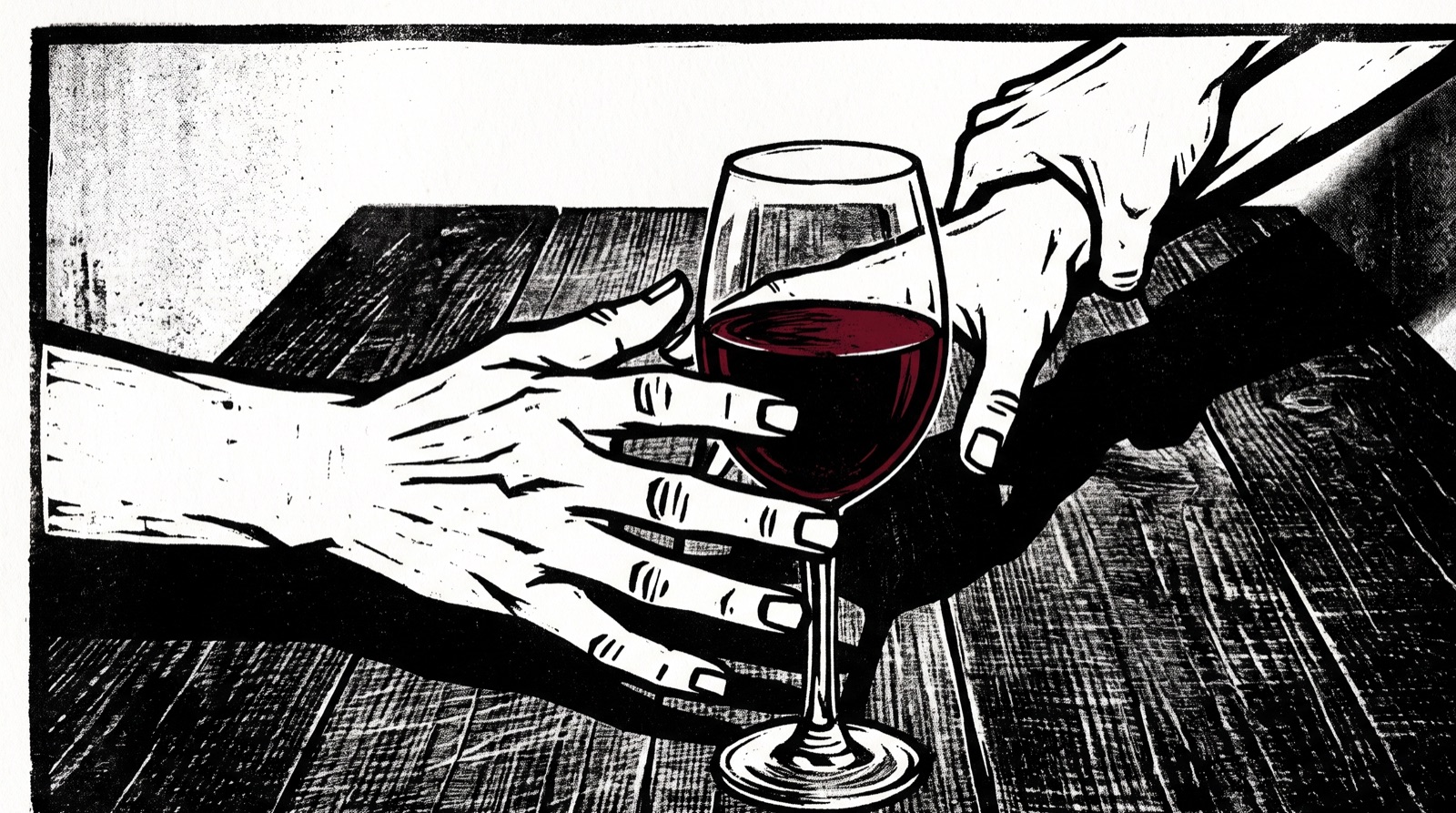
Self-control n.
Sometimes used interchangeably with self-regulation, though self-regulation more broadly includes any process of managing emotions, thoughts, and behaviours toward a goal.
also known as self-regulation
The definition
Self-control is the capacity to override dominant impulses, desires, or habitual responses in favour of goals requiring sustained effort or delayed gratification. It operates through competition between an automatic, impulsive system and a deliberative, reflective system rooted in prefrontal cortex function. Higher trait self-control consistently predicts better health, academic performance, financial security, and interpersonal outcomes.
The mechanism
Self-control operates through competition between two cognitive systems2. The impulsive system generates fast, automatic responses based on associative learning and emotional salience. The reflective system, anchored in prefrontal cortex circuits, applies rules and long-term goals to override those responses through executive working memory. Controlled behaviour engages prefrontal cortex circuits; habitual and automatic behaviour engages posterior striatal circuits. The balance between these systems, not the strength of any single faculty, determines self-control outcomes.
For decades, the dominant account of self-control failure was Baumeister's strength model: each act of self-regulation draws on a single, finite inner resource, and exercising self-control on one task measurably reduces subsequent performance on an unrelated one1. This ego depletion framework became foundational in both research and popular advice. A 23-laboratory registered replication involving 2,141 participants, however, found an effect indistinguishable from zero4. The strength model is historically important but its core empirical claim remains contested.
Trait self-control, assessed through measures such as the Brief Self-Control Scale, predicts engagement in health-promoting practices across physical activity, diet, and sleep5. High-trait individuals succeed less by resisting temptation in the moment and more by structuring their environments to reduce conflict situations before they arise2. The analogy to military logistics is apt: the skilled commander arranges supply lines so the force never runs short, rather than relying on discipline under scarcity. The architecture of the situation, not the force of will, is the primary operative variable.
In practice
The distinction between willpower-dependent and environment-dependent self-control shows up clearly in practical habit design.
Worked example
A professional working from home finds that mid-afternoon snacking consistently derails his nutrition goals. When he moves snacks to an opaque container at the back of a high shelf rather than leaving them on the desk, consumption drops sharply without any conscious effort. He has not strengthened his willpower; he has redesigned the cue environment so the impulsive system rarely gets activated.
Self-control here required no conscious resistance: only a single architectural change to the choice environment.
Why it matters
The stakes of self-control extend well beyond single-session willpower. Moffitt and colleagues tracked 1,000 individuals from birth to age 32 and found that childhood self-control, measured between ages three and eleven, predicted adult physical health, substance dependence, financial standing, and criminal record in a dose-response gradient3. The gradient held after controlling for IQ and socioeconomic status. Children with lower self-control became adults with worse outcomes on nearly every dimension assessed.
For performance practitioners, the implication is that self-control is more a design problem than a character problem. Interventions that reduce situational exposure to temptation, such as removing environmental cues or forming implementation intentions, consistently outperform willpower-only approaches in sustaining behaviour change5. Trait self-control also predicts sleep quality alongside physical activity and dietary adherence; practitioners who deprioritise sleep as a variable in performance programmes are overlooking one of self-control's strongest downstream effects.
Questions of record
What is the difference between self-control and willpower?
Willpower usually refers to the moment-to-moment subjective experience of resisting a specific temptation. Self-control is the broader capacity, encompassing both impulsive and reflective systems, that determines whether that resistance succeeds. High-self-control individuals rely less on willpower and more on environment design to avoid conflict situations before they arise.
Does self-control run out during the day?
Baumeister's ego depletion model proposed that each act of self-regulation draws from a finite inner resource, reducing subsequent performance. A 23-laboratory replication in 2016 found an effect size near zero, leaving the depletion hypothesis contested. Current evidence supports recovery practices such as rest, but does not confirm resource exhaustion as the mechanism.
How does childhood self-control affect adult outcomes?
A 32-year cohort study tracking 1,000 individuals from birth found that childhood self-control, assessed between ages three and eleven, predicted adult health, substance dependence, financial security, and criminal record independently of IQ and socioeconomic status. The relationship was dose-response: lower childhood self-control consistently mapped to worse adult outcomes across every domain measured.
How can I improve self-control?
The most durable gains come from environment design rather than willpower practice. Remove cues that trigger unwanted behaviours, form specific implementation intentions (if-then plans linking cues to desired responses), and build routines that make the reflective system's preferred action the path of least resistance. Willpower-based resistance alone tends to fail under fatigue or high cognitive load.