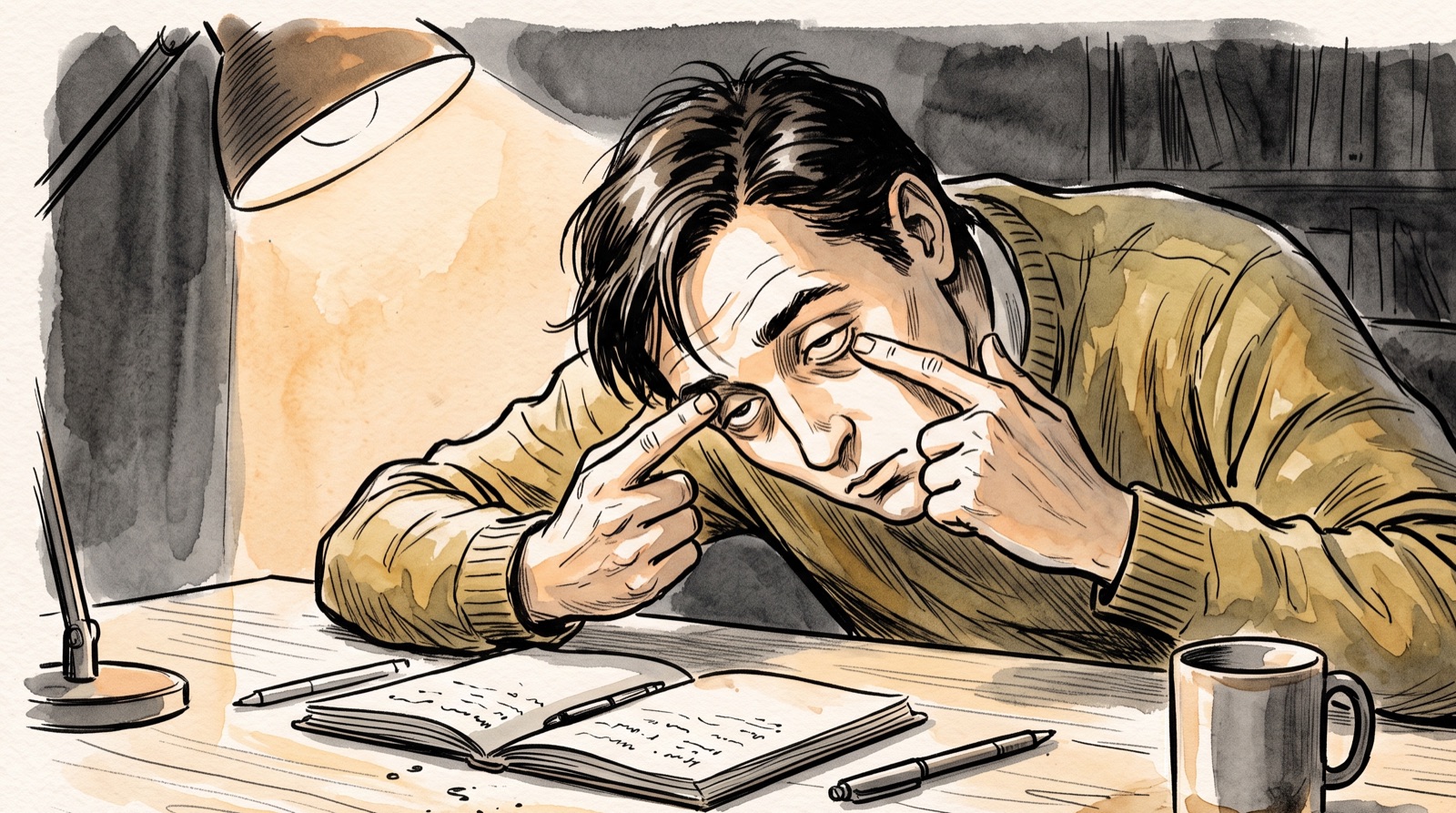
Adenosine n.
Adenosine is not adenosine triphosphate (ATP): ATP is the cell's primary energy carrier, a structurally distinct molecule with three phosphate groups.
/əˈdɛn.ə.siːn/ · also known as adenine riboside, 9-beta-D-ribofuranosyladenine
The definition
Adenosine is a purine nucleoside synthesised continuously in the brain throughout wakefulness, accumulating progressively in the basal forebrain and adjacent regions to generate what researchers term homeostatic sleep pressure. By binding to A1 and A2A receptor subtypes, it suppresses the activity of wake-promoting neurons and drives the physiological urge to sleep.
~2x
higher basal forebrain adenosine after 6 hours of enforced wakefulness vs. sleep
PORKKA-HEISKANEN ET AL. · 19971
The mechanism
Adenosine is produced continuously in the brain throughout wakefulness, accumulating progressively in the basal forebrain's extracellular space. Porkka-Heikkinen and colleagues demonstrated that concentrations in this region rise continuously over hours of sustained wakefulness and return to baseline during recovery sleep1. A meta-analysis of multiple animal models confirmed this accumulation pattern across species2.
The sleep-promoting effect operates through two receptor subtypes. A1 receptors in the basal forebrain bind adenosine and directly inhibit wake-active cholinergic neurons, shifting the arousal balance towards sleep5. A2A receptors in the shell of the nucleus accumbens govern a separate pathway; Lazarus and colleagues established that caffeine's arousal effect depends on these A2A receptors specifically, not the A1 subtype3.
Sleep deprivation does not simply suppress adenosine signalling; the pressure accumulates. Bjorness and colleagues demonstrated that forebrain A1 receptors are necessary for the homeostatic slow-wave activity rebound that follows sleep deprivation4. When recovery sleep occurs, basal forebrain adenosine concentrations fall and the slow-wave rebound that discharges the accumulated pressure proceeds.
Sleep Pressure — Adenosine accumulates through the day, building sleep pressure, then clears during sleep.
In practice
The mechanism of adenosine accumulation becomes practically concrete in any context where wakefulness is extended beyond a standard sleep-wake cycle.
Worked example
A shift worker completing an eight-hour overnight period has been accumulating basal forebrain adenosine continuously since before midnight. By the time the shift ends, concentrations are near their daily peak. Any cognitively demanding task attempted at this point, whether reviewing operational decisions, navigating a commute, or managing a time-sensitive call, occurs against maximal sleep pressure rather than the cleared adenosine state that follows a full night's sleep.
Adenosine accumulation, not motivational failure, is the physiological substrate of performance decline under extended wakefulness.
Why it matters
Adenosine concentrations in the basal forebrain approximately double within six hours of enforced wakefulness relative to baseline sleep levels1, and this build-up continues throughout the entire wake period. Because the molecule drives sleep onset via receptor-mediated inhibition of wake-active neurons5, the sleepiness associated with extended wakefulness has a quantifiable molecular correlate, not merely a subjective one.
The adenosine system also clarifies why caffeine works and where its limits lie. Caffeine blocks A1 and A2A receptors competitively3, which reduces the perception of sleepiness, but the underlying adenosine accumulation continues during this blockade. The homeostatic rebound that follows sleep deprivation, characterised by elevated slow-wave activity, requires intact A1 receptor signalling4; this recovery process is receptor-mediated and depends on sleep occurring, not on stimulant clearance alone.
Questions of record
What does adenosine actually do in the brain?
Adenosine is a nucleoside that accumulates in the basal forebrain throughout wakefulness. It binds to A1 and A2A receptors on wake-active neurons and inhibits their activity, progressively reducing arousal. The longer you remain awake, the more adenosine builds up and the stronger your biological drive to sleep becomes.
How does caffeine interact with adenosine?
Caffeine competes with adenosine for the same receptor binding sites, specifically the A1 and A2A subtypes, without activating them. This competitive blockade temporarily reduces the perception of sleepiness. However, adenosine continues accumulating throughout the period of blockade; when caffeine is metabolised, the accumulated sleepiness reasserts itself.
Does sleep actually reduce adenosine levels?
Basal forebrain adenosine concentrations rise progressively during wakefulness and fall during recovery sleep. This decline is the physiological process that clears accumulated sleep pressure. Sleep deprivation prevents this clearance, which is why the homeostatic sleep drive, and the adenosine concentrations that produce it, persist until adequate sleep is obtained.
Is adenosine the same as ATP?
No. Adenosine triphosphate (ATP) is the primary energy currency of cells, a structurally distinct molecule with three phosphate groups attached. Adenosine is the nucleoside core of ATP but serves an entirely different role in the brain, functioning as a sleep-pressure signal rather than an energy carrier.
Sources
Appears in
- Sleep DebtGlossary