Curcumin and Neuroinflammation: The Evidence Behind the Hype.
The molecule works in the lab, the signal is consistent across human trials, and the delivery problem remains unsolved. Curcumin brain science is a case study in the distance between mechanism and medicine. Here is what the science actually says, and what to do with it.
01The Delivery Problem
Curcumin suppresses neuroinflammation in the lab but barely reaches the brain
Curcumin brain science begins with a paradox. The molecule that gives turmeric its colour has been used medicinally for roughly six thousand years,[5] studied in modern laboratories for over a century since its isolation in 1815,[6] and tested in more than a hundred randomised controlled trials.[7] It suppresses inflammatory cytokines in the lab. It crosses into brain tissue barely. The gap between those two facts is where most of the confusion lives. The curcumin story is not a story about whether the molecule works. It is a story about whether the molecule arrives.
That distinction matters because neuroinflammation (the chronic, low-grade activation of the brain's resident immune cells) is no longer a background detail in neuroscience. It is increasingly understood as a driver of cognitive decline, mood dysregulation, and neurodegenerative risk.[8][9] The cytokines that curcumin suppresses in controlled trials (tumour necrosis factor-alpha (TNF-α), interleukin-6 (IL-6), and C-reactive protein (CRP)) are the same markers that predict measurable cognitive deterioration a decade later.[3]
The global supplement market has noticed. Curcumin products generated roughly $100 million in revenue in 2024, with projections approaching $400 million by the early 2030s.[10] The industry's enthusiasm outpaces the science by a wide margin: the U.S. FDA issued 29 warning letters to curcumin supplement manufacturers between 2018 and 2023 for making unsupported anti-disease claims.[11] A critical umbrella review published in 2025 found that 82.8% of curcumin meta-analyses rated "very low to low" on the GRADE certainty scale, meaning the vast majority of the pooled evidence fails basic quality thresholds.[12]
Curcumin brain science has three distinct layers, each of which holds weight on its own but creates problems in combination. The mechanism is real: curcumin inhibits the NF-κB inflammatory signalling pathway, shifts microglial activation toward neuroprotective phenotypes, and upregulates brain-derived neurotrophic factor (BDNF), at least in preclinical models.[14][15][4] The human trial signal is also real: meta-analyses of randomised controlled trials consistently show reductions in inflammatory biomarkers.[1][16] The bioavailability problem is equally real: standard curcumin is so poorly absorbed that a 24-week Alzheimer's trial using 2–4 grams daily found undetectable levels in cerebrospinal fluid and zero clinical benefit.[17]
Every positive clinical finding in the modern literature used a patented bioavailable formulation, Theracurmin, Meriva, CurQfen, or nano-curcumin.[2][18][19] Every failed trial used standard curcumin powder. That pattern is not a minor footnote. It is the central translational problem, and it is the reason this article exists: to separate what the molecule can do from what the supplement aisle actually delivers.
The hype centres on turmeric powder and golden lattes, while the evidence centres on pharmaceutical formulations that most consumers have never heard of and most supplement labels do not contain.
02The Mechanism
The NF-κB Cascade and the Brain's Inflammatory Default
The brain runs a permanent security operation. Roughly 10–15% of all cells in the central nervous system are microglia, the resident immune cells whose job is to detect damage, clear debris, and coordinate the inflammatory response.[20] In a healthy brain, microglia survey their territory in a resting state, extending and retracting their processes like sentries scanning a perimeter. When they detect a threat (infection, metabolic stress, accumulating protein aggregates) they shift into an activated state and begin releasing pro-inflammatory cytokines: TNF-α, IL-6, IL-1β, and a cascade of reactive oxygen species.[21][22]
This activation is governed by a molecular switch called nuclear factor kappa-light-chain-enhancer of activated B cells, or NF-κB. In its resting state, NF-κB sits in the cell's cytoplasm, held inactive by an inhibitor protein called IκBα. When a danger signal arrives (lipopolysaccharide from a bacterial wall, oxidative metabolites from chronic stress, misfolded proteins from ageing tissue) the IKK complex phosphorylates IκBα, releasing NF-κB to translocate into the nucleus and activate the transcription of inflammatory genes.[14]
The result is not a single alarm. It is a self-amplifying loop. The cytokines released by activated microglia, particularly TNF-α, further activate NF-κB in neighbouring cells, which release more cytokines, which activate more microglia. In acute infection, this is adaptive. In chronic low-grade activation (the kind driven by metabolic stress, sleep disruption, sedentary behaviour, or ageing) it becomes a sustained inflammatory state that damages the very neurons the immune system is meant to protect.[20][22]
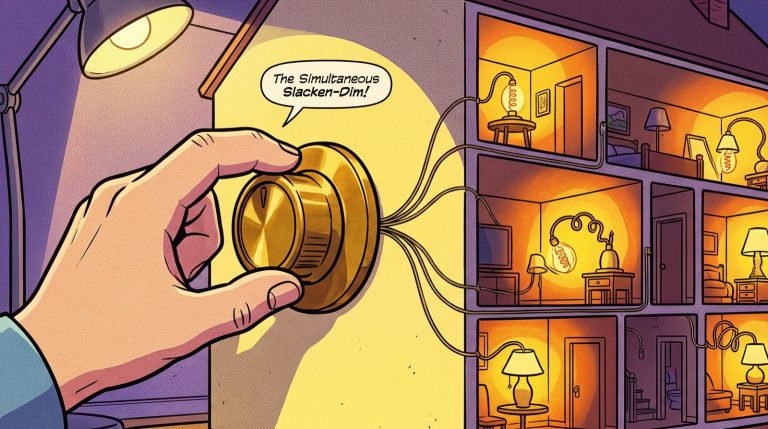
Curcumin intervenes at two upstream nodes, blocking IKK-mediated phosphorylation and NF-κB nuclear entry, then reprograms the microglial operating programme from the M1 inflammatory phenotype to the M2 neuroprotective phenotype.
Diagram · HPC
Curcumin interrupts this cascade at multiple nodes. In preclinical models, it blocks the IKK complex's ability to phosphorylate IκBα, preventing NF-κB from entering the nucleus in the first place.[14][15] It suppresses the downstream transcription of TNF-α, IL-6, IL-1β, cyclooxygenase-2 (COX-2), and inducible nitric oxide synthase (iNOS), the enzyme family responsible for generating reactive oxygen species (ROS) that directly damage synaptic structures.[14][23]
The molecule does more than block. In cell culture and rodent models, curcumin shifts microglial activation from the M1 phenotype (the pro-inflammatory state that produces tissue damage) toward the M2 phenotype, a neuroprotective mode that promotes debris clearance and tissue repair without the inflammatory collateral.[20][41] This polarisation shift is not a minor biochemical detail. It represents a qualitative change in the immune cell's operational programme, from attack mode to maintenance mode.
A parallel arm of curcumin's activity runs through the Nrf2/HO-1 pathway, a master regulator of antioxidant defence. In preclinical ischaemic brain injury models, curcumin activated the Akt/Nrf2 signalling axis, upregulating endogenous antioxidant enzymes (superoxide dismutase (SOD), catalase, and glutathione peroxidase) that neutralise the ROS generated by inflammatory microglia.[24][16]
03Evidence
The Five Strongest Studies on Curcumin and the Brain
01The claim
The single load-bearing finding
The hero study finds −1.92 ES (TNF-α).
Ranking evidence is an editorial act, not merely a technical one. Two studies can be equally "positive" and occupy entirely different tiers of reliability: one because it pooled thousands of participants across dozens of controlled trials, another because it measured 40 people with a brain scanner.
Pooled estimate
−1.92 ES (TNF-α)
02How we measured
Grading the curcumin trials
Studies scored on design, sample, rigour, causality, replication, citations.
In curcumin research, formulation is the confound that rankings must account for: every positive cognitive finding used a patented bioavailable preparation, while every failed trial used standard powder, making design quality inseparable from delivery chemistry.
Rubric weights
03The spread
Heterogeneity across 5 studies
Methodological quality across the ranked studies.
The cognitive evidence deserves scrutiny. A 2024 systematic review found that 11 of 12 studies using bioavailable curcumin formulations showed cognitive improvements.[18] That 92% positive rate is striking, but it requires qualification. An updated 2025 meta-analysis confirmed that cognitive benefits were only statistically significant in trials lasting 24 weeks or longer, in participants aged 60 or over, or in Asian populations.[32]
Rubric spread
86 → 64 /100
Highest to lowest rubric score across the ranked studies.
04What does not hold
Negative knowledge
What the evidence base does not support.
The 2025 critical umbrella review by Xu and colleagues examined the entire curcumin meta-analytic landscape and found a bleak picture. Of 122 outcome assessments across all published meta-analyses, only 3.28% achieved high GRADE certainty. Only 36% of included meta-analyses had pre-registered protocols. And 76% rated "very low quality" on the AMSTAR-2 methodological assessment tool.[12] This does not mean curcumin does nothing.
5 trials. One pooled answer.
Below: the anchor study in full; then the forest plot at scale; then the supporting trials in ranked order.
01Anchor
Profiling Inflammatory Biomarkers following Curcumin Supplementation: An Umbrella Meta-Analysis of Randomized Clinical Trials
Curcumin supplementation consistently reduces inflammatory biomarkers across controlled human trials. The signal is not a statistical artefact.
Umbrella meta-analysis is the highest available evidence tier; no single RCT or standard meta-analysis matches its scope or aggregation power.
Rubric breakdown
The strongest studies, ranked by methodological weight.
Each scored 0–100 against a six-criterion rubric, tagged by design and year; the anchor leads. No study in this set reaches the rubric-90 tier.
02
Memory and Brain Amyloid and Tau Effects of a Bioavailable Form of Curcumin in Non-Demented Adults
In the longest published curcumin RCT (18 months), 40 non-demented adults aged 51–84 received bioavailable Theracurmin (90 mg twice daily) or placebo. Verbal memory improved significantly (ES = 0.63, p = 0.002); attention improved (ES = 0.96, p < 0.0001). FDDNP-PET brain imaging showed a trend toward reduced amyloid/tau-associated binding in the amygdala within the curcumin group (p = 0.04), though the between-group comparison was not significant (p = 0.07), and curcumin's own affinity for the FDDNP tracer complicates interpretation.
78/100
03
Antioxidant and Anti-Inflammatory Effects of Curcumin/Turmeric Supplementation in Adults: A GRADE-Assessed Systematic Review and Dose-Response Meta-Analysis
Across 66 RCTs, curcumin reduced CRP by 0.58 mg/L, TNF-α by 3.48 pg/mL, and IL-6 by 1.31 pg/mL. Antioxidant markers also improved: SOD activity increased by 20.51 u/L and oxidative stress marker MDA decreased by 0.33 µmol/L.
75/100
04
Short-Term Curcumin Supplementation Enhances Serum Brain-Derived Neurotrophic Factor in Adult Men and Women
Four RCTs (139 participants) showed curcumin supplementation at 200–1,820 mg/day significantly increased serum BDNF (WMD = +1,789 pg/mL, p < 0.01). Direction was consistent across all four trials, though I² = 83.5% indicates very high heterogeneity and the confidence interval spans a 4-fold range (722–2,857 pg/mL).
66/100
05
Association of Midlife Inflammatory Markers With Cognitive Performance at 10-Year Follow-up
In 915 Finnish adults aged 45–74, elevated baseline IL-6 independently predicted reduced verbal fluency at 10 years (β = −1.14, p = 0.003) and word-list learning (β = −0.61, p = 0.007). TNF-α showed similar predictive power; hs-CRP did not, a specificity pattern that strengthens the mechanistic interpretation.
64/100
04Stakes
The Cost of Chronic Low-Grade Brain Inflammation
The cytokines curcumin suppresses (TNF-α, IL-6, and CRP) are not abstract biomarkers. They are predictors of measurable cognitive, emotional, and neurological decline when chronically elevated.
The Memory Tax
Kipinoinen's prospective cohort showed that elevated midlife IL-6 predicted verbal fluency decline at 10 years (β = −1.14, p = 0.003) and reduced word-list learning (β = −0.61, p = 0.007).[3] Chronic low-grade inflammation imposes a measurable cognitive cost that compounds over decades. TNF-α showed similar predictive power; hs-CRP, often the only marker tested clinically, did not predict decline.[3]
word-finding difficulties, slower recall, declining verbal fluency
The Inflammatory Mood Circuit
Population-level data from the UK Biobank and Nordic cohorts link elevated inflammatory markers to increased depression and anxiety risk.[33][38] The relationship between inflammation and mood is biochemically mediated through cytokine interference with serotonin and dopamine synthesis. The connection is dose-dependent and specific to IL-6 and TNF-α.[33]
persistent low mood, reduced motivation, emotional flatness
The Repair Deficit
When microglial activation remains chronically elevated in the M1 pro-inflammatory state, the brain's repair capacity is progressively compromised. BDNF expression declines. Synaptic pruning becomes excessive. The brain shifts from a growth-and-repair mode to a damage-containment mode that accelerates structural decline.[8][34]
mental fatigue that sleep doesn't resolve, difficulty learning new skills
The Systemic Spillover
Chronic neuroinflammation does not stay contained. Systemic inflammatory markers predict cardiac cognitive decline through shared vascular pathways.[35] Low-grade systemic inflammation is independently associated with domain-specific cognitive impairment in older adults.[36] The inflammatory signal circulates, amplifies, and damages multiple organ systems simultaneously.
brain fog after meals, exercise intolerance, generalised sluggishness
05Protocol
A Curcumin-Based Anti-Neuroinflammatory Protocol
Four evidence-informed steps focused on the formulation and delivery conditions that separate positive trial outcomes from expensive urine.
The protocol, as a sequence.
Morning → With food → Consistent daily → Ongoing awareness
Bioavailable Formulation
Choose a formulation with demonstrated human bioavailability data: Theracurmin, Meriva (phytosome), CurQfen, or nano-curcumin, at the studied dose.
Every positive cognitive trial used a patented bioavailable formulation.[2][18][19] Standard curcumin powder reaches undetectable CSF levels even at 4 g/day.[17] Theracurmin achieves 36–43× higher plasma AUC than standard curcumin.[37]
Taking standard curcumin capsules or turmeric powder and expecting brain-level effects. The formulation is not a nice-to-have. It is the entire mechanism of delivery.
Fat Co-Administration
Take curcumin with a fat-containing meal. The lipophilic molecule requires dietary fat for intestinal absorption.
Curcumin is lipophilic; fat-soluble formulations and lipid co-ingestion increase post-digestive solubility, the rate-limiting step for oral bioavailability.[28][40]
Taking curcumin on an empty stomach or with a carbohydrate-only meal.
Sustained Duration
Maintain supplementation for a minimum of 8–12 weeks before evaluating effects; cognitive benefits in meta-analyses required ≥24 weeks.
BDNF elevation required 8–12 weeks across trials.[4] Cognitive improvements in the 2025 meta-analysis were significant only at ≥24 weeks.[32] The Lopresti depression RCT showed effects only from weeks 4–8.[30]
Expecting results within days or stopping after 4 weeks due to perceived lack of effect.
Dose Ceiling and Safety
Target 400–800 mg/day of bioavailable curcuminoids; the 2025 cognitive meta-analysis identified ~800 mg/day as optimal, with a non-linear dose-response curve.
Higher doses did not produce proportionally larger effects.[32] The dose-response relationship is curvilinear: more is not better. Curcumin is generally well-tolerated but can cause GI discomfort at high doses and may interact with anticoagulants.[5][40]
Megadosing standard curcumin to compensate for poor bioavailability, which increases GI side effects without improving brain delivery.
06Verdict
The verdict.
Bottom line
The molecule is real. The pathway is real. The distance between the lab and the brain is also real, and until that distance is closed, curcumin brain science remains a promissory note, not a delivered result.
Anyone who has followed this argument through the NF-κB cascade, the evidence hierarchy, and the bioavailability crisis should now see curcumin differently than when they started. Not as a health food. Not as a scam. As a compound with a legitimate pharmacological identity that has been poorly served by an industry more interested in selling turmeric powder than solving a drug delivery problem.
No comparison figure runs here. The prose above does not resolve to one clean effect size to set against another, and this magazine does not manufacture a number to fill the space. The verdict stands on the evidence as written.
Consistent Signal
Curcumin supplementation reduces TNF-α, IL-6, and CRP across pooled randomised controlled trials, with the TNF-α signal showing the lowest heterogeneity and highest reliability. The anti-inflammatory effect is not disputed. It is consistently observed across the strongest available designs.
Fragile Foundation
82.8% of curcumin meta-analyses rated very low to low GRADE certainty. Cognitive benefits appear only in trials lasting ≥24 weeks, in participants ≥60, or in specific populations. The evidence supports direction, not magnitude, and certainly not the broad claims made by the supplement industry.
Formulation Precision
The only positive clinical trials used patented bioavailable formulations. Standard curcumin reaches undetectable brain levels at clinical doses. The lever is not curcumin itself. It is the delivery technology that determines whether the molecule arrives where it needs to act.
07Bibliography
The bibliography.
-
01
Meta
doi: 10.1155/2023/4875636
-
02
RCT
doi: 10.1016/j.jagp.2017.10.010
-
03
Journal
doi: 10.1212/WNL.0000000000201116
-
04
Meta
doi: 10.1016/j.nutres.2019.05.001
-
05
Review
doi: 10.3390/foods6100092
-
06
Journal
doi: 10.1002/jsf2.70043
-
07
Meta
doi: 10.1002/ptr.8340
-
08
Journal
-
09
Journal
doi: 10.1016/j.biocel.2008.06.001
-
10
Journal
-
11
Journal
-
12
Meta
doi: 10.3389/fphar.2025.1601204
-
13
Journal
doi: 10.1001/archneur.57.6.824
-
14
Review
doi: 10.1007/s10787-024-01492-1
-
15
Journal
doi: 10.1038/aps.2007.200
-
16
Meta
doi: 10.1016/j.cyto.2023.156144
-
17
RCT
doi: 10.1186/alzrt146
-
18
Meta
doi: 10.7759/cureus.67706
-
19
Journal
doi: 10.1021/acsomega.2c07326
-
20
Journal
doi: 10.3390/molecules27020341
-
21
Journal
doi: 10.3389/fphar.2018.00386
-
22
Journal
doi: 10.1186/1742-2094-8-125
-
23
Review
doi: 10.3389/fphar.2025.1658115
-
24
Journal
doi: 10.1371/journal.pone.0059843
-
25
Journal
doi: 10.3390/nu11102147
-
26
Journal
doi: 10.3390/pharmaceutics13101715
-
27
Journal
doi: 10.1055/s-2006-957450
-
28
RCT
doi: 10.1002/mnfr.202100613
-
29
Review
doi: 10.3390/nu17172884
-
30
RCT
doi: 10.1016/j.jad.2014.06.001
-
31
Meta
doi: 10.1016/j.clnesp.2024.05.017
-
32
Meta
doi: 10.3389/fnut.2025.1549509
-
33
Journal
doi: 10.1016/j.eclinm.2021.100992
-
34
Journal
doi: 10.1016/j.immuni.2019.12.003
-
35
Journal
doi: 10.3390/life13020329
-
36
Journal
doi: 10.1016/j.neurobiolaging.2023.08.001
-
37
Journal
-
38
Meta
doi: 10.3389/fphar.2025.1638645
-
39
Journal
doi: 10.3390/cancers15225491
-
40
Journal
doi: 10.3389/fphar.2020.01021
-
41
Journal
doi: 10.3389/fnins.2019.01223
-
42
RCT
doi: 10.1016/j.euroneuro.2014.11.015
-
43
Journal
No entries match the current filter and search.