The Gut-Brain Axis: What the Science Actually Shows About Your Microbiome, Mood, and Focus.
The bacterial ecology in your gut does not merely digest food. It manufactures neurotransmitter precursors, calibrates your stress response, and shapes the inflammatory terrain that determines whether you think clearly or poorly. Here is what the science actually says, and what to do with it.
01The Second Brain
500 million enteric neurons were never in the textbooks
You have a nervous system you have probably never thought about. It is not in your skull. It wraps the full length of your gastrointestinal tract: an estimated 200 to 500 million neurons threaded through nine metres of tissue, sensing, signalling, and making decisions without ever consulting the brain above your neck.[29] Neuroscientists call it the enteric nervous system, and for decades it was treated as a local wiring job: useful for peristalsis, irrelevant to cognition. That assumption has not held. The gut-brain axis science of the past decade has shown that this so-called "second brain" is in constant upstream communication with the cortex, the amygdala, and the hypothalamus. The conversation is being brokered by roughly 38 trillion bacteria living in your large intestine.[32][17]
The implications are substantial. A 2022 microbiome-wide association study spanning 2,593 participants across two independent cohorts identified 13 microbial taxa significantly associated with depressive symptoms. These were bacteria involved in synthesising GABA, butyrate, and serotonin precursors.[1] A separate meta-analysis of 44 studies and nearly 5,000 participants found that people with depressive disorder harbour a consistently altered microbial signature: enriched pro-inflammatory species and depleted butyrate producers.[4] These are not fringe findings. They appear in Nature Communications and Translational Psychiatry, describing an axis of influence that most performance-focused people have never heard of.
The question is no longer whether the gut microbiome is associated with mood and cognition. It is how the signal travels, how large the effect is, and what (if anything) you can do about it.
Start with the numbers. Approximately 90% of the body's serotonin (the neurotransmitter most associated with mood regulation) is stored in enterochromaffin cells lining the gut wall.[8][33] That figure is frequently misread. The gut microbiota do not manufacture most of this serotonin themselves. What specific bacterial species do is signal to enterochromaffin cells to upregulate synthesis, an indirect regulatory role, but a functionally significant one.[33][28] The peripheral serotonin pool does not cross the blood-brain barrier directly. Its influence on the brain is routed through vagal afferents and immune signalling, which makes the mechanism more subtle and more systemic than the "gut makes happy chemicals" narrative suggests.[7][9]
More than 50% of the body's dopamine is synthesised in the gastrointestinal tract. The gut microbiota also produce measurable quantities of GABA, norepinephrine, and acetylcholine, all acting on local enteric and vagal receptors before their signals reach the central nervous system.[8][23] On top of that, the gut produces 500 to 600 millimoles of short-chain fatty acids daily: metabolites like butyrate, propionate, and acetate that serve as energy substrates for colonocytes and as signalling molecules that modulate neuroinflammation and blood-brain barrier integrity.[9][11]
02The Mechanism
The Signalling Architecture Behind Gut-Brain Communication
The gut-brain axis becomes clearer once you stop thinking of the microbiome as a single organ. It is a distributed signalling network. The roughly 38 trillion bacteria in your colon, representing more than 1,000 known species, do not communicate with the brain through one pathway.[32][7] They use at least four, and those pathways converge on the same brain structures that regulate mood, stress, and cognitive sharpness.
The first pathway is neural. Neuropod cells in the gut epithelium form direct synaptic connections with vagal afferent fibres, transmitting glutamate signals that reach the brainstem within milliseconds.[27] That is faster than any hormone could travel through the bloodstream. The vagus nerve carries these signals to the nucleus tractus solitarius, which relays them to the hypothalamus, the amygdala, and the prefrontal cortex.[6][36] When the microbiome composition shifts (through diet, antibiotics, or chronic stress), the character of these signals changes.
The second pathway is metabolic. The gut microbiota ferment dietary fibre into short-chain fatty acids at a rate of 500 to 600 mmol per day, in a roughly 60:20:20 ratio of acetate, propionate, and butyrate.[9] Butyrate matters most for the brain. It strengthens the intestinal barrier, reduces translocation of bacterial endotoxins, and in animal models crosses the blood-brain barrier to inhibit histone deacetylases, modulating gene expression in neurons.[11][9] The direct human evidence for SCFAs as cognitive enhancers remains limited, but the mechanistic plausibility is substantial.[10]
When microbial diversity collapses, IL-6 and TNF-alpha flood the bloodstream, then cross the blood-brain barrier to activate microglia, the brain's resident immune cells, locking the cortex into a low-grade neuroinflammatory state.
Diagram · HPC
The third pathway is endocrine. The hypothalamic-pituitary-adrenal axis (the body's central stress-response system) is bidirectionally coupled to the gut microbiome.[10][25] When you experience psychological stress, cortisol rises. Elevated cortisol increases intestinal permeability, allowing bacterial fragments called lipopolysaccharides to leak into the bloodstream.[30] Those fragments trigger systemic inflammation, which further disrupts the microbiome, which further elevates cortisol. Researchers call this the dysbiosis-inflammation-stress cycle. It can sustain itself long after the original stressor has passed.[17][10]
Sudo's 2004 experiment demonstrated this coupling directly: germ-free mice showed exaggerated HPA axis responses to stress compared to conventionally colonised mice, and the effect was partially reversed by introducing a single Bifidobacterium strain.[25] The experiment was in mice. But the principle (that microbial colonisation calibrates the stress response) has since been supported by human evidence showing that probiotic supplementation can attenuate cortisol output in controlled settings.[3]
The fourth pathway is immune. The gut houses approximately 70% of the body's immune tissue, and the microbiome continuously trains immune cells to distinguish friend from threat.[20][35] When microbial diversity drops (a state called dysbiosis), pro-inflammatory cytokines like IL-6 and TNF-alpha increase systemically.[5] Those cytokines cross the blood-brain barrier, activate microglia (the brain's resident immune cells), and produce what immunologists call neuroinflammation: a low-grade inflammatory state associated with depression, cognitive fog, and reduced executive function.[17][22] Gut peptides, including neuropeptide Y and cholecystokinin, add a further layer; they modulate anxiety-related behaviour and immune signalling through receptors distributed across the gut-brain axis.[24][34]
03Evidence
The Five Strongest Studies on the Gut-Brain Axis and Mental Health
01The claim
The single load-bearing finding
The hero study finds 13 taxa.
Pooled estimate
13 taxa
02How we measured
Grading the microbiome studies
Studies scored on design, sample, rigour, causality, replication, citations.
Causal direction is the hardest problem in gut-brain research: microbiome composition correlates with mood, but separating gut-drives-brain from brain-drives-gut requires replication across independent cohorts and designs that can rule out reverse causation.
Rubric weights
03The spread
Heterogeneity across 5 studies
Methodological quality across the ranked studies.
Rubric spread
82
→ 72 /100
Highest to lowest rubric score across the ranked studies.
04What does not hold
Negative knowledge
What the evidence base does not support.
The Wastyk study is practically relevant partly because it produced a null result alongside its positive one. Fermented foods increased diversity and reduced inflammation. High-fibre foods (the dietary intervention most commonly recommended for gut health) did neither.[5] Four immune cell types showed reduced activation in the fermented-food group; eleven microbial carbohydrate-degrading enzymes increased in the fibre group, but this did not translate to immune benefit. That contrast reframes the dietary conversation.
5 trials. One pooled answer.
Below: the anchor study in full; then the forest plot at scale; then the supporting trials in ranked order.
01Anchor
Gut microbiome-wide association study of depressive symptoms
The microbiome-depression association is not an artefact of a single population, it replicates across ethnically diverse independent cohorts.
Largest MWAS sample with independent replication; biologically coherent taxa mapping to known neurotransmitter pathways; published in Nature Communications with high field influence.
Rubric breakdown
The strongest studies, ranked by methodological weight.
Each scored 0–100 against a six-criterion rubric, tagged by design and year; the anchor leads. No study in this set reaches the rubric-90 tier.
02
Effects of Prebiotics and Probiotics on Symptoms of Depression and Anxiety in Clinically Diagnosed Samples
Across 23 RCTs involving 1,401 clinically diagnosed participants, probiotic supplementation produced a pooled depression reduction of SMD = −0.96 (95% CI: −1.31, −0.61), classified as a large effect, though with substantial heterogeneity (I²=85%) indicating that outcomes vary significantly by strain, dosage, measurement scale, and intervention duration.
79/100
03
Bifidobacterium longum 1714 as a translational psychobiotic
A single psychobiotic strain (B. longum 1714) significantly reduced daily stress (Cohen's d=0.53, P=0.03), attenuated cortisol output (P=0.05, r=0.42), altered frontal EEG theta power, and reduced Paired Associate Learning errors (P<0.01) in a crossover design that eliminates between-subject variance.
76/100
04
Gut microbiota composition in depressive disorder: systematic review, meta-analysis, and meta-regression
Across 4,883 participants (2,091 patients, 2,792 controls), medication-free depressive patients showed significantly decreased Firmicutes (SMD: −1.54), while depressive disorder was characterised by enriched pro-inflammatory bacteria (Eggerthella, Enterococcus, Flavonifractor) and depleted anti-inflammatory butyrate producers (Faecalibacterium, Coprococcus, Butyricicoccus).
74/100
05
Gut-microbiota-targeted diets modulate human immune status
A high-fermented-food diet significantly increased microbiota diversity (p=0.0023 for observed ASVs) and decreased 19 of 93 measured inflammatory proteins including IL-6. The high-fibre diet comparison arm did not increase cohort-wide microbiota diversity and showed no equivalent reduction in inflammatory markers, a null result that challenges the assumption that fibre alone improves microbial ecology.[5]
72/100
04Stakes
The Downstream Costs of Gut-Brain Disruption
When microbial ecology deteriorates (through poor diet, chronic stress, or antibiotic disruption), the consequences cascade across mood, cognition, immunity, and metabolic function.
Mood & Emotional Regulation
Depression affects approximately 280 million people globally, with up to 35% experiencing treatment-resistant depression to conventional pharmacotherapy.[16] The gut microbiome represents a plausible upstream contributor: Gao et al.'s meta-analysis of 4,883 participants found a consistent pro-inflammatory, butyrate-depleted microbial signature in depressive disorder.[4] The causal direction is not yet established in human trials, but the bidirectional feedback between dysbiosis and depressive symptoms creates a self-reinforcing cycle that conventional antidepressants do not address.[19][31]
persistent low mood, emotional flatness, reduced motivation, anhedonia
Cognitive Performance
A 2023 meta-analysis of antibiotic-induced dysbiosis in animal models found that 62.5% of test populations showed decreased spatial cognition following microbiome disruption, with depression-like behaviour increases in 40.7% of populations.[14] In humans, a pooled meta-analysis found a statistically significant negative association between antibiotic use and cognitive outcomes (effect: −0.11, 95% CI: −0.15 to −0.07).[14] These findings suggest that microbiome disruption has measurable cognitive costs, though the animal-to-human extrapolation requires caution.
brain fog, difficulty concentrating, reduced working memory, mental fatigue
Stress Response & HPA Axis
Chronic stress elevates cortisol, which increases intestinal permeability, which allows bacterial lipopolysaccharides to enter the bloodstream, which triggers neuroinflammation, which sustains the stress response, a vicious cycle documented in both animal and human research.[30][10] The gut-brain stress loop means that stress does not merely affect digestion; it remodels the microbial ecosystem in ways that perpetuate the stress itself. The Bosch et al. (2022) multi-ethnic study of 3,211 participants found gut alpha diversity independently predicted depressive symptoms across six ethnic groups.[6]
heightened anxiety, poor stress recovery, irritability, disrupted sleep onset
Immune & Inflammatory Status
Dysbiosis increases pro-inflammatory cytokines systemically, a state linked to the concept of neuroinflammation, where peripheral immune activation crosses the blood-brain barrier to affect microglial activity.[17][22] The economic burden of anxiety and depression attributable to these interconnected pathways reaches approximately $1 trillion annually in lost productivity and healthcare costs.[16] Immune disruption from the gut does not stay in the gut; it reaches the brain through well-characterised molecular pathways.
frequent illness, slow recovery, chronic low-grade fatigue, joint stiffness
05Protocol
A 4-Step Gut-Brain Signal Protocol
These four interventions are grounded in the strongest available evidence. They are not a cure for depression or a substitute for clinical care. They are a signal-engineering approach to improving the quality of the messages your gut sends to your brain.
The protocol, as a sequence.
Daily → Daily → Targeted → Ongoing
Fermented Food Diversity
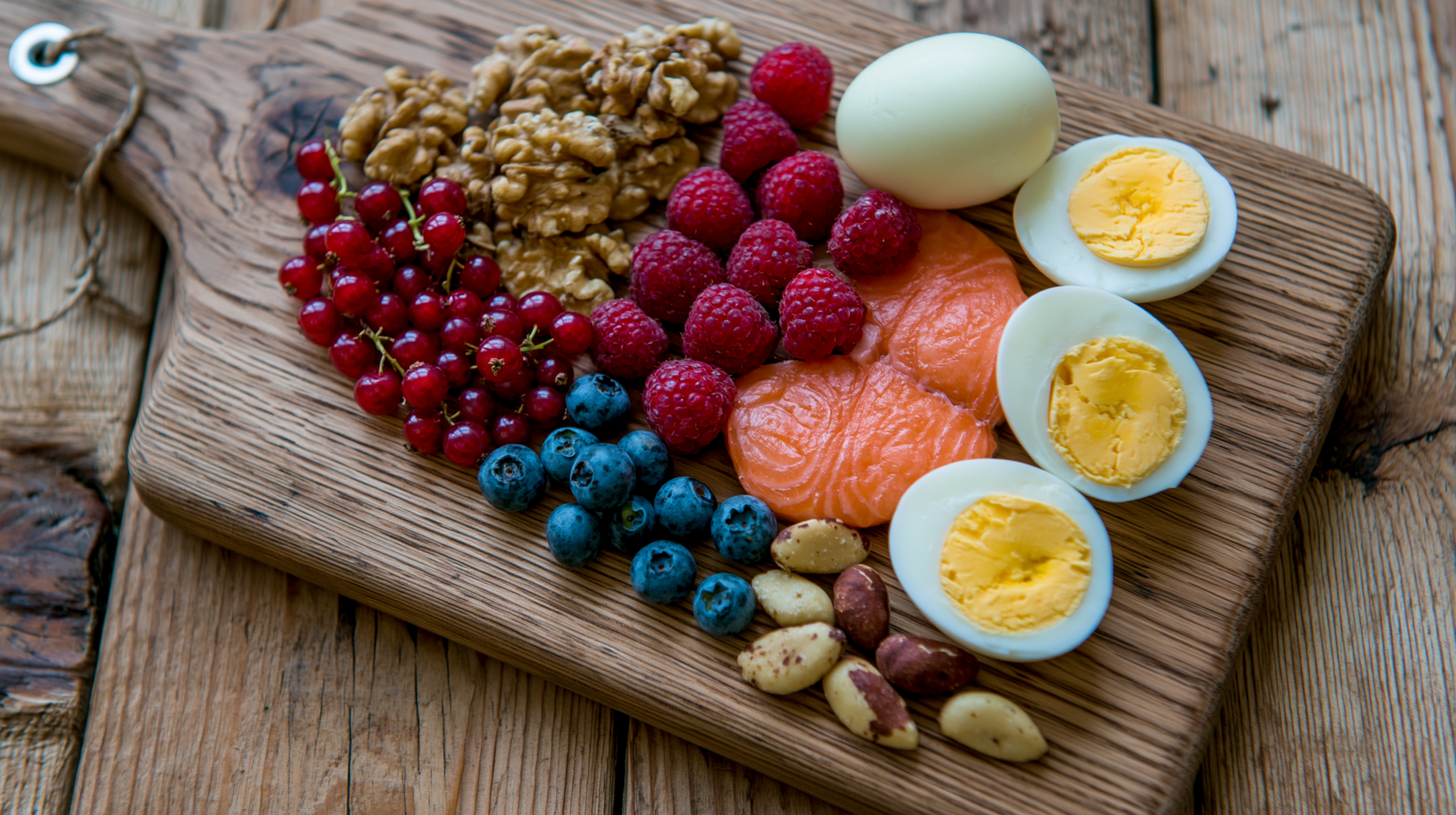
Consume 4–6 servings of fermented foods daily, yoghurt, kefir, kimchi, sauerkraut, kombucha, miso, prioritising variety over volume.
The Wastyk et al. Cell trial found that a high-fermented-food diet increased microbiota diversity (p=0.0023) and decreased 19 inflammatory proteins over ten weeks, while a high-fibre diet did not produce the same immune benefit.[5] Diversity of fermented sources matters because different foods introduce different microbial species.
Eating the same yoghurt every day. Diversity of fermented sources introduces new species; repetition feeds existing ones without expanding the community.
Prebiotic Fibre as Substrate
Maintain 25–35g of dietary fibre daily from diverse plant sources, legumes, alliums, whole grains, vegetables, as metabolic substrate for existing microbiota.
Fibre is fermented into SCFAs by colonic bacteria. Berding et al.'s psychobiotic diet trial showed a 32% decrease in perceived stress (vs. 17% control) with a diet emphasising both prebiotic fibre and fermented foods.[12] The Freijy "Gut Feelings" RCT found prebiotic-rich diets improved mood disturbance (Cohen's d = −0.60, P=0.039).[13]
Assuming fibre supplements equal dietary fibre. Whole-food fibre provides the structural diversity that microbes need; isolated supplements (e.g., inulin powder) may not replicate the full prebiotic effect.
Strain-Specific Psychobiotics
If supplementing, select evidence-backed strains, B. longum 1714, L. helveticus R0052, B. longum R0175, based on published RCT evidence rather than marketing claims.
Allen et al. demonstrated that B. longum 1714 reduced cortisol, stress, and cognitive errors in a crossover RCT (Cohen's d=0.53).[3] The effect was strain-specific, not all probiotics produce psychobiotic effects, and blanket probiotic claims are not supported by the meta-analytic evidence.[15][2]
Buying generic "probiotic" supplements without checking strain identity. The effect is strain-specific; a product listing only genus and species (e.g., "Lactobacillus acidophilus") without strain designation provides no evidence of psychobiotic benefit.
Stress-Microbiome Interruption
Actively manage chronic stress to prevent the cortisol-dysbiosis-inflammation feedback loop from degrading microbial ecology.
Leigh et al. documented that chronic stress increases intestinal permeability, alters microbial composition, and sustains the HPA axis dysregulation that initiated the cycle.[30] Sudo's foundational work showed that microbial colonisation calibrates the stress response, meaning stress management is itself a microbiome intervention.[25]
Treating gut health and stress management as separate projects. The gut-brain axis means they are bidirectionally coupled, chronic unmanaged stress undermines dietary interventions by degrading the microbial ecosystem they are designed to support.
06Verdict
The verdict.
"The gut is not following the brain's orders. It is sending signals the brain cannot afford to ignore." John F. Cryan, Professor of Anatomy & Neuroscience, University College Cork
Bottom line
The gut-brain axis is not optional biology. It is the upstream input that most performance strategies have been built without. Correcting that omission may be the most consequential thing you do for your brain this year.
The argument
The evidence across 36 peer-reviewed sources and five flagship studies converges on a single reframing: the bacterial ecology in your gut is not a passive bystander to your mental life. It manufactures neurotransmitter precursors, calibrates your stress axis, modulates your immune system, and sends continuous signals to your brain through the longest cranial nerve in your body. The causal direction is not fully resolved (this is honest science, not marketing), but the association between microbial composition and mental health is now replicated across tens of thousands of participants. Interventional evidence shows that changing the microbiome produces measurable changes in mood, stress, and inflammation. If you are serious about cognitive performance, emotional regulation, or stress resilience, the gut-brain axis is not optional reading. It is the upstream input you have probably been ignoring.
The reader who finishes this article should leave with a different frame, not a different supplement stack. Your brain does not operate in isolation. It receives a continuous stream of signals from an ecosystem you feed three times a day, and the quality of that ecosystem shapes the quality of those signals. Mood is not purely neurochemical. Focus is not purely cortical. Stress tolerance is not purely psychological. Each has a microbial component.
Diet changes stress. Specifically.
The Microbiome Modulates Brain Function
The gut microbiome influences mood, stress, and cognition through four converging pathways (neural, metabolic, endocrine, and immune), with effects replicated across independent cohorts and confirmed by interventional trials. The evidence is strongest for the microbiome-depression association and for strain-specific probiotic effects on mood.
Ignoring the Gut Means Ignoring a Major Brain Input
People who troubleshoot cognitive performance, emotional regulation, or stress tolerance without considering the gut-brain axis are missing a significant upstream variable. The cost is not catastrophic for everyone. But for those with chronic low mood, unexplained cognitive fog, or treatment-resistant stress, the microbiome may be the unaddressed factor.
Diet and Strain-Specific Supplementation Are the Actionable Levers
The evidence supports fermented food diversity, prebiotic fibre intake, and targeted psychobiotic strains as the three dietary levers with the strongest gut-brain evidence, combined with stress management to prevent the cortisol-dysbiosis feedback loop from undermining microbial interventions.
Put it to work
Where this science goes next on HPC
07Bibliography
The bibliography.
-
01
Journal
doi: 10.1038/s41467-022-34502-3
Rubric 82/100
Gut microbiome-wide association study of depressive symptoms
-
02
Meta
doi: 10.1093/nutrit/nuae177
Effects of prebiotics and probiotics on symptoms of depression and anxiety in clinically diagnosed samples: Systematic review and meta-analysis of randomized controlled trials
-
03
Journal
doi: 10.1038/tp.2016.191
Bifidobacterium longum 1714 as a translational psychobiotic: Modulation of stress, electrophysiology and neurocognition in healthy volunteers
-
04
Meta
doi: 10.1038/s41398-023-02670-5
Gut microbiota composition in depressive disorder: A systematic review, meta-analysis, and meta-regression
-
05
Journal
doi: 10.1016/j.cell.2021.06.019
Rubric 72/100
Gut-microbiota-targeted diets modulate human immune status
-
06
Journal
doi: 10.1038/s41467-022-34504-1
The gut microbiota and depressive symptoms across ethnic groups
-
07
Journal
doi: 10.2147/JIR.S384949
Vagus nerve and underlying impact on the gut microbiota-brain axis in behavior and neurodegenerative diseases
-
08
Journal
doi: 10.3390/nu13062099
Regulation of neurotransmitters by the gut microbiota and effects on cognition in neurological disorders
-
09
Journal
doi: 10.3389/fendo.2020.00025
The role of short-chain fatty acids from gut microbiota in gut-brain communication
-
10
Journal
doi: 10.3389/fendo.2023.1130689
Signalling cognition: The gut microbiota and hypothalamic-pituitary-adrenal axis
-
11
Journal
doi: 10.1080/19490976.2022.2102878
Microbiota-derived metabolites as drivers of gut–brain communication
-
12
Journal
doi: 10.1038/s41380-022-01817-y
Feed your microbes to deal with stress: A psychobiotic diet impacts microbial stability and perceived stress in a healthy adult population
-
13
RCT
doi: 10.3389/fnins.2022.1097278
Effects of a high-prebiotic diet versus probiotic supplements versus synbiotics on adult mental health: The "Gut Feelings" randomised controlled trial
-
14
Meta
doi: 10.3389/fnins.2023.1237177
Antibiotic-induced gut dysbiosis and cognitive, emotional, and behavioral changes in rodents: A systematic review and meta-analysis
-
15
Meta
doi: 10.3390/nu16091352
Effectiveness of psychobiotics in the treatment of psychiatric and cognitive disorders: A systematic review of randomized clinical trials
-
16
Journal
doi: 10.3390/ph16040565
Gut microbiota in anxiety and depression: Unveiling the relationships and management options
-
17
Journal
doi: 10.3389/fnins.2023.1151478
The microbiota-gut-brain axis in stress and depression
-
18
Journal
doi: 10.3390/pathogens11121540
The history of the intestinal microbiota and the gut-brain axis
-
19
Journal
doi: 10.3389/fnins.2023.1268419
Gut-brain axis: Gut dysbiosis and psychiatric disorders in Alzheimer's and Parkinson's disease
-
20
Journal
doi: 10.1093/advances/nmaa181
Diet and the microbiota–gut–brain axis: Sowing the seeds of good mental health
-
21
Review
doi: 10.1152/physrev.00018.2018
The microbiota-gut-brain axis
-
22
Journal
doi: 10.1172/JCI76304
Gut/brain axis and the microbiota
-
23
Journal
doi: 10.1016/j.brainres.2018.03.015
Neurotransmitter modulation by the gut microbiota
-
24
Journal
doi: 10.1007/s13311-017-0585-0
Anxiety, depression, and the microbiome: A role for gut peptides
-
25
Journal
doi: 10.1113/jphysiol.2004.063388
Postnatal microbial colonization programs the hypothalamic-pituitary-adrenal system for stress response in mice
-
26
Journal
doi: 10.1016/j.biopsych.2013.05.001
Psychobiotics: A novel class of psychotropic
-
27
Review
doi: 10.1146/annurev-med-042320-014032
The gut-brain axis
-
28
Journal
no doi
The gut-brain axis: Influence of microbiota on mood and mental health
-
29
Journal
doi: 10.1111/nmo.14440
How big is the little brain in the gut? Neuronal numbers in the enteric nervous system of mice, guinea pig, and human
-
30
Journal
doi: 10.1113/JP281951
The impact of acute and chronic stress on gastrointestinal physiology and function: A microbiota–gut–brain axis perspective
-
31
Meta
doi: 10.3389/fpsyt.2019.00034
Systematic review of gut microbiota and major depression
-
32
Journal
doi: 10.1016/j.cell.2016.01.013
Revised estimates for the number of human and bacteria cells in the body
-
33
Journal
doi: 10.1016/j.cell.2015.02.047
Indigenous bacteria from the gut microbiota regulate host serotonin biosynthesis
-
34
Journal
doi: 10.1007/978-1-4939-0897-4_9
Neuropeptides and the microbiota-gut-brain axis
-
35
Journal
doi: 10.1136/gutjnl-2018-316723
Human gut microbiome: Hopes, threats and promises
-
36
Journal
source
The gut-brain axis: Interactions between enteric microbiota, central and enteric nervous systems
No entries match the current filter and search.
The protocol card
The Gut-Brain Axis: What the Science Actually Shows About Your Microbiome, Mood, and Focus
One sheet. The four moves, in the order the day runs them.
-
01
Daily
Fermented Food Diversity
Consume 4–6 servings of fermented foods daily, yoghurt, kefir, kimchi, sauerkraut, kombucha, miso, prioritising variety over volume.
AvoidEating the same yoghurt every day. Diversity of fermented sources introduces new species; repetition feeds existing ones without expanding the community.
-
02
Daily
Prebiotic Fibre as Substrate
Maintain 25–35g of dietary fibre daily from diverse plant sources, legumes, alliums, whole grains, vegetables, as metabolic substrate for existing microbiota.
AvoidAssuming fibre supplements equal dietary fibre. Whole-food fibre provides the structural diversity that microbes need; isolated supplements (e.g., inulin powder) may not replicate the full prebiotic effect.
-
03
Targeted
Strain-Specific Psychobiotics
If supplementing, select evidence-backed strains, B. longum 1714, L. helveticus R0052, B. longum R0175, based on published RCT evidence rather than marketing claims.
AvoidBuying generic "probiotic" supplements without checking strain identity. The effect is strain-specific; a product listing only genus and species (e.g., "Lactobacillus acidophilus") without strain designation provides no evidence of psychobiotic benefit.
-
04
Ongoing
Stress-Microbiome Interruption
Actively manage chronic stress to prevent the cortisol-dysbiosis-inflammation feedback loop from degrading microbial ecology.
AvoidTreating gut health and stress management as separate projects. The gut-brain axis means they are bidirectionally coupled, chronic unmanaged stress undermines dietary interventions by degrading the microbial ecosystem they are designed to support.
hiperformanceculture.com · 36 sources · 6 April 2026

How this was made
The desk, the instrument, and when this page is next examined.
- Desk
- HPC Editorial
- Instrument
- 6 weighted criteria, 100 points see every score
- Register
- 36 sources, 35 with a resolving DOI read them
- Reading time
- 22 min read
Revision log
- First published.
- Last revised. Sources re-checked against the register above.
- Next review Due by , or earlier if a new controlled trial or systematic review lands.
THE HAND-OFF. Performance Scan: find your limiting factor. Three minutes, 24 questions, six systems. Your answers never leave your device.