The Neuroinflammation Crisis: How What You Eat Reshapes Your Brain's Immune System.
Chronic dietary inflammation activates a gut-to-brain cascade that degrades cognition years before clinical symptoms appear. The largest prospective studies now show the damage is both measurable and, in principle, reversible. Here is what the science actually says, and what to do with it.
01The Invisible Cascade
A Western diet triggers a five-node cascade that erodes the brain over decades
Roughly sixty percent of the calories consumed in the United States and the United Kingdom now come from ultra-processed foods: products engineered for shelf stability, palatability, and margin, not for biological compatibility.[45] That number alone is unremarkable until you consider what it means at the level of the brain. A growing body of prospective evidence, now spanning hundreds of thousands of participants and decades of follow-up, links the chronic inflammatory signaling triggered by these diets to measurable structural damage in the brain: smaller hippocampal volumes, expanded white matter lesions, and accelerated cognitive decline that begins years before anyone notices a problem.[2][3] The question is no longer whether diet-driven inflammation reaches the brain. It is how much damage accumulates before it becomes irreversible, and what the neuroinflammation causes actually look like at a molecular level.
The word neuroinflammation has entered mainstream conversation largely through Long COVID, where patients describe a persistent cognitive fog that resists sleep, rest, and willpower alike.[33] But the phenomenon is far older and far more common than any single virus. Neuroinflammation is the brain's immune system in a state of sustained activation, not fighting an acute infection, but responding to a chronic signal that never resolves. In a 2016 review in Science, Richard Ransohoff described it as the mechanistic bridge between environmental triggers and neurodegeneration: the process by which ordinary insults become extraordinary damage.[1]
What makes dietary neuroinflammation causes particularly consequential is their invisibility. A person eating a standard Western diet is not sick. They are not injured. They may not feel anything unusual for years. Beneath the surface, though, the cumulative inflammatory load of their food is degrading the systems responsible for memory consolidation, executive function, and emotional regulation, the infrastructure high performers depend on most.[7][22]
The evidence is difficult to dismiss. In 2025, an analysis of the Framingham Heart Study offspring cohort (one of the most deeply characterized community samples in epidemiology) found that participants in the highest quartile of the Dietary Inflammatory Index (DII) had 84% greater incidence of all-cause dementia over 22 years of follow-up, compared to those in the lowest quartile.[3] That finding did not stand alone. A meta-analysis of nine observational studies totaling 19,379 participants found a pooled odds ratio of 1.46 for cognitive impairment among those with the highest DII scores, a result directionally consistent across every cohort examined.[4] In the UK Biobank's 166,377-participant study, each single-unit DII increase was associated with a 4.6% increase in dementia incidence and with objectively smaller hippocampal gray matter volume and larger white matter hyperintensity volume on neuroimaging.[2]
These are associations, not controlled experiments. The DII is a literature-derived scoring instrument applied to dietary recall data, not a direct biomarker measurement, and all estimates inherit measurement error from the questionnaires used to collect them.[2][4] Confounding is always possible: people who eat pro-inflammatory diets also tend to have higher BMI, less physical activity, more comorbidities, and lower socioeconomic status. Yet the largest adjusted analyses retain statistical significance after controlling for these factors, and the neuroimaging data provide a mechanistic bridge that pure epidemiology cannot, the brain is visibly different in people who eat this way.[2][20]
02The Mechanism
The Five-Node Cascade: From Dietary Signal to Synaptic Damage
The mechanism connecting diet to neuroinflammation causes is not a single pathway. It is a five-node cascade, each stage amplifying the signal from the one before it, with a feedback loop that makes the process self-sustaining once it reaches a critical threshold. Understanding this cascade explains why dietary changes take time to produce cognitive effects, why the damage is gradual, and why reversal (when it occurs) follows the same multi-step architecture in reverse.[15][46]
The first node is the diet itself. A meal dominated by ultra-processed ingredients, refined seed oils high in omega-6 fatty acids, added sugars, trans fats, emulsifiers, and low fiber, actively disrupts the microbial ecosystem of the gut.[46] The second node is gut dysbiosis: a shift in intestinal bacteria away from species that produce short-chain fatty acids (SCFAs), the metabolites that maintain intestinal barrier integrity, toward species that generate endotoxins, particularly lipopolysaccharide (LPS).[15][48] When gut permeability increases (the phenomenon sometimes called "leaky gut"), LPS enters systemic circulation and the inflammatory cascade shifts from local to global.[15]
The third node is systemic inflammation: elevated circulating levels of interleukin-6 (IL-6), tumor necrosis factor-alpha (TNF-α), and C-reactive protein (CRP). These cytokines are not just markers of inflammation; they are active signals that degrade the tight-junction proteins holding the blood-brain barrier (BBB) together. TNF-α activates the transcription factor NF-κB, which directly reduces expression of claudin-5, one of the BBB's critical structural proteins.[8] Once the barrier is compromised, peripheral immune cells and inflammatory molecules gain access to brain tissue, a crossing that healthy brains prevent.
LPS breached from a dysbiotic gut drives circulating IL-6 and TNF-α across a degraded blood–brain barrier, triggering NLRP3 inflammasome activation in microglia, a self-amplifying loop that ultimately collapses BDNF and long-term potentiation in the hippocampus.
Diagram · HPC
The fourth node is where the damage becomes neurological. Microglia (the brain's resident immune cells) exist on a spectrum of activation states. In their homeostatic mode, they perform essential maintenance: pruning unnecessary synapses, clearing debris, supporting neuronal health. Under sustained inflammatory signaling, they shift to an M1-like pro-inflammatory phenotype, activating the NLRP3 inflammasome, an intracellular protein complex that triggers production of IL-1β and amplifies the cytokine signal within the brain itself.[9] This creates the feedback loop that makes the cascade self-sustaining: activated microglia produce cytokines that further compromise the BBB, allowing more peripheral inflammation to enter, which activates more microglia.[9][10]
Regional vulnerability is not uniform. Research using murine models has shown that the frontal and temporal lobes, the regions governing executive function, memory, and learning, are the most susceptible to TNF-α-induced NF-κB inflammation.[19] This anatomical specificity explains why the earliest cognitive symptoms of chronic neuroinflammation tend to be difficulties with working memory and attention rather than motor function or sensory processing.
The fifth and final node is synaptic and cognitive dysfunction. Sustained microglial activation reduces brain-derived neurotrophic factor (BDNF), a protein essential for long-term potentiation (LTP), the molecular mechanism of memory formation. IL-1β specifically impairs LTP in the hippocampus, with aged brains showing greater vulnerability than young ones.[13][14] The result is a measurable reduction in the brain's capacity to form and retrieve memories, regulate attention, and modulate emotional responses.
03Evidence
The Five Strongest Studies on Dietary Neuroinflammation Causes
01The claim
The single load-bearing finding
The hero study finds +4.6 % per DII unit.
Not all evidence carries equal weight. A meta-analysis of observational studies can confirm that an association holds across populations, but it cannot prove causation. An RCT can establish a causal mechanism in a controlled setting, but its findings may not generalize. A controlled animal study can trace molecular pathways that human studies cannot ethically replicate, but the findings may not translate. The five studies ranked below represent the strongest available evidence on the neuroinflammation causes connecting diet to cognitive decline.
Pooled estimate
+4.6% per DII unit
02How we measured
Grading the dietary cohorts
Studies scored on design, sample, rigour, causality, replication, citations.
In dietary neuroinflammation research, the observational-to-interventional gap is the central methodological problem: prospective cohorts consistently link pro-inflammatory diets to cognitive decline, while randomised trials have not yet replicated those protective effects at scale.
Rubric weights
03The spread
Heterogeneity across 5 studies
Methodological quality across the ranked studies.
The observational-interventional gap is real and worth confronting directly. A 2022 systematic review of Mediterranean diet RCTs on cognition found that only 12.1% of individual cognitive outcomes at the trial level significantly favored the intervention, across five RCTs and 1,888 participants.[25] The 2023 MIND diet trial, the highest-quality dietary intervention study for cognition ever conducted, found no significant difference in cognitive decline between the MIND diet group and a mild caloric restriction control over three years.[26]
Rubric spread
87 → 61 /100
Highest to lowest rubric score across the ranked studies.
04What does not hold
Negative knowledge
What the evidence base does not support.
The UK Biobank analysis by Li et al. (2024) examined gene-diet interactions across 207,301 participants and found that high DII scores combined synergistically with high Alzheimer's disease genetic risk scores: the compound risk exceeded what either factor predicted alone.[20] Dietary inflammation may not merely add to genetic vulnerability but multiply it, potentially by providing the sustained microglial activation signal that converts genetic risk into phenotypic expression. The Singh-Manoux et al. (2014) Whitehall II cohort study adds temporal precision.
5 trials. One pooled answer.
Below: the anchor study in full; then the forest plot at scale; then the supporting trials in ranked order.
01Anchor
Association of pro-inflammatory diet with increased risk of all-cause dementia and Alzheimer's dementia: a prospective study of 166,377 UK Biobank participants
Dietary inflammatory load predicts both dementia diagnosis and measurable brain structural change in the largest prospective sample ever assembled for this question.
Unmatched scale (166K), pre-registered neuroimaging biomarkers, dual outcome (clinical dementia + MRI), UK Biobank institutional credibility, and replication across multiple independent cohorts.
Rubric breakdown
The strongest studies, ranked by methodological weight.
Each scored 0–100 against a six-criterion rubric, tagged by design and year; the anchor leads. No study in this set reaches the rubric-90 tier.
02
Association between dietary inflammatory index score and incident dementia
Highest DII quartile associated with 84% increased all-cause dementia incidence vs. lowest quartile across 22 years, with associations persisting after adjustment for demographics, lifestyle, and cardiovascular risk factors.
67/100
03
Association between dietary inflammatory index and cognitive impairment: A meta-analysis
Pooled data from 9 independent observational studies (N = 19,379) confirmed a consistent association between higher DII and increased cognitive impairment risk (pooled OR 1.46, 95% CI 1.26–1.69) with a dose-response relationship across multiple cognitive outcomes.
64/100
04
Mediterranean diet protects against a neuroinflammatory cortical transcriptome in nonhuman primates
Western diet animals showed NF-κB and IL-6 upregulation in peripheral monocytes and pro-inflammatory gene upregulation in lateral temporal cortex. Mediterranean diet animals showed anti-inflammatory cortical gene profiles, larger brain volumes, less anxiety, and more social behavior.
62/100
05
Association between inflammatory biomarkers and the cognitive response to a multidomain intervention: MAPT study
Plasma levels of TNFR1 and GDF15 were inversely associated with 2-year cognitive change. Critically, inflammatory burden blunted the benefit of multidomain lifestyle intervention, independent of amyloid pathology and ApoE4 status.
61/100
04Stakes
The Four Systems That Dietary Neuroinflammation Degrades
Chronic dietary inflammation does not produce a single symptom. It degrades multiple cognitive and psychological systems simultaneously, each through a distinct neuroinflammatory pathway, and the damage compounds over time.
Memory & Learning
Sustained microglial activation reduces BDNF and impairs hippocampal LTP, the molecular substrate of memory formation. The hippocampal volume reductions visible on MRI in the UK Biobank cohort are the structural consequence of this impairment.[2][13] The brain is not forgetting more. It is forming fewer durable memories in the first place.
Difficulty retaining new information, re-reading the same paragraph, losing the thread of conversations
Executive Function
The frontal and temporal lobes are the regions most vulnerable to TNF-α-induced NF-κB inflammation.[19] Executive function (planning, prioritizing, sustaining attention, inhibiting impulses) depends on precisely these circuits.
Brain fog, inability to focus through complex tasks, procrastination that feels physical rather than motivational
Mood & Emotional Regulation
Pro-inflammatory diets are associated with 45% higher depression risk and 66% higher anxiety risk.[35] The kynurenine pathway diverts tryptophan from serotonin synthesis under inflammatory conditions, and ultra-processed food consumption correlates with structural changes in the brain's reward circuitry.[16][30] The mood dysregulation is a neurochemical consequence of sustained immune activation, not a character flaw.
Persistent low mood, irritability disproportionate to the situation, emotional flatness, anxiety without identifiable cause
Energy & Recovery
Neuroinflammation disrupts mitochondrial efficiency in synaptic fractions, the energy supply to neural communication.[12] The 89% prevalence of cognitive impairment in ME/CFS patients represents the extreme end of this spectrum, where neuroinflammation-mediated fatigue becomes the dominant symptom.[32]
Cognitive fatigue after moderate mental effort, sluggish recovery after demanding days, persistent tiredness that sleep does not fully resolve
05Protocol
An Anti-Inflammatory Dietary Signal Protocol
These four steps are a signal-engineering strategy, not a treatment protocol. Each targets a specific node in the neuroinflammatory cascade, shifting the cumulative dietary signal from pro-inflammatory activation toward resolution and microglial homeostasis.
The protocol, as a sequence.
Daily → Daily → Nightly → Per Meal
Dietary Pattern Shift
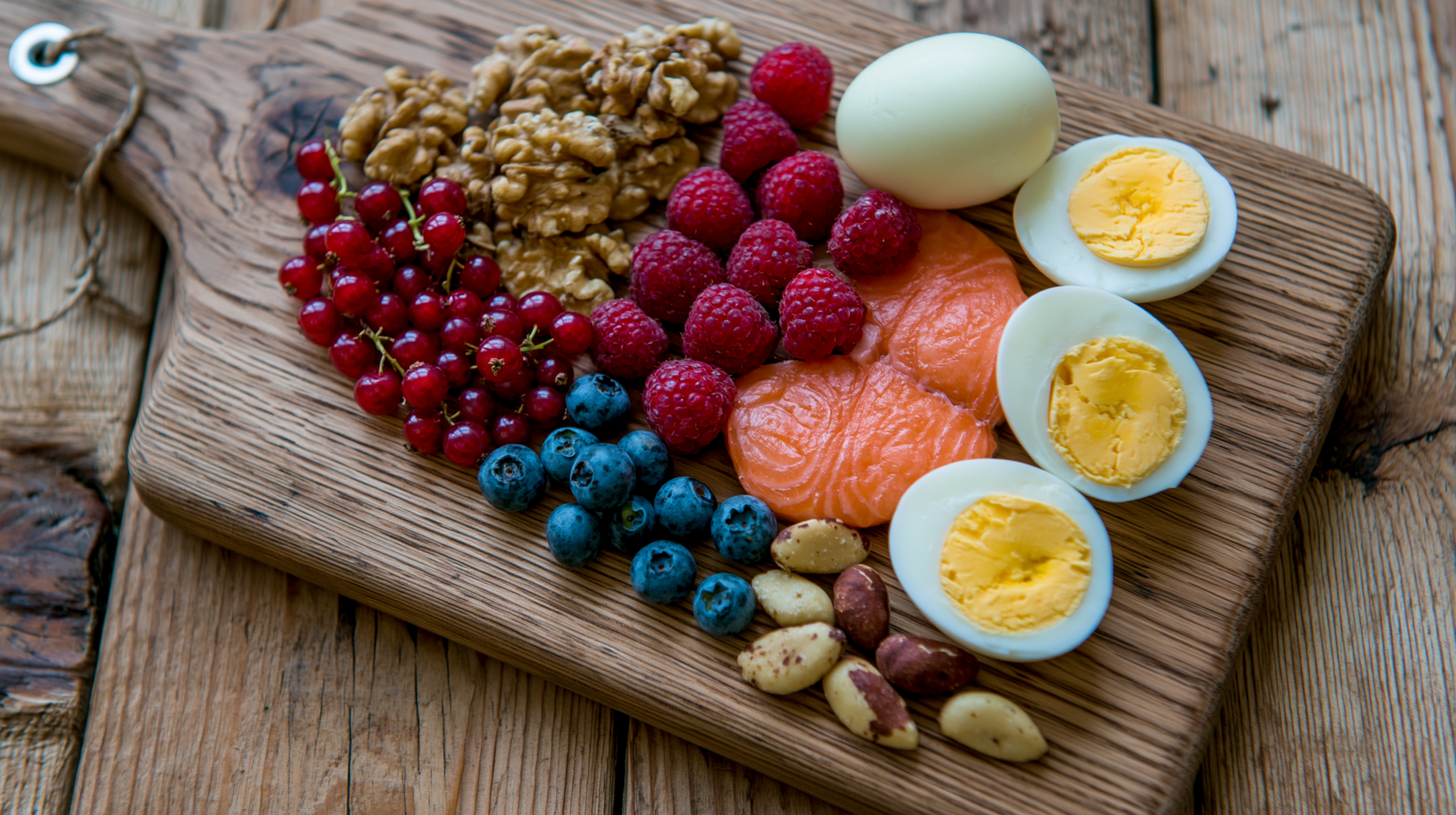
Adopt a Mediterranean/MIND-style dietary pattern as your default: a permanent signal change, not a diet. Target leafy greens 6+/week, berries 2+/week, nuts 5+/week, fatty fish 1+/week, extra virgin olive oil as primary fat, legumes 4+/week, whole grains 3+/day. Displace ultra-processed foods as the primary caloric source.
This step targets Node 1 of the cascade, the dietary trigger. Displacing UPF eliminates the primary source of omega-6 excess, emulsifiers, and refined sugars that drive gut dysbiosis. Prebiotic fiber (≥30g/day) feeds SCFA-producing bacteria, maintaining gut barrier integrity and reducing LPS translocation.[38][46]
Treating this as a 30-day inflammation cleanse. The neuroinflammatory pathway operates over years; reversal requires sustained dietary identity shift, not a protocol with an end date.
Omega-3 + SPM Precursor Loading
Ensure EPA+DHA intake of 1–2g/day from food or supplementation. This supplies the resolution substrates your immune system needs to terminate inflammation. Fatty fish twice weekly or algae-based DHA 500mg–1g/day.[41][17]
Targets the resolution phase: Node 4 to homeostasis. EPA and DHA are precursors to SPMs (resolvins, maresins, protectins), the molecular signals that tell microglia to return to surveillance mode. Without adequate SPM precursors, the inflammatory cascade cannot complete its off-cycle.[17][18]
Taking omega-3 supplements alongside meals high in omega-6 seed oils. The eicosanoid competition blunts SPM production, so reducing omega-6 load simultaneously is essential.
Sleep Architecture Protection
Maintain consistent sleep timing (±30 min) with ≥7 hours per night. This is when the glymphatic system clears neuroinflammatory debris. Anti-inflammatory dietary changes have been associated with 25 fewer minutes awake per night.[44][51]
The glymphatic system clears IL-1β, amyloid-β, and tau during NREM sleep. Chronic sleep debt below 6 hours acutely elevates TNF-α and IL-6, restarting the cascade even if dietary inputs improve. The relationship runs both ways: an anti-inflammatory diet reduces sleep fragmentation, and better sleep reduces inflammatory cytokine production.[44][51]
Weekend "recovery sleep" bingeing. Irregular timing disrupts the glymphatic clearance cycle and does not normalize inflammatory cytokine levels that require consistent nightly duration.
Glycemic Spike Management
Replace refined carbohydrates with resistant starch, legumes, and intact whole grains. Target glycemic load <100/day. Cool cooked starches (rice, potatoes) to increase resistant starch content.[47]
Postprandial hyperglycemia acutely elevates IL-6 and CRP. Resistant starch fermentation feeds anti-inflammatory microbiome species and reduces the gut permeability triggers that drive LPS-mediated neuroinflammation at Node 2 of the cascade.[47][48]
Conflating "low carb" with "anti-inflammatory." Fruits, legumes, and whole grains are among the most anti-inflammatory foods available; eliminating them can worsen the gut dysbiosis that drives the cascade.
06Verdict
The verdict.
Bottom line
The brain does not have a separate immune system for food and a separate one for disease. It has one system. And the longest signal that system receives, longer than any infection, any injury, any single stressor, is the cumulative inflammatory load of what you choose to eat.
The reframe this article asks of the reader is consequential. Stop thinking of food as fuel. Think of it as an immune signal, because that is what the molecular biology confirms. Every meal shifts the balance between pro-inflammatory and resolution signaling in the gut, the bloodstream, and ultimately the brain. A single meal does not matter. A decade of meals determines whether your microglia spend their time maintaining your synapses or attacking them.
No comparison figure runs here. The prose above does not resolve to one clean effect size to set against another, and this magazine does not manufacture a number to fill the space. The verdict stands on the evidence as written.
Diet drives neuroinflammation
Pro-inflammatory dietary patterns activate a five-node cascade (gut dysbiosis, systemic cytokine elevation, BBB compromise, microglial reprogramming, and synaptic dysfunction) that is consistently associated with accelerated cognitive decline in the largest available human datasets. The mechanism is not speculative; it is observed at the molecular, cellular, and population level.
The damage is silent and cumulative
Neuroinflammatory degradation does not announce itself. Memory, executive function, mood, and recovery erode simultaneously over years, producing diffuse symptoms that are routinely attributed to aging, stress, or personality, not diet. By the time symptoms become obvious, the microglial reprogramming is already advanced.
The dietary signal is modifiable
Unlike genetic risk, the dietary inflammatory signal can be changed. Shifting from a UPF-dominant pattern to a Mediterranean/MIND-style pattern displaces the primary inflammatory triggers and supplies the resolution substrates the immune system requires. The evidence supports this as a decades-long investment, not a short-term intervention.
07Bibliography
The bibliography.
-
01
Journal
doi: 10.1126/science.aag2590
How neuroinflammation contributes to neurodegeneration
-
02
Cohort
doi: 10.1186/s12916-023-02940-5
Association of pro-inflammatory diet with increased risk of all-cause dementia and Alzheimer's dementia: a prospective study of 166,377 UK Biobank participants
-
03
Journal
doi: 10.1002/alz.14390
Association between dietary inflammatory index score and incident dementia
-
04
Meta
doi: 10.3389/fnagi.2022.1007629
Association between dietary inflammatory index and cognitive impairment: A meta-analysis
-
05
Journal
doi: 10.1016/j.bbi.2024.04.016
Mediterranean diet protects against a neuroinflammatory cortical transcriptome: Associations with brain volumetrics, peripheral inflammation, social isolation, and anxiety in nonhuman primates
-
06
Cohort
doi: 10.1007/s11357-024-01497-2
Association between inflammatory biomarkers and the cognitive response to a multidomain intervention: secondary longitudinal analyses from the MAPT study
-
07
Journal
doi: 10.1212/WNL.0000000000000665
Interleukin-6 and C-reactive protein as predictors of cognitive decline in late midlife
-
08
Journal
doi: 10.3389/fnmol.2022.1013933
New insight into neurological degeneration: Inflammatory cytokines and blood–brain barrier
-
09
Journal
The role of neuroinflammation in neurodegenerative diseases: current understanding and future therapeutic targets. PMC11045904
-
10
Journal
doi: 10.1038/s41398-021-01349-z
Pro-inflammatory interleukin-6 signaling links cognitive impairments and peripheral metabolic alterations in Alzheimer's disease
-
11
Journal
doi: 10.3389/fnins.2021.734158
Hippocampal Function Is Impaired by a Short-Term High-Fat Diet in Mice: Increased Blood–Brain Barrier Permeability and Neuroinflammation as Triggering Events
-
12
Journal
High-Fat Diet Induces Neuroinflammation and Mitochondrial Impairment in Mice Cerebral Cortex and Synaptic Fraction. PMC6861522
-
13
Journal
doi: 10.1038/s41538-023-00211-4
Short-term high-fat diet consumption impairs synaptic plasticity in the aged hippocampus via IL-1 signaling
-
14
Journal
High-fat diet and aging interact to produce neuroinflammation and impair hippocampal- and amygdalar-dependent memory. PMID: 28719855
-
15
Journal
doi: 10.3389/fimmu.2022.796288
Gut Microbiota Interact With the Brain Through Systemic Chronic Inflammation: Implications on Neuroinflammation, Neurodegeneration, and Aging
-
16
Journal
doi: 10.1007/s10571-024-01496-z
Gut–Brain Axis and Neuroinflammation: The Role of Gut Permeability and the Kynurenine Pathway in Neurological Disorders
-
17
Review
Specialized Pro-Resolving Mediators in Neuroinflammation: Overview of Studies and Perspectives of Clinical Applications. PMC9370036
-
18
Journal
doi: 10.1186/s13024-025-00824-1
The role of n-3-derived specialised pro-resolving mediators in microglial mitochondrial respiration and inflammation resolution in Alzheimer's disease
-
19
Journal
Regional Susceptibility to TNF-α Induction of Murine Brain Inflammation via Classical IKK/NF-κB Signalling. PMC3372464
-
20
Cohort
doi: 10.1007/s00415-023-12065-7
Dietary inflammatory index, genetic susceptibility and risk of incident dementia: a prospective cohort study from UK Biobank
-
21
Meta
doi: 10.3389/fnagi.2023.1069439
Association of inflammation and cognition in the elderly: A systematic review and meta-analysis
-
22
Journal
doi: 10.1186/s12974-022-02584-x
Neuroinflammation represents a common theme amongst genetic and environmental risk factors for Alzheimer and Parkinson diseases
-
23
Journal
Diet Inflammatory Index and Dementia Incidence: A Population-Based Study. PMID: 34759053
-
24
Meta
Dietary inflammatory potential and the risk of cognitive impairment: A meta-analysis of prospective cohort studies
-
25
Meta
doi: 10.1093/ajcn/nqac282
Effect of the Mediterranean diet on cognition and brain morphology and function: a systematic review of randomized controlled trials
-
26
Journal
doi: 10.1056/NEJMoa2302368
Trial of the MIND Diet for Prevention of Cognitive Decline in Older Persons
-
27
Review
doi: 10.3389/fpsyt.2023.1130989
Chronic stress, neuroinflammation, and depression: an overview of pathophysiological mechanisms and emerging anti-inflammatories
-
28
Meta
Ultra-Processed Food Consumption and Mental Health: A Systematic Review and Meta-Analysis of Observational Studies
-
29
Journal
doi: 10.1212/WNL.0000000000209432
Associations Between Ultra-Processed Food Consumption and Adverse Brain Health Outcomes
-
30
Journal
Consumption of ultra-processed foods is associated with depression, mesocorticolimbic volume, and inflammation
-
31
Journal
Emerging role of gut microbiota dysbiosis in neuroinflammation and neurodegeneration. PMC10225576
-
32
Meta
doi: 10.1038/s41598-021-04764-w
Systematic review and meta-analysis of cognitive impairment in myalgic encephalomyelitis/chronic fatigue syndrome
-
33
Journal
Long Covid brain fog: a neuroinflammation phenomenon? PMC9914477
-
34
Cohort
doi: 10.3389/fnagi.2024.1371873
Association between dietary inflammatory index and cognitive impairment among American elderly: a cross-sectional study
-
35
Meta
doi: 10.1186/s41043-022-00303-z
Dietary inflammatory potential and the incidence of depression and anxiety: a meta-analysis
-
36
Journal
Neuroinflammation as a Common Mechanism Associated with the Modifiable Risk Factors for Alzheimer's and Parkinson's Diseases. PMID: 28302047
-
37
RCT
doi: 10.1186/s12916-017-0791-y
A randomised controlled trial of dietary improvement for adults with major depression (the 'SMILES' trial)
-
38
Journal
doi: 10.1136/gutjnl-2019-319654
Mediterranean diet intervention alters the gut microbiome in older people reducing frailty and improving health status: the NU-AGE 1-year dietary intervention across five European countries
-
39
Meta
Antioxidant and anti-inflammatory effects of curcumin/turmeric supplementation in adults: A GRADE-assessed systematic review and dose-response meta-analysis of randomized controlled trials. PMID: 36804260
-
40
Journal
[Duplicate entry consolidated with ref-39.]
-
41
Meta
doi: 10.1038/s41598-025-16129-8
A systematic review and dose response meta-analysis of Omega-3 supplementation on cognitive function
-
42
Journal
An Anti-Inflammatory Diet and Its Potential Benefit for Individuals with Mental Disorders and Neurodegenerative Diseases. PMC11357610
-
43
Journal
Healthy lifestyles and wellbeing reduce neuroinflammation and prevent neurodegenerative and psychiatric disorders. PMC9975355
-
44
Journal
Changes in dietary inflammatory potential predict changes in sleep quality metrics, but not sleep duration. PMC7658634
-
45
Journal
doi: 10.1016/S0140-6736(25)01565-X
Ultra-processed foods and human health: the main thesis and the evidence
-
46
Journal
doi: 10.3389/fnbeh.2017.00009
Gut to Brain Dysbiosis: Mechanisms Linking Western Diet Consumption, the Microbiome, and Cognitive Impairment
-
47
Journal
The Role of Diet as a Modulator of the Inflammatory Process in the Neurological Diseases. PMC10057655
-
48
Journal
Dysbiosis of Gut Microbiota from the Perspective of the Gut–Brain Axis: Role in the Provocation of Neurological Disorders. PMC9692419
-
49
Journal
doi: 10.1186/s12974-020-1705-z
The progress of gut microbiome research related to brain disorders
-
50
Journal
Dietary Inflammatory Index and Memory Function: Population-Based National Sample of Elderly Americans. PMC5839966
-
51
Book
Why We Sleep
-
52
Book
Why Zebras Don't Get Ulcers
No entries match the current filter and search.