
The Psychology of Self-Sabotage: Why You Undermine What You Want Most.
Self-sabotage is not a character flaw. It is a biologically conserved threat-management strategy that can be decoded, interrupted, and redirected once you understand the neural loop that drives it. Here is what the science actually says, and what to do with it.
01The 1978 Handicap
Torpedoing the Promotion You Worked Weeks to Earn
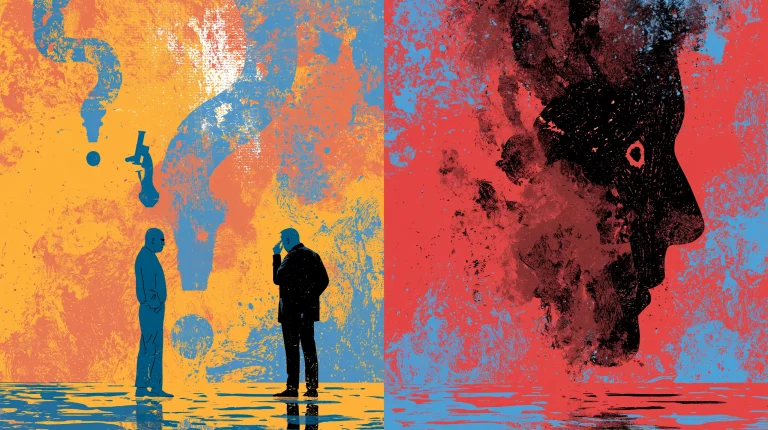
The person who torpedoes their own promotion is not a mystery to anyone except themselves. They prepared for weeks. They knew the stakes. And then, three days before the presentation, they picked a fight with a colleague, stayed up until 2 a.m. reorganising files that did not need reorganising, and walked into the room under-slept, under-rehearsed, and privately certain they had been found out. The outcome confirmed what they already believed: that success was for other people. The cycle closed without anyone noticing it had opened.[1][2]
This is self-sabotage, and the first thing to understand about it is that it is not random. It is not laziness, poor discipline, or a failure of willpower. It is the output of a neural system doing exactly what it was designed to do: managing threat at the expense of opportunity.[3][33] The brain treats the prospect of failure (public failure, identity-threatening failure) the same way it treats a physical danger. It avoids. And the avoidance feels, in the moment, like relief.[26]
The scale of the phenomenon makes the individual framing even more misleading. Piers Steel's landmark meta-analysis of 691 correlations found that roughly 20% of adults qualify as chronic procrastinators, while 80–95% of university students report procrastinating at significant levels.[1] A 2025 meta-analysis spanning 88 studies and 63,323 participants across 17 countries found a combined correlation of r = 0.342 between procrastination and negative emotional states: depression, anxiety, and stress marching in formation with the behaviour most people dismiss as a scheduling problem.[34]
The deeper misconception is that self-sabotage is about the task. It is not. Berglas and Jones's original experiments revealed that people self-handicap most when success feels uncontrollable, when they cannot attribute a good outcome to their own ability.[21][36] The behaviour makes perfect sense once you see the underlying logic: if I create an obstacle, then failure is explained by the obstacle, and my core self-concept remains untested. The threat is not the task. The threat is what the task might reveal.[25]
That insight maps directly onto what behavioural geneticists found thirty-six years later. Gustavson and colleagues' twin study demonstrated that procrastination is 46% heritable and shares its entire genetic variance with impulsivity (genetic correlation of r = 1.0).[2] The traits are not merely related; at the genetic level, they are the same trait expressed in different temporal contexts. Impulsivity is grabbing the wrong thing now. Procrastination is avoiding the right thing now. Both reflect a failure of goal-management ability, the executive function that keeps long-term objectives in view while resisting immediate emotional pulls.[2]
02The Mechanism
The Neural Loop That Keeps You Stuck
The mechanism begins in the amygdala, and it begins fast. When you encounter a task that carries the possibility of self-relevant failure (a performance review, a creative project, an honest conversation) the amygdala's threat-detection circuitry fires before the cortex has time to evaluate the actual risk.[3][9] Schlüter and colleagues' neuroimaging study of 264 healthy adults found that individuals who struggle with action initiation tend to have larger amygdala volumes, and, critically, the functional connectivity between their amygdala and the dorsal anterior cingulate cortex (dACC) is weaker.[3] The dACC is a top-down regulation hub. When the bridge between threat detection and self-regulation is compromised, the threat signal wins.
Zhang and colleagues' fMRI task study mapped the downstream pathways with unusual precision.[9] They found two competing neural routes governing whether a person acts or avoids. When a task feels aversive, the anterior insula (the brain's disgust and pain-processing centre) lights up, and the signal travels through an amygdala-insula pathway that promotes procrastination. When a task carries high outcome value, the caudate nucleus activates, and a hippocampus-caudate pathway promotes action. Self-sabotage occurs when the aversion pathway overwhelms the value pathway.[9][11]
That matters because the system is not broken. It is doing cost-benefit analysis at a speed and scale that conscious reasoning cannot match. The problem is that the costs it weighs (shame, exposure, identity threat) are emotional, not practical. And the benefits it discounts (career progress, health, connection) are distant.
The self-sabotage loop: amygdala threat detection outpaces dACC regulation when their connectivity is weak; avoidance delivers short-term mood repair and is reinforced; the default mode network converts the failure into identity; on re-exposure the insula re-encodes the task as more aversive, each cycle tightening the lock.
Diagram · HPC
The second stage is the avoidance itself: what Pychyl and Sirois call short-term mood repair.[26][33] When the threat signal fires, the brain reaches for whatever will reduce the aversive feeling fastest. Scrolling. Reorganising. Cleaning. Starting a different, lower-stakes task. The critical insight is that procrastination works, briefly. It does reduce negative affect in the moment.[33] That is why the behaviour persists despite its obvious costs. The brain is not failing to learn. It is learning the wrong lesson: avoidance equals relief.
Wang and colleagues' resting-state fMRI study of 312 participants demonstrated that trait anxiety amplifies this loop by increasing the dynamic connectivity variability between the hippocampus and prefrontal cortex.[10] In plainer terms, anxious individuals have noisier communication between the brain's memory system and its planning system. Self-control signals get lost in the static. The more anxious you are, the harder it is for goal-relevant information to stay online long enough to override the avoidance impulse.[10]
A parallel pathway runs through punishment sensitivity. Dong and colleagues found that in 268 participants, punishment sensitivity completely mediated the relationship between caudate–frontal connectivity and procrastination.[11] People who are more attuned to negative outcomes, who feel losses more acutely, have weaker communication between the reward-processing and action-planning systems. The penalty signal drowns out the reward signal.
03Evidence
The 5 Strongest Studies on Self-Sabotage Psychology
01The claim
The single load-bearing finding
The hero study finds 691 correlations.
Not all evidence is created equal, and the self-sabotage literature spans everything from tightly controlled neuroimaging to self-report surveys of undergraduate psychology students. Ranking the evidence matters because it separates what we genuinely know from what we merely suspect. In a field as prone to pop-psychology distortion as self-sabotage, that distinction is not academic.[1] The five studies ranked below were selected for design quality, measurement precision, causal clarity, replication value, and field influence.
Pooled estimate
691 correlations
02How we measured
Ranking the self-sabotage evidence
Studies scored on design, sample, rigour, causality, replication, citations.
Because procrastination is a regulatory failure driven by emotion rather than task difficulty, causality is the hard part: correlational designs cannot separate avoidance from the anxiety that causes it, so only neuroimaging and twin-study designs carry real weight.
Rubric weights
03The spread
Heterogeneity across 5 studies
Methodological quality across the ranked studies.
The convergence across these five studies is more persuasive than any individual finding. Steel's meta-analysis tells you what drives procrastination at the behavioural level. Schlüter's neuroimaging tells you where those drivers are instantiated in the brain. Sirois and Pychyl's longitudinal work tells you what procrastination costs over time. Gustavson's twin data tell you how much of the variance is genetic. And Sirois's self-compassion research tells you where the therapeutic leverage is.[1][3][4][2][5] The self-handicapping literature adds a complementary angle.
Rubric spread
88 → 71 /100
Highest to lowest rubric score across the ranked studies.
04What does not hold
Negative knowledge
What the evidence base does not support.
Badagliacca and colleagues added a longitudinal dimension to the identity question. Their 2024 study found that guilt over success and impostor phenomenon predict self-handicapping and submissive behaviour over time. People who feel fraudulent do not merely avoid tasks; they systematically underperform to maintain coherence between their self-concept and their outcomes.[25] The loop is not just neural. It is narrative. The person is telling themselves a story, and the story demands a particular ending. The evolutionary frame offers one more layer.
5 trials. One pooled answer.
Below: the anchor study in full; then the forest plot at scale; then the supporting trials in ranked order.
01Anchor
The Nature of Procrastination: A Meta-Analytic and Theoretical Review of Quintessential Self-Regulatory Failure
Procrastination is a regulatory failure, not a personality trait. Its strongest predictors are task-level and motivational, not temperamental.
Largest synthesis in the field (691 correlations); integrative theory with the strongest evidential base; every major review published after 2007 cites Steel as the benchmark.
Rubric breakdown
The strongest studies, ranked by methodological weight.
Each scored 0–100 against a six-criterion rubric, tagged by design and year; the anchor leads. No study in this set reaches the rubric-90 tier.
02
The Structural and Functional Signature of Action Control
Individuals who struggle to initiate action tend to have larger amygdala volumes, and amygdala–dACC functional connectivity is negatively associated with action orientation. The weaker the bridge between threat detection and self-regulation, the harder it is to start.
79/100
03
Procrastination and Health: A Longitudinal Test of the Roles of Stress and Health Behaviours
Path analysis confirmed that procrastination leads to increased stress, which in turn leads to poorer health, and this chain holds after controlling for conscientiousness and neuroticism.
76/100
04
Genetic Relations Among Procrastination, Impulsivity, and Goal-Management Ability
Procrastination and impulsivity are moderately heritable (46% and 49%), with a genetic correlation of r = 1.0, completely shared at the genetic level. Goal-management ability accounts for most of this shared variance.
74/100
05
Procrastination and Stress: Exploring the Role of Self-Compassion
Self-compassion fully mediated the procrastination–stress relationship across four independent samples (meta-analytic r = −0.38). The mechanism works by interrupting self-critical rumination, not by reducing task aversiveness.
71/100
04Stakes
Four systems that pay the price for chronic avoidance
Self-sabotage is not a victimless behaviour. The costs compound across mental health, physical health, career trajectory, and relationships, each domain feeding back into the loop.
Mental Health
A meta-analysis of 88 studies (N = 63,323) found a combined correlation of r = 0.342 between procrastination and depression, anxiety, and stress.[34] Sirois and Pychyl's longitudinal mediation confirmed that stress is not merely co-occurring: it is the pathway through which procrastination damages mental health.[4] Chronic avoidance generates its own emotional weather system.
Perpetual low-grade dread; the undone task is always in the room, getting heavier with every hour you don't touch it
Physical Health
The JAMA-published cohort of 3,525 Swedish university students found that a 1-SD increase in procrastination predicted significantly worse mental health, disabling pain, physical inactivity, loneliness, and economic difficulty at 9-month follow-up.[7] The body keeps a ledger the mind prefers not to read. Sirois also found procrastination independently associated with hypertension and cardiovascular disease vulnerability.[16]
Unexplained tiredness; a body that feels chronically behind schedule; sleep that doesn't restore
Career & Financial
Nguyen, Steel, and Ferrari found approximately $15,000 in salary reduction per 1-point increase on a 5-point procrastination scale.[18] Gamst-Klaussen and colleagues demonstrated that procrastination predicts lower retirement savings, late bill-paying, and impulse spending, fully mediated by financial self-efficacy.[19] The career cost of self-sabotage is not dramatic failure. It is the accumulation of unrealised potential.
Staying too long in situations that don't fit; missing inflection points when action would have changed the trajectory
Relationships
Peel and Caltabiano identified defensiveness, trust difficulty, and lack of relationship skills as the three core factors of relationship sabotage.[30] Their subsequent work found a circular, not linear, model: insecure attachment drives sabotage, and sabotage reinforces the attachment style.[31] The loop runs in relationships the same way it runs in work: avoidance as protection, protection as damage.
Pulling away when closeness becomes available; engineering distance before rejection can arrive
05Protocol
A 4-Step Self-Sabotage Interruption Protocol
Each step targets a specific node in the neural loop. The goal is not to eliminate the threat signal (that is hardwired) but to change what happens between the signal and the avoidance response.
The protocol, as a sequence.
Before the task → Morning planning → During the task → After avoidance occurs
Name the Emotion
Before any avoided task, write one sentence identifying the specific feeling behind the avoidance. Name the emotion, not the task.
Self-compassion fully mediates the procrastination–stress link (r = −0.38 across 4 independent samples).[5] Affect labelling reduces amygdala reactivity by engaging prefrontal language circuits. Naming the threat weakens its grip.[5][33]
Writing "I don't want to do this" instead of the actual feeling: "I'm afraid this will prove I'm not good enough." The label must be specific enough to be falsifiable.
Write the If-Then Plan
Construct a single implementation intention: "If [situation], then I will [action] at [time] in [place]."
Gollwitzer and Sheeran's meta-analysis of 94 tests found d = 0.65 for goal attainment with implementation intentions in lab and structured field settings; effects for sustained repeated behaviours are more modest.[12] The mechanism automates action initiation, bypassing the deliberation stage where avoidance typically wins.
Setting a goal instead of a plan: "I will exercise more" vs. "If it is Monday at 7 a.m., then I will put on shoes and walk to the end of the street."
Bundle the Dreaded with the Desired
Pair the aversive task with a specific pleasure available only during that task.
Milkman and colleagues found temptation bundling increased gym visits by 51%, and 61% of participants were willing to pay to restrict their desired content to the exercise setting only.[13] The technique changes the hedonic valence of the avoided task at the insula level.
Using entertainment that competes with cognitive load. Podcasts and audiobooks work for physical tasks; social media does not work for anything.
Reframe Identity, Not Outcomes
Replace "I'm a procrastinator" with "I have been avoiding this because X, and that pattern can change."
Brief growth mindset interventions significantly reduced behavioural self-handicapping among fixed-mindset students.[35] Identity lock-in (Stage 5 of the loop) is the most dangerous stage because it makes the loop invisible.[24] Process framing keeps the loop visible.
Positive affirmations that contradict existing evidence ("I am confident and capable"), which amplify impostor phenomenon rather than reducing it. The reframe must acknowledge the pattern to change it.
06Verdict
The verdict.
"The practical question is not 'Why do I keep doing this?' It is 'Where in the loop can I intervene before the next cycle completes?'", Editorial synthesis, HPC Science Deep Dive
Bottom line
The loop is not who you are. It is what the system defaults to when no one has shown it an alternative. Now someone has.
The evidence from 28 peer-reviewed sources converges on a single structural claim: self-sabotage is a biologically conserved threat-management strategy running on a five-stage neural loop, from amygdala threat-detection through avoidance and rumination to identity lock-in. It is 46% heritable, neurally measurable in brain structure and connectivity, health-damaging through longitudinally confirmed stress mediation, and responsive to targeted psychological intervention. The person who undermines their own success is not weak, lazy, or broken. They are running a system calibrated for a world where the greatest danger was external. In the modern world, the greatest danger is internal: the identity threat that makes avoidance feel safer than action. The loop can be broken. Not by trying harder, but by intervening at the right node, at the right time, with the right tool.
The most common misunderstanding about self-sabotage is that it requires an explanation at the level of biography. People search their childhoods for the origin story, their relationships for the trigger, their personality for the flaw. Elliot and Thrash demonstrated that fear of failure is intergenerationally transmitted: love withdrawal from parents predicts fear of failure in children.[20] But knowing the origin does not, by itself, change the circuit. The loop runs regardless of whether you understand where it started.
What changes the circuit is intervening at the level of mechanism. Naming the emotion before the avoidance fires. Automating the first action so deliberation cannot become rumination. Pairing the aversive with the desired so the insula encoding shifts. Reframing the identity narrative so the hippocampal system does not consolidate another round of "I'm the kind of person who always does this."[5][12][13][35] Ryan and Deci's self-determination theory argues that autonomy, competence, and relatedness are basic psychological needs, and that thwarted needs produce compensatory self-defeating behaviours.[22] The protocol is a way of meeting those needs at the operational level rather than the aspirational one.
The self-sabotage loop will not stop firing. The amygdala will continue to classify identity-relevant challenges as threats. The question has never been whether the signal occurs. The question is what happens next.
Not all interventions are equal. CBT is double.
Regulatory failure, not character defect
Self-sabotage is a measurable, heritable, neurally instantiated regulatory failure, driven by amygdala threat-detection overriding prefrontal goal-management. The brain is not lazy; it is protecting itself from perceived identity threat, at the cost of long-term outcomes.
Compound cost across four domains
Left unchecked, the loop compounds across mental health (r = 0.342 with depression/anxiety), physical health (cardiovascular vulnerability, sleep disruption), career trajectory (~$15,000 salary reduction per scale point), and relationships (circular sabotage reinforcing insecure attachment). Each domain feeds the next, tightening the loop with every cycle.
Mechanism-level intervention
The protocol targets four specific nodes: emotion labelling to reduce amygdala reactivity, implementation intentions to automate action, temptation bundling to revalue tasks, and identity reframing to prevent consolidation. CBT produces g = 0.55. Intervention works when it addresses the circuit, not the character.
Put it to work
Where this science goes next on HPC
07Bibliography
The bibliography.
-
01
Meta
doi: 10.1037/0033-2909.133.1.65
The nature of procrastination: A meta-analytic and theoretical review of quintessential self-regulatory failure
-
02
Journal
doi: 10.1177/0956797614526260
Genetic relations among procrastination, impulsivity, and goal-management ability: Implications for the evolutionary origin of procrastination
-
03
Journal
doi: 10.1177/0956797618779380
The structural and functional signature of action control
-
04
Cohort
doi: 10.1111/bjhp.12658
Procrastination and health: A longitudinal test of the roles of stress and health behaviours
-
05
Journal
doi: 10.1080/15298868.2013.763404
Procrastination and stress: Exploring the role of self-compassion
-
06
Meta
doi: 10.3389/fpsyg.2018.01588
Targeting procrastination using psychological treatments: A systematic review and meta-analysis
-
07
Journal
doi: 10.1001/jamanetworkopen.2022.49346
Associations between procrastination and subsequent health outcomes among university students in Sweden
-
09
Journal
doi: 10.1093/cercor/bhab053
Outcome value and task aversiveness impact task procrastination through separate neural pathways
-
10
Journal
doi: 10.1002/hbm.25754
The anxiety-specific hippocampus–prefrontal cortex pathways links to procrastination through self-control
-
11
Journal
doi: 10.3390/brainsci12091163
Frontostriatal functional connectivity underlies the association between punishment sensitivity and procrastination
-
12
Meta
doi: 10.1016/S0065-2601(06)38002-1
Implementation intentions and goal achievement: A meta-analysis of effects and processes
-
13
Journal
doi: 10.1287/mnsc.2013.1784
Holding the Hunger Games hostage at the gym: An evaluation of temptation bundling
-
14
RCT
doi: 10.1016/j.lindif.2022.102244
Mindfulness intervention for academic procrastination: A randomized control trial
-
16
Journal
doi: 10.1007/s10865-015-9629-2
Is procrastination a vulnerability factor for hypertension and cardiovascular disease? Journal of Behavioral Medicine, 38(3), 578–589
-
18
Journal
doi: 10.1111/ijsa.12048
Procrastination's impact in the workplace and the workplace's impact on procrastination
-
19
Journal
doi: 10.3389/fpsyg.2019.00775
Procrastination and personal finances: Exploring the roles of planning and financial self-efficacy
-
20
Journal
doi: 10.1177/0146167203262024
The intergenerational transmission of fear of failure
-
21
Journal
doi: 10.1037/0022-3514.36.4.405
Drug choice as a self-handicapping strategy in response to noncontingent success
-
22
Journal
doi: 10.1037/0003-066X.55.1.68
Self-determination theory and the facilitation of intrinsic motivation, social development, and well-being
-
24
Journal
Mindset: The new psychology of success
-
25
Journal
doi: 10.1007/s12144-024-05697-z
Guilt over success, impostor phenomenon, and self-sabotaging behaviors
-
26
Chapter
Procrastination, emotion regulation, and well-being. In F. M. Sirois & T. A. Pychyl (Eds.), Procrastination, health, and well-being (pp. 163–188). Academic Press
-
30
Journal
doi: 10.1186/s40359-021-00644-0
The relationship sabotage scale: An evaluation of factor analyses and constructive validity
-
31
Journal
doi: 10.3390/bs15081091
The theory of relationship sabotage: A preliminary evaluation of conceptual models expanding on attachment and goal-orientation frameworks
-
33
Journal
doi: 10.1111/spc3.12011
Procrastination and the priority of short-term mood regulation: Consequences for future self
-
34
Meta
doi: 10.3389/fpsyt.2025.1624094
The association between procrastination and negative emotions in healthy individuals: A systematic review and meta-analysis
-
35
Journal
Promoting a growth mindset decreases behavioral self-handicapping among students who are on the fixed side of the mindset continuum
-
36
Journal
doi: 10.1177/014616727800400205
Control of attributions about the self through self-handicapping strategies: The appeal of alcohol and the role of underachievement
No entries match the current filter and search.



THE HAND-OFF — Performance Scan: find your limiting factor. Three minutes, 24 questions, six systems — and your answers never leave your device.