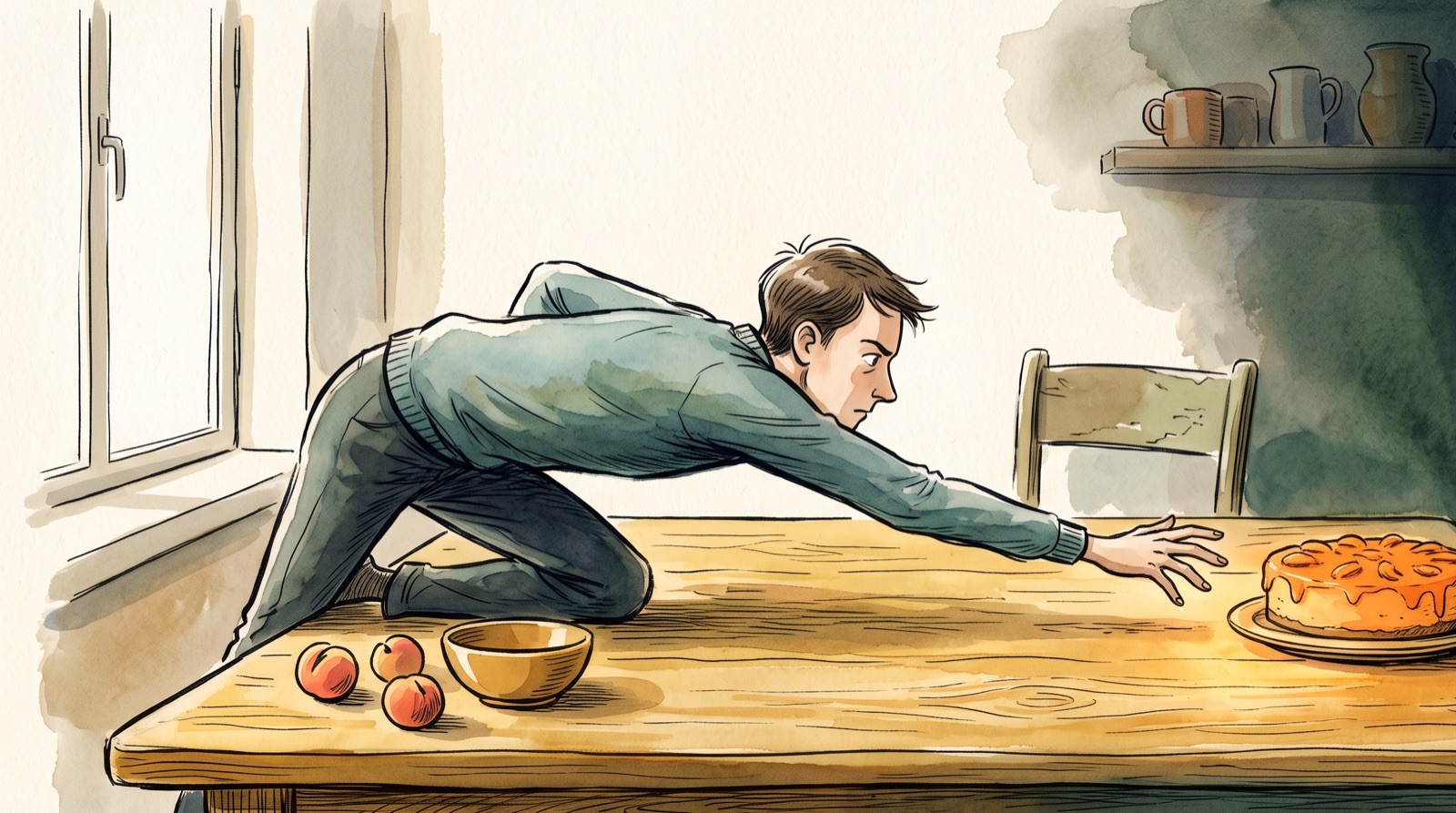
Craving n.
The popular term is often used as a synonym for intense desire; in neuroscience, craving specifically names the wanting state produced by incentive-sensitised dopamine circuits.
The definition
Craving is an intense motivational state produced by sensitised mesolimbic dopamine circuits that generate a compelling urge to obtain a specific substance or behaviour. Neurobiologically distinct from ordinary desire, craving arises when incentive wanting separates from hedonic liking; the motivational drive persists and can intensify as a reward's capacity to satisfy diminishes.
237 studies / 51,788 participants
cue-induced craving predicts relapse across substance types
VAFAIE & KOBER · 20223
The mechanism
Mesolimbic dopamine circuits mediate what Robinson and Berridge labelled 'incentive salience' (the motivational pull towards a reward), but do not generate the hedonic pleasure obtained from it1. These two processes are neurobiologically dissociable. Dopamine activity in the nucleus accumbens and ventral striatum encodes anticipated reward value, firing in response to reward-predicting cues rather than to the reward itself. The result is a wanting system that operates largely beneath conscious deliberation, capable of driving behaviour independent of genuine enjoyment.
Repeated exposure sensitises this mesolimbic system, amplifying its response to associated cues without a corresponding increase in hedonic reward14. The sensitisation can persist for years after abstinence, which explains why a place, object, or person linked to prior use can trigger intense craving long after the behaviour has stopped. Ordinary desire, by contrast, tracks hedonic expectation: when opioid and GABAergic circuits in the nucleus accumbens shell signal that a reward is no longer particularly enjoyable, desire contracts2. In craving, that feedback loop is broken.
Environmental cues acquire motivational force through classical conditioning: a stimulus reliably paired with a dopaminergic event comes to activate incentive salience on its own23. This mechanism accounts for the seemingly involuntary quality of craving; the motivational state is not chosen but induced by a conditioned cue triggering dopamine release before the person is consciously aware of the urge.
Surfing the Urge — A craving rises to a peak then subsides on its own if not acted on — the basis of urge surfing.
In practice
The difference between craving and ordinary desire becomes clear in situations where the environment, not a person's intentions, does the triggering.
Worked example
A person who stopped drinking alcohol several years ago visits a pub with colleagues for a work event. Though they have no desire to drink and have not thought about alcohol for months, the smell of beer and the clink of glasses immediately produces a strong urge to order a drink. No deliberate thought precipitated the state; the environmental cues activated the conditioned dopamine pathway directly.
The craving arose not from a conscious decision to want alcohol but from a conditioned dopamine circuit responding to cues associated with prior use.
Why it matters
A 2022 systematic review and meta-analysis of 237 studies and 51,788 participants confirmed that cue-induced craving is a significant prospective predictor of drug use and relapse across multiple substance types3. This matters because it shifts the clinical frame: craving is not a failure of character or insufficient motivation to quit. It is a conditioned neurobiological response that operates below the threshold of deliberate control. Interventions targeting self-discipline or the perceived value of the reward miss the mechanism entirely.
Because incentive sensitisation amplifies wanting without a matching increase in liking, the gap between wanting and satisfaction widens over time14. Effective strategies must therefore target the cue-dopamine association directly: cue-exposure therapy extinguishes the conditioned response; mindfulness-based approaches train urge surfing, the practice of observing the incentive salience signal without acting until it subsides23. Willpower-based approaches treat the symptom; dismantling the conditioned circuitry treats the cause.
Questions of record
What is the difference between craving and ordinary desire?
Ordinary desire tracks expected pleasure: when something is no longer enjoyable, desire for it diminishes. Craving is driven by incentive salience, a motivational signal in mesolimbic dopamine circuits that operates independently of hedonic value. A person can intensely crave something they no longer enjoy, because the wanting and liking systems are neurobiologically separate21.
Why does craving return after long periods of abstinence?
Craving returns because incentive sensitisation produces lasting changes in mesolimbic dopamine circuits that do not reverse through abstinence alone14. Environmental cues associated with prior use retain the ability to trigger incentive salience years later. The sensitised circuitry persists below conscious awareness, waiting to be activated by a conditioned cue.
Can a person crave something they no longer enjoy?
Yes. Because mesolimbic dopamine mediates wanting rather than liking, a sensitised system can generate intense craving even when the substance delivers little hedonic pleasure24. This widening gap between wanting and satisfaction is one of the defining features of advanced addiction; compulsive seeking persists despite diminished reward.
How do environmental cues trigger craving?
Through classical conditioning, stimuli reliably associated with a rewarding substance acquire the ability to activate mesolimbic dopamine circuits independently23. When the conditioned cue is encountered, it triggers incentive salience before deliberate thought occurs. The person experiences the motivational pull as an apparently spontaneous urge rather than a response to an external prompt.