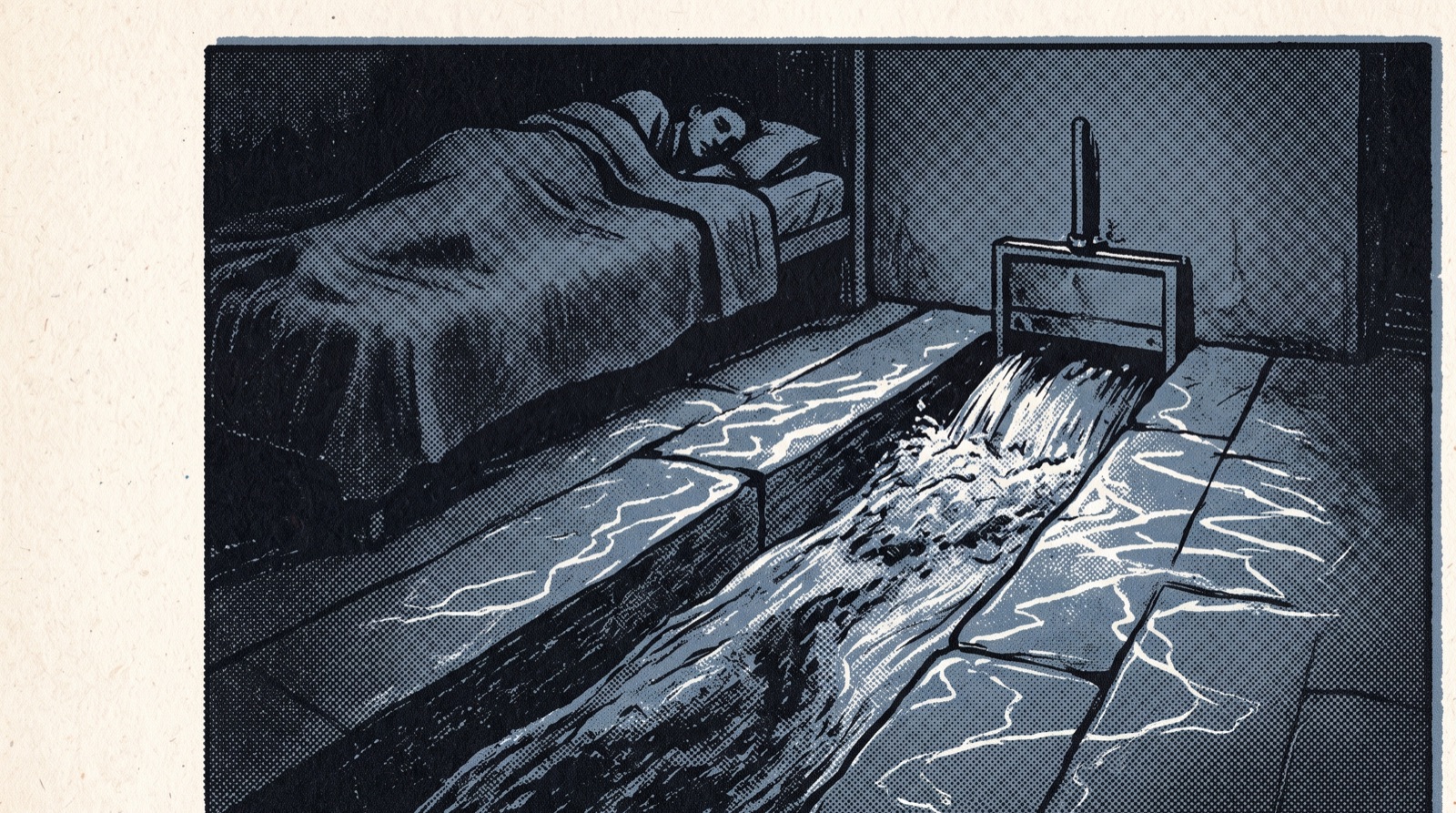
Glymphatic System n.
The name combines 'glial' and 'lymphatic': astrocytes line the perivascular channels, and the waste-transport function parallels that of the peripheral lymphatic system.
/ɡlɪmˈfætɪk ˈsɪstəm/
The definition
Glymphatic System is a brain-wide waste clearance network that uses cerebrospinal fluid circulating along perivascular channels, facilitated by astrocytic aquaporin-4 water channels, to flush metabolic byproducts including amyloid beta and tau from the interstitial space. The system operates primarily during slow-wave sleep, when the extracellular space expands by approximately 60 per cent.
60%
expansion of interstitial space during slow-wave sleep enabling glymphatic clearance
XIE ET AL. · 20132
The mechanism
The glymphatic system routes cerebrospinal fluid into the brain along paravascular spaces surrounding penetrating arteries. Arterial pulsatility propels this inflow; the CSF then exchanges with the interstitial fluid bathing neurons and glia before draining via paravenous channels.1 The entire process depends on aquaporin-4 (AQP4) water channels, densely expressed on the perivascular endfeet of astrocytes. When AQP4 is genetically deleted in animal models, interstitial solute clearance falls by approximately 70 per cent, confirming that glial architecture is integral to the circuit.1
Clearance rate is not constant. During waking activity, the brain's extracellular space is relatively compressed, constraining convective fluid exchange. Slow-wave sleep expands this space by approximately 60 per cent, enabling substantially accelerated CSF-interstitial fluid mixing and metabolite removal.2 The principal clearance targets are amyloid beta and tau, the protein aggregates that accumulate in neurodegenerative disease. The brain shifts into an active maintenance state during deep sleep, progressively reversing the metabolic debt that sustained waking neural activity accumulates.4
Sleep posture may also influence efficiency. Lateral (side) sleeping has been proposed to optimise perivascular fluid flow compared with supine or prone positions, though human evidence for this effect remains preliminary.4
In practice
The relationship between sleep quality and glymphatic function is illustrated by what happens across a period of chronic partial sleep restriction.
Worked example
Consider an individual who regularly averages five to six hours of sleep per night. Slow-wave sleep duration is curtailed below the threshold required for complete nightly clearance, and amyloid beta burden begins to accumulate. PET imaging in healthy adults shows that a single night of restricted sleep measurably elevates amyloid beta in the hippocampus and thalamus. The deficit compounds across weeks.
Glymphatic clearance failure is not a theoretical risk; it is measurable after a single disrupted night.
Why it matters
The clinical stakes of glymphatic function centre on neurodegeneration. Chronic impairment of glymphatic clearance is associated with accumulation of amyloid beta and tau, the hallmark aggregates of Alzheimer's disease.43 A single night of sleep deprivation produces a measurable increase in amyloid beta burden in healthy young adults, measured by positron emission tomography, demonstrating that the relationship is not merely correlational.3
Beyond Alzheimer's risk, any factor that fragments or curtails slow-wave sleep architecture impairs this clearance cycle. Alcohol, common sedatives, and normal ageing all reduce the proportion of time spent in slow-wave sleep, meaningfully curtailing nightly clearance capacity.24 The implication is that sleep quality and architecture matter as much as total duration: consistent slow-wave sleep across sufficient nightly hours is the most evidence-based approach to maintaining adequate glymphatic clearance and reducing long-term protein aggregation risk.3
Questions of record
What happens to the glymphatic system during sleep deprivation?
Glymphatic clearance slows significantly. The interstitial space remains compressed without slow-wave sleep, limiting the convective fluid exchange the system depends on. A single night of sleep deprivation measurably increases amyloid beta load in the human brain, as confirmed by PET imaging in healthy adults.
How does the glymphatic system relate to Alzheimer's disease?
The glymphatic system clears amyloid beta and tau, the proteins that aggregate into plaques and tangles in Alzheimer's disease. When sleep is chronically insufficient, these proteins accumulate in neural tissue. The connection suggests that sustained poor sleep may accelerate neurodegenerative pathology over time.
What is the role of aquaporin-4 in the glymphatic system?
Aquaporin-4 (AQP4) is a water channel protein expressed densely on the endfeet of astrocytes lining the perivascular spaces. It facilitates bulk fluid transport across the glial boundary. Deleting the AQP4 gene in animal models reduces interstitial solute clearance by approximately 70 per cent, confirming its essential role.
How can you support glymphatic clearance naturally?
Protecting slow-wave sleep is the most evidence-based approach. Consistent sleep timing, adequate duration, and limiting alcohol intake before bed are the primary strategies. Lateral (side) sleeping has been proposed to enhance perivascular fluid flow, though human evidence for a posture benefit remains preliminary.
Sources
Appears in
- Deep SleepGlossary