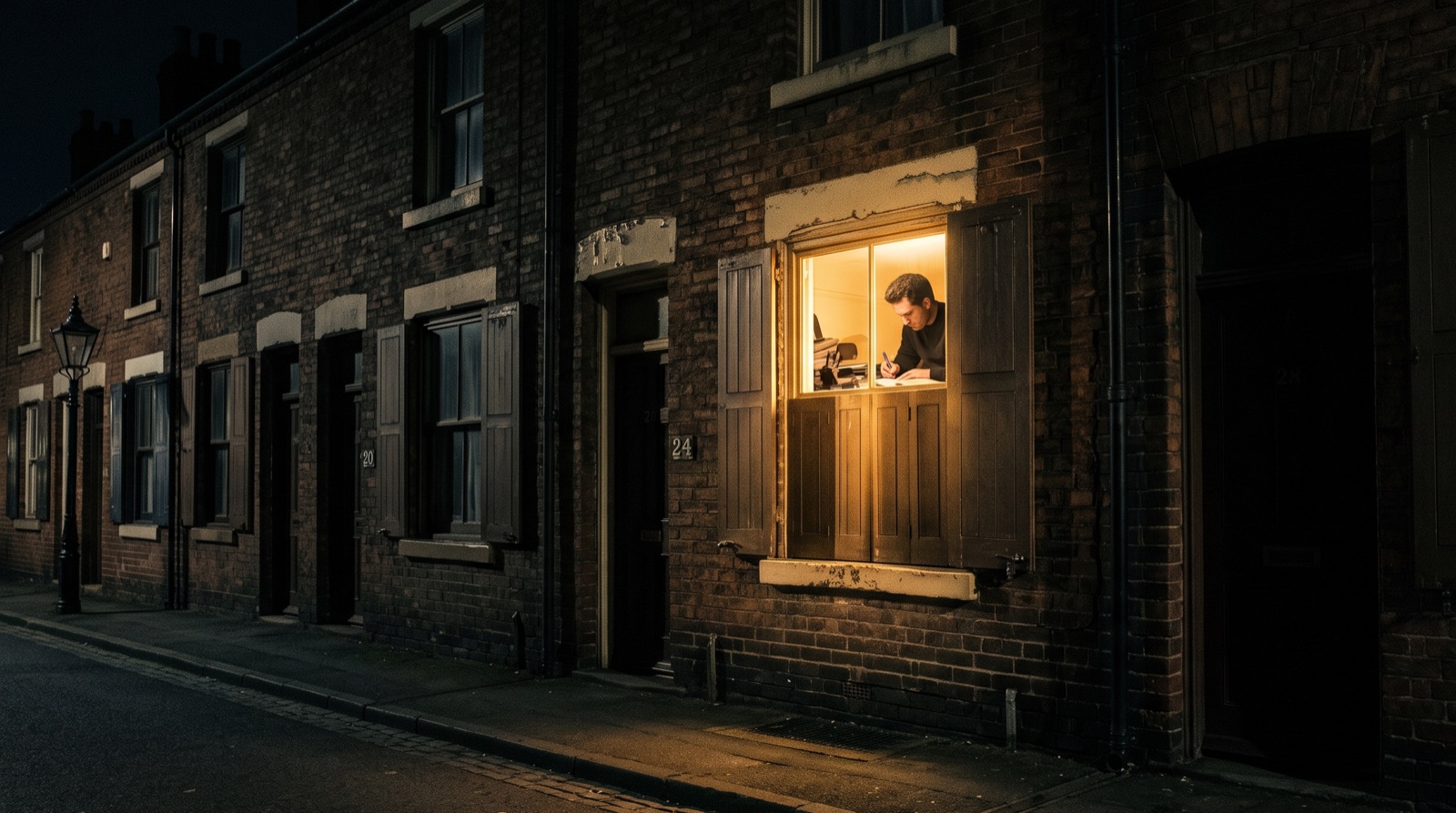
Chronotype n.
The established scientific typology comprises three categories: morning, intermediate (neither), and evening. A popular four-category model adding a 'dolphin' type has no peer-reviewed validation in chronobiology.
The definition
Chronotype is an individual's intrinsic disposition for the timing of sleep, peak alertness, and hormonal rhythms across the 24-hour day, driven primarily by the genetically encoded period of the circadian clock. Ranging from pronounced morning types to pronounced evening types, chronotype governs melatonin onset, core body temperature nadirs, and cortisol secretion patterns.
The mechanism
At the core of chronotype is the endogenous period (tau) of the suprachiasmatic nucleus (SCN), the brain's master circadian pacemaker. Morning types typically have a tau slightly below 24 hours; evening types carry a tau exceeding 24.5 hours, progressively shifting preferred sleep timing later12. A genome-wide association study of 697,828 individuals identified 351 genetic loci associated with morningness, implicating phototransduction pathways and core clock genes including PER2 and RGS16, and demonstrating the substantial heritable basis of chronotype2. This genetic architecture establishes chronotype as a biological trait that lifestyle changes can shift only modestly.
Evening types secrete melatonin and reach their core body temperature nadir later in the 24-hour cycle than morning types, delaying the biological signal for sleep onset by up to two to three hours1. Sleep homeostasis compounds this effect: evening types accumulate sleep pressure more slowly, sustaining alertness further into the night, and dissipate it more slowly upon waking, producing pronounced grogginess when forced to rise at early socially imposed times3.
The Morningness-Eveningness Questionnaire, introduced by Horne and Ostberg in 1976, remains the most widely validated self-report instrument for chronotype classification1. Three established categories emerge from its scoring: morning type, intermediate (neither) type, and evening type. The popular four-category model that adds a 'dolphin' type has no peer-reviewed validation in chronobiology and should not be conflated with this classification.
Lark to Owl — Chronotype runs from strong morning types (larks) to evening types (owls), with most people in between.
In practice
Chronotype misalignment becomes consequential when institutional schedules are fixed and an individual's biological peak falls outside them.
Worked example
An early-shift worker with an evening chronotype, required to start at 6 a.m., is not simply tired; her melatonin remains elevated, core body temperature is still falling, and reaction time sits near its 24-hour trough. Over a working week, this mismatch compounds sleep debt and metabolic strain. Shifting high-stakes tasks to her biological peak, mid-morning on days off, yields measurable gains in accuracy and attention.
Matching task demand to circadian phase, not the clock on the wall, determines whether high-stakes work receives the cognitive resources it requires.
Why it matters
Evening chronotype carries demonstrable cardiometabolic risk beyond fatigue. Pooled analyses find a 30% higher odds of type 2 diabetes in evening versus morning types, along with elevated LDL cholesterol, fasting blood glucose, and glycated haemoglobin4. Cancer incidence and depression rates are also elevated, suggesting that persistent circadian misalignment exerts pressure across multiple physiological systems simultaneously, rather than through a single metabolic pathway.
Social jetlag, the mismatch between an individual's biological clock and the schedule imposed by work or school, affects an estimated 70% of the working and student population by at least one hour3. Its prevalence makes chronotype a public health variable, not merely a personal quirk. For individuals in cognitively demanding or high-consequence roles, scheduling even partial alignment between peak circadian phase and peak task demand yields measurable reductions in performance variability and error rates2.
Questions of record
What is chronotype and how do I determine mine?
Chronotype is an individual's genetically driven preference for sleep and peak-performance timing across the 24-hour day. The Morningness-Eveningness Questionnaire, developed by Horne and Ostberg, is the most widely validated self-report measure, classifying respondents into morning, intermediate, or evening types through 19 standardised questions about sleep and activity preferences.
Can you change your chronotype?
Chronotype is substantially heritable, with genome-wide studies linking it to hundreds of genetic loci, so its core timing is not freely reconfigurable by lifestyle alone. Light-exposure management, meal timing, and exercise scheduling can shift sleep timing by up to one to two hours, but cannot override the underlying genetic programme.
Why does evening chronotype carry worse health outcomes?
Evening chronotype forces persistent misalignment between the body's internal clock and socially imposed early schedules, producing chronic sleep debt and disrupted metabolic signalling. This misalignment is independently associated with a 30% higher odds of type 2 diabetes, elevated cardiovascular risk markers, and increased rates of depression and certain cancers.
What is social jetlag and how does it relate to chronotype?
Social jetlag is the discrepancy between an individual's biological sleep timing and the schedule imposed by work, school, or social obligations. Evening chronotypes experience the largest social jetlag because their internal clock runs later than most institutional schedules demand. An estimated 70% of the working population lives with at least one hour of social jetlag chronically.