Microglia n.
/maɪˈkrəʊɡliə/
The definition
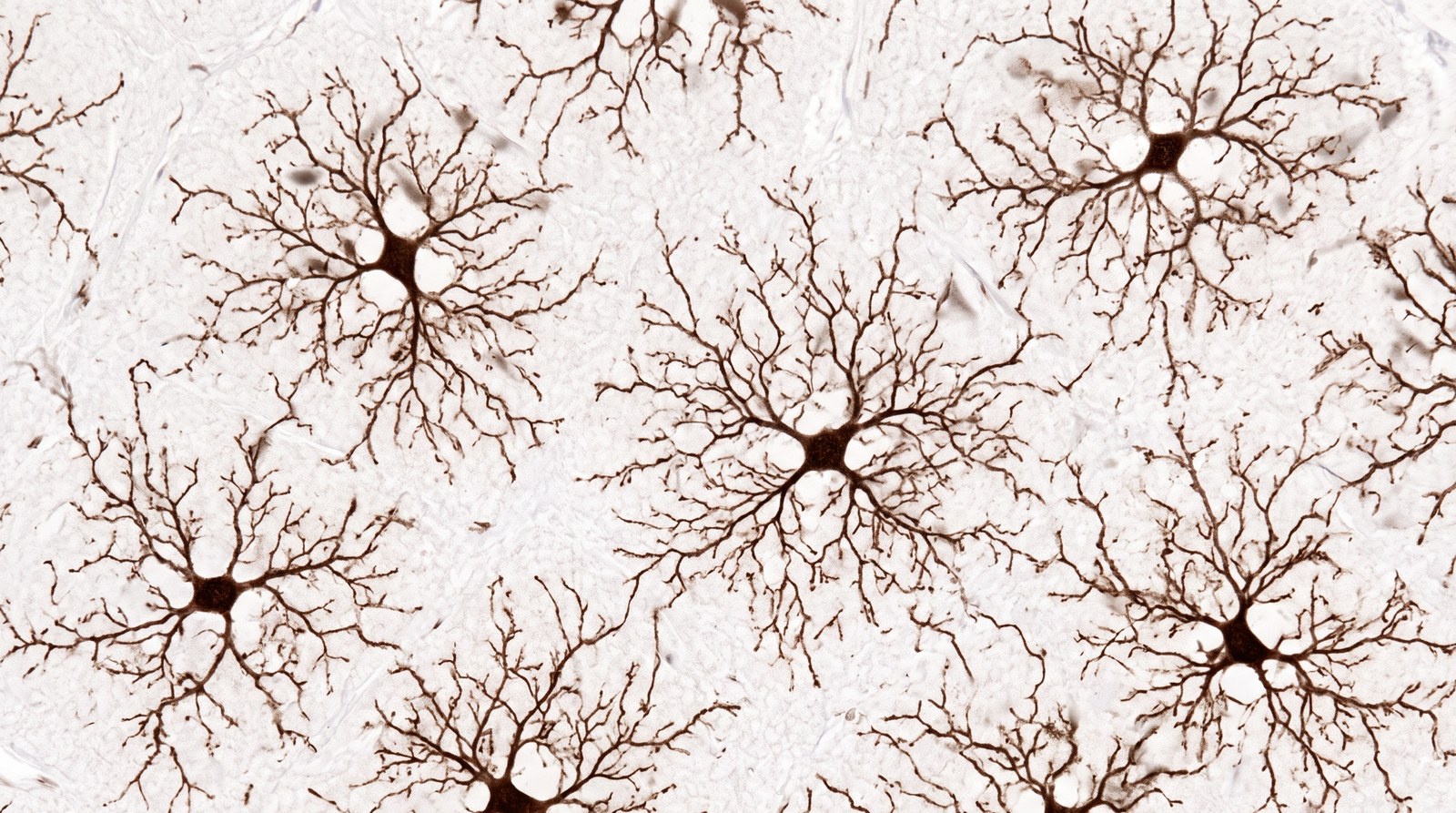
Microglia are the resident immune cells of the central nervous system, constantly extending and retracting fine processes to survey surrounding brain tissue for damage, debris and pathogens. Chronic stress, poor sleep and diet quality can push microglia away from this surveillance role and toward a sustained pro-inflammatory state linked to neurodegenerative risk.
The mechanism
Even when the brain is not injured or infected, microglia are far from idle. These cells continuously extend and retract fine, branch-like processes to scan the surrounding brain parenchyma in real time, a resting behaviour known as homeostatic surveillance1. This constant sampling lets microglia detect tissue damage, debris and pathogens as soon as they appear, making them the central nervous system's first responders rather than cells held in reserve. This surveillance mode makes microglia the tissue's constant monitors, positioned to respond to abnormalities as they arise rather than only after damage becomes apparent.
That surveillance state is not fixed. Chronic psychosocial and lifestyle stressors shift microglia away from homeostatic surveillance and toward a sustained pro-inflammatory phenotype, a change associated with elevated neurodegenerative risk2. Diet composition shapes the same switch: brain omega-3 polyunsaturated fatty acid status alters microglial morphology and changes the peak number of activated microglia responding to an amyloid-beta challenge3. Psychosocial stress and dietary fat composition therefore converge on the same underlying phenotypic switch, rather than acting through separate systems.
In practice
Two of the most easily modifiable levers on microglial activation are diet quality and sleep, and their combined effect shows up in ordinary lifestyle patterns.
Worked example
A shift worker with a fragmented sleep schedule and a diet low in oily fish reports persistent brain fog, low mood and difficulty concentrating after several months on this pattern. Both the sleep disruption and the low omega-3 intake independently push microglia toward a pro-inflammatory state, compounding the effect rather than acting as separate, unrelated stressors on cognition.
The lesson is not that either factor alone fully explains the fog, but that both push the same cellular switch, so fixing one without the other leaves half the mechanism untouched.
Why it matters
The stakes of this activation switch extend well past a single bad night. Sleep deprivation activates microglia and triggers the efflux of mitochondrial DNA into the cytosol, provoking the release of pro-inflammatory cytokines in the brain, so insufficient sleep carries a direct inflammatory cost at the cellular level4. Omega-3-derived specialised pro-resolving mediators, by contrast, support microglial mitochondrial respiration and help resolve that inflammation once it starts, a pathway that is disrupted in Alzheimer's disease5.
Because both routes run through diet and sleep, they represent modifiable levers rather than fixed risks. Diet quality and sleep are two of the few practical levers that shift microglial activation state, which positions nutrition and sleep hygiene as concrete intervention points against neuroinflammatory risk34.
Questions of record
What do microglia actually do in the brain?
Even without injury or infection present, microglia patrol the brain around the clock, using thin branching extensions to check nearby tissue for anything abnormal. The moment they detect damaged cells, debris or an invading pathogen, they can shift into a more active, defensive mode instead of sitting dormant until called upon.
How does chronic stress affect microglia?
Ongoing psychosocial and lifestyle stress does more than feel unpleasant: it nudges microglia out of their normal monitoring role and into a persistently inflamed state, a shift linked to higher risk of neurodegenerative disease. In that sense stress leaves a measurable trace in your brain's immune cells, not just your mood.
Can diet affect microglia and neuroinflammation?
Yes, diet quality is one of the clearer levers here. Brain omega-3 status changes microglial shape and affects how many microglia switch into an activated state during an inflammatory challenge. Compounds derived from omega-3s also help microglia keep their mitochondria running properly and resolve inflammation afterwards, a process that breaks down in Alzheimer's disease.
Does poor sleep activate microglia?
Yes. Sleep deprivation activates microglia and triggers the release of mitochondrial DNA into the cell interior, which provokes pro-inflammatory cytokine release in the brain. That means the inflammatory cost of a poor night's sleep is not just tiredness; it shows up at the level of your brain's immune cells.