Ghrelin n.
The functions of unacylated ghrelin, the predominant circulating form, remain an active area of investigation.
also known as hunger hormone
The definition
Ghrelin is a 28-amino acid peptide hormone secreted primarily by cells in the gastric fundus. It circulates in two forms; only the acylated form, modified at serine-3 by the enzyme ghrelin O-acyltransferase, activates the growth hormone secretagogue receptor. Ghrelin peaks before meals, drives appetite through the hypothalamic arcuate nucleus, and triggers pituitary growth hormone release.
The mechanism
Ghrelin exerts its appetite-stimulating effects by binding the growth hormone secretagogue receptor (GHS-R1a), a G protein-coupled receptor concentrated in the hypothalamic arcuate nucleus and the anterior pituitary.14 Receptor activation triggers downstream calcium signalling via phospholipase C, stimulating neuropeptide Y (NPY) and agouti-related protein (AgRP) neurones. These orexigenic neurones increase appetite while simultaneously suppressing energy expenditure, a dual effect that amplifies hunger beyond simple meal-skipping.
A critical structural feature distinguishes ghrelin from most peptide hormones: only the acylated form is biologically active. The enzyme ghrelin O-acyltransferase (GOAT) attaches an octanoyl group to serine-3, a post-translational modification required for GHS-R1a binding.4 Without this modification, the peptide circulates as des-acyl ghrelin and cannot engage the receptor. Plasma concentrations follow a predictable rhythm: levels peak in the pre-meal fasting state and fall within approximately one hour of eating, functioning as an anticipatory signal rather than a reactive one.14
Ghrelin also drives pituitary growth hormone secretion through the hypothalamic-pituitary axis, an effect that was central to the original characterisation of its receptor.1 Sustained caloric restriction and weight loss reliably elevate circulating ghrelin, providing a biological basis for the escalating hunger that accompanies dieting.4
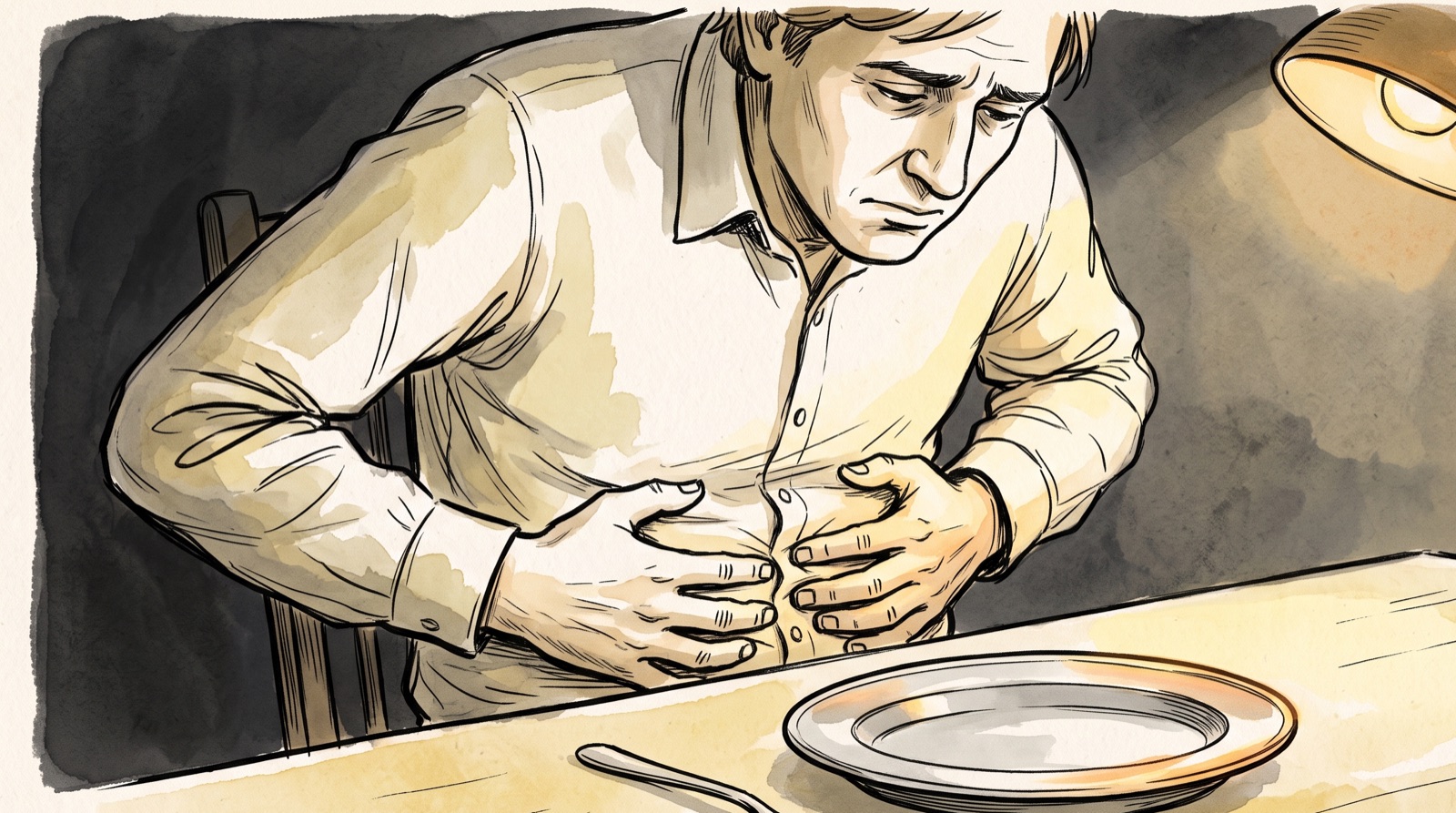
The Hunger Hormone — Ghrelin rises as the stomach empties, peaking before a meal, then falls sharply after eating.
In practice
Ghrelin's influence becomes concrete when two appetite drivers compound one another.
Worked example
A strength athlete in a moderate caloric deficit trains fasted three mornings per week, then shortens sleep to six hours to accommodate early sessions. Within days, pre-training hunger intensifies beyond what the deficit alone would predict. Ghrelin is rising on two fronts: caloric restriction has elevated the baseline, and the sleep reduction has added a further acute increase. The combined signal produces craving-level hunger that undermines adherence.
Protecting sleep duration is a practical ghrelin-management lever, not merely a recovery preference.
Why it matters
Ghrelin is the primary driver of anticipatory hunger, and its susceptibility to external inputs makes it a meaningful target for performance-oriented lifestyle management. Sleep curtailment to approximately four hours per night raised ghrelin concentrations 28% above fully rested levels in a controlled crossover trial, with corresponding increases in hunger and appetite ratings.3 The mechanism matters because sleep restriction impairs adherence to caloric targets through a hormonal route that willpower alone cannot reliably overcome: fighting ghrelin-driven hunger with discipline is a less efficient strategy than protecting sleep duration.
Macronutrient composition provides a further lever. Protein and fat-rich meals suppress ghrelin more durably than carbohydrate-matched alternatives, an effect confirmed as a significant moderator across 47 studies encompassing nearly 1,800 participants in a 2023 meta-analysis.5 Selecting meals that combine protein and fat around training or high-demand periods extends the post-meal suppression window and reduces the frequency of ghrelin-driven hunger spikes that erode nutritional adherence.
Questions of record
What does ghrelin do in the body?
Ghrelin is the body's primary hunger signal. It binds receptors in the hypothalamic arcuate nucleus to stimulate appetite and suppress energy expenditure, and triggers growth hormone release from the pituitary. Plasma concentrations rise before meals and fall within an hour of eating, coordinating the body's anticipatory preparation for food intake.
How does sleep affect ghrelin levels?
Insufficient sleep raises ghrelin. Restricting sleep to around four hours per night elevated ghrelin approximately 28% above fully rested values in a controlled crossover study, with corresponding increases in hunger and appetite ratings.3 The effect is meaningful even from a single night's curtailment, though smaller pooled effects have been reported in broader meta-analyses.
How can ghrelin levels be lowered naturally?
Adequate sleep is the most modifiable lever; even modest curtailment raises ghrelin measurably. Consuming protein and fat-rich meals suppresses ghrelin more durably than carbohydrate-matched alternatives.5 Larger meal volumes increase gastric distension, which mechanically reduces fundal ghrelin secretion. Spacing meals to avoid prolonged fasting also limits the pre-meal surge.
Does ghrelin cause weight gain?
Ghrelin does not cause weight gain directly; it signals hunger, and sustained elevation increases the likelihood of overeating. Intravenous ghrelin raised caloric intake by 28% at a buffet meal compared to saline in a controlled trial.2 Weight gain results from the caloric surplus that elevated ghrelin facilitates, not from ghrelin acting on fat tissue directly.